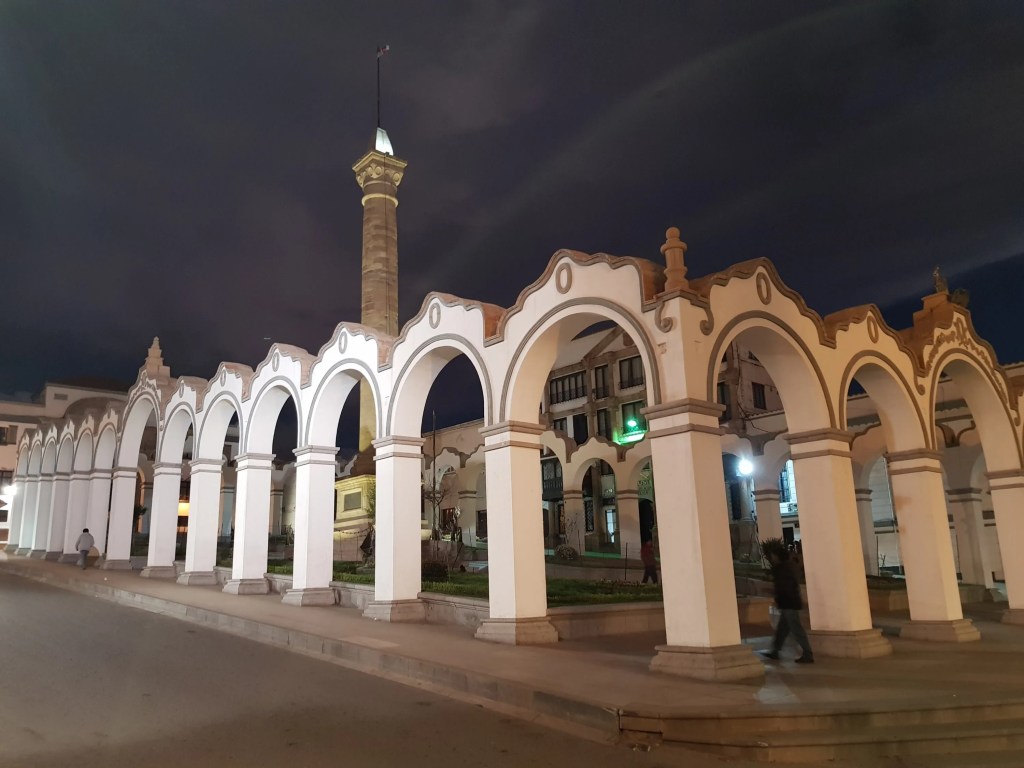
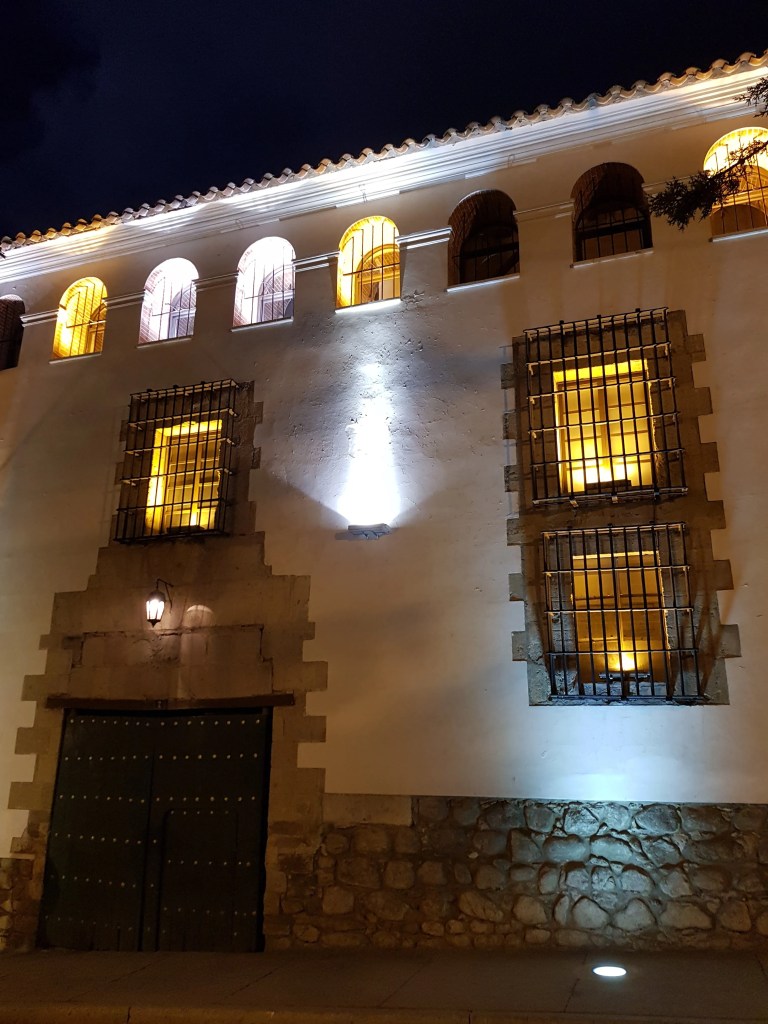
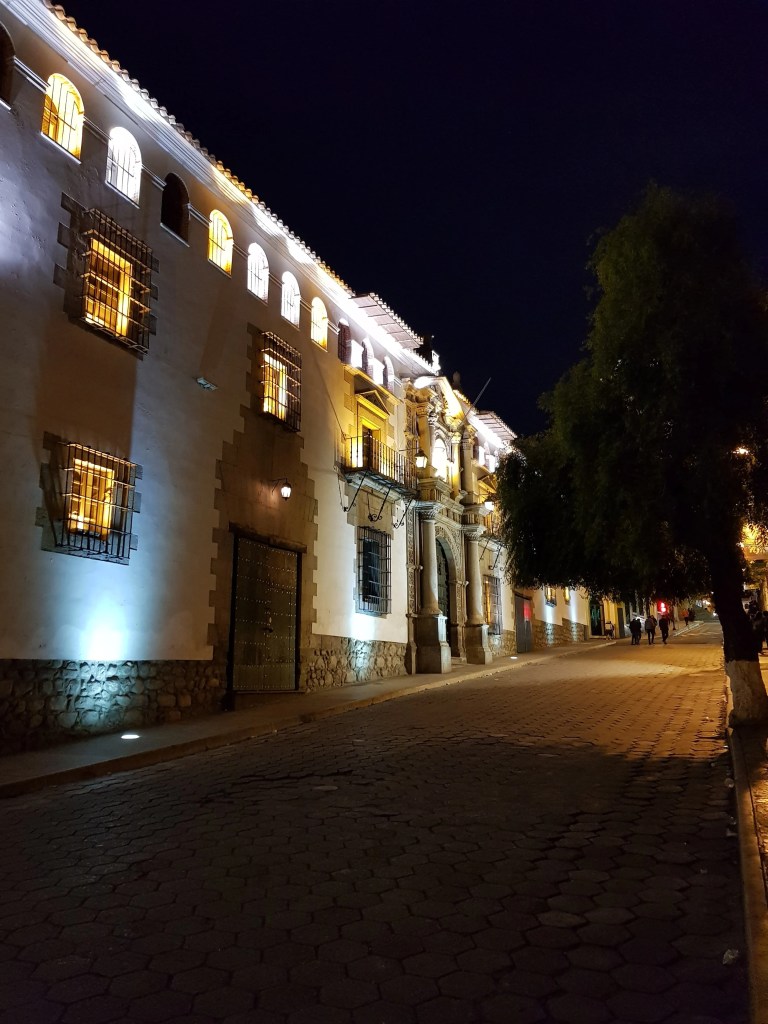
I’m spending the smallest portion of my trip in Bolivia, just ten days, so despite the injury to my leg, it was time to pack in some more adventures. We drove to the colonial mining town of Potosi, the highest town in the world at 4,090m! It used to be a very rich place thanks to the mining of silver, although once this went, so did the riches, and now it mostly produces tin. It’s still a very charming town, albeit a little worn.
We were offered a tour of the working mines, but I’d read that it was a very emotional and chastening experience, not least because of the children who work down there for $150 a month and so I passed. If you’re interested to know more about the cold minders and their working conditions, there’s a great article here.
After a couple of days in Potosi, we drove to Uyuni, famous as the gateway to the amazing salt flats at Salar deUyuni. The remote small town sits on the edge of the high altiplano, a wilderness that extends for hundreds of kilometres towards the border with Argentina and Chile. Our hostel was really nice and within ten minutes of arriving, a doctor in a white coat appeared to redress the bandage on my leg. The home visit was a bargain at BOB100 (€10)!! Within the hostel was an incredible pizza restaurant which lays claim to be the highest in the world. I have a feeling a lot of businesses around here are the highest something!
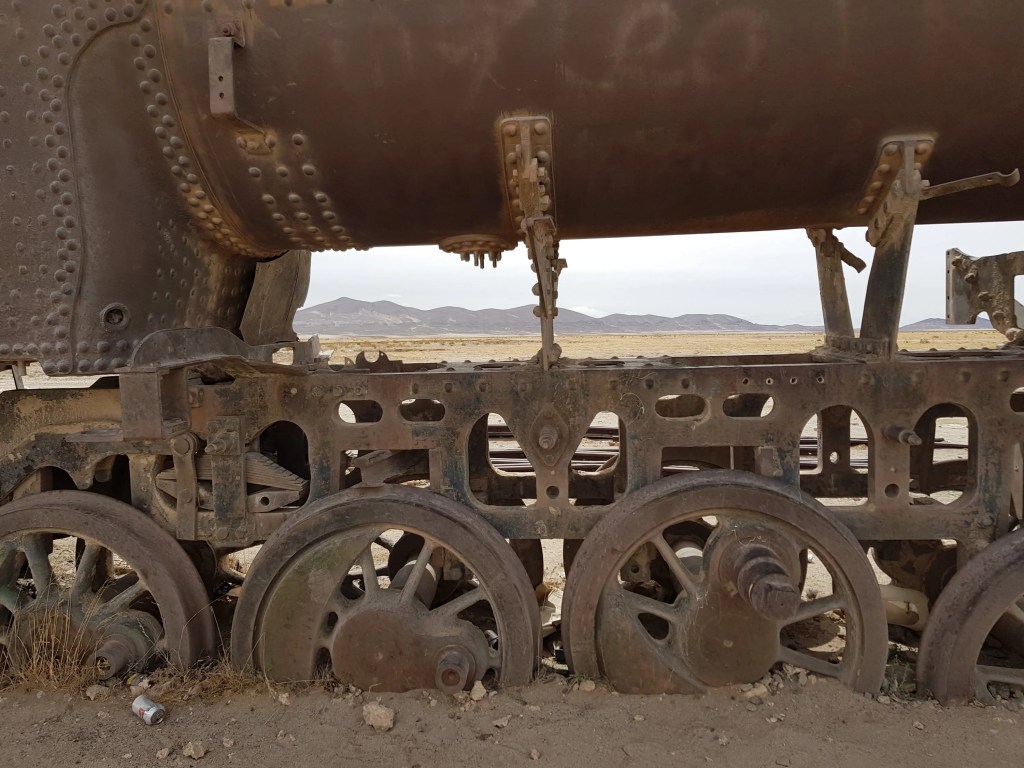
On our way to the salt flats, we stopped off at a train cemetery where the physically-abled of us (not me obvs) soon regressed back to childhood by climbing and scampering among the long-retired carriages. We also stopped off at a local market to buy some items to aid us in taking some perspective-bending photographs.
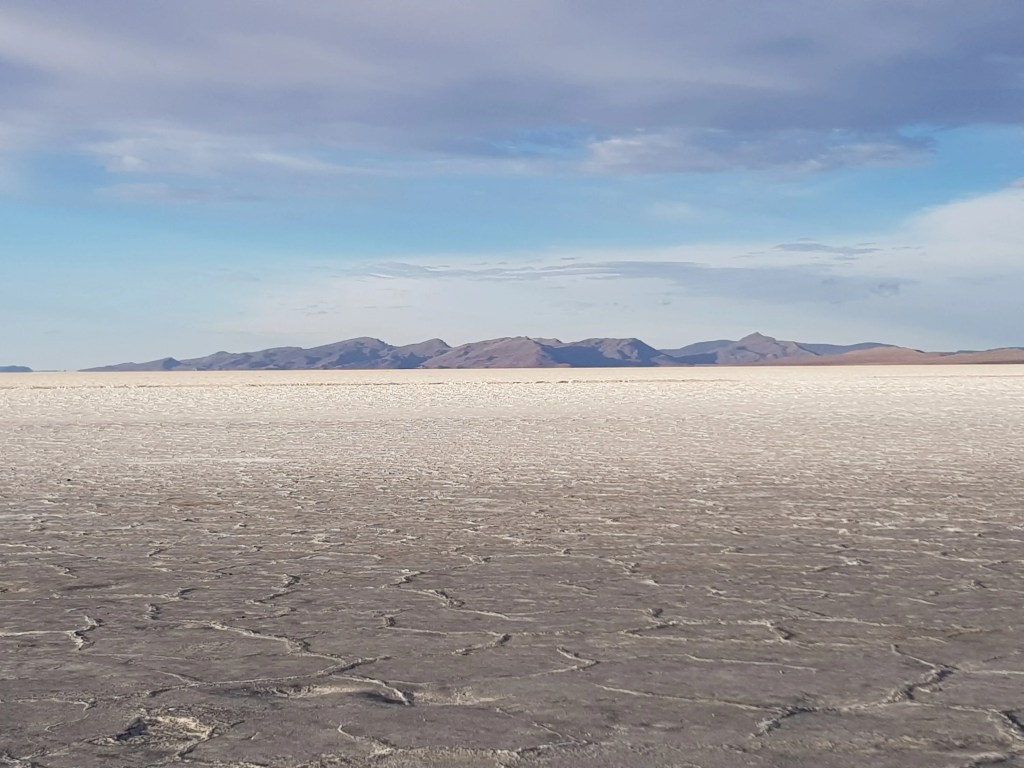
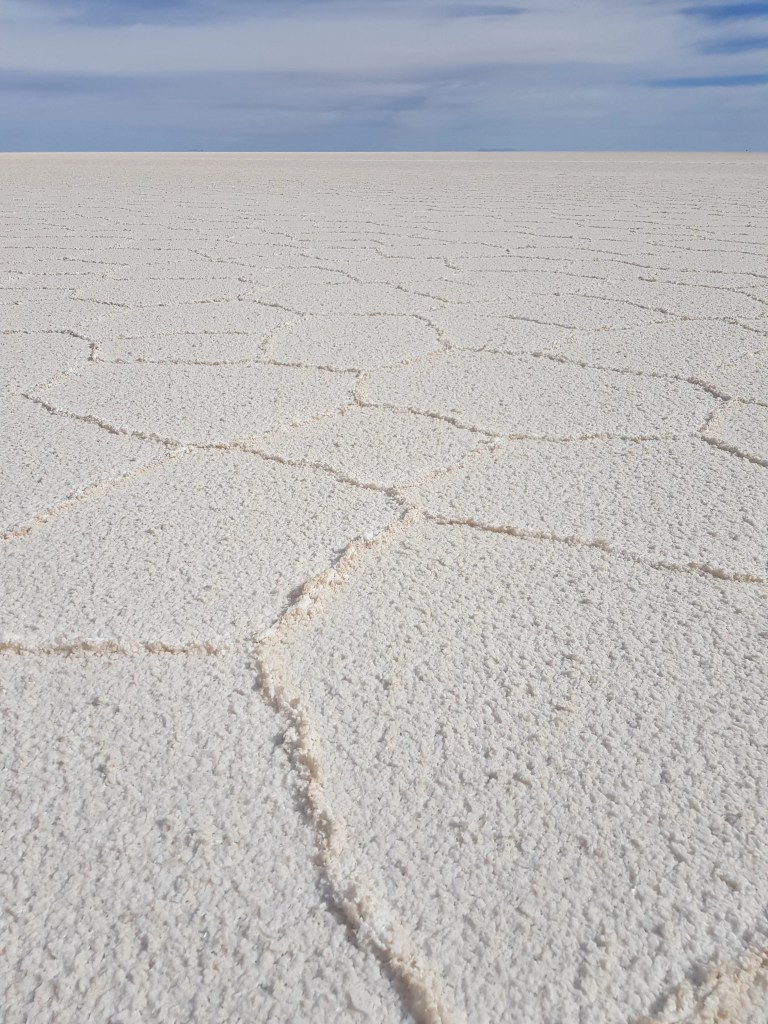
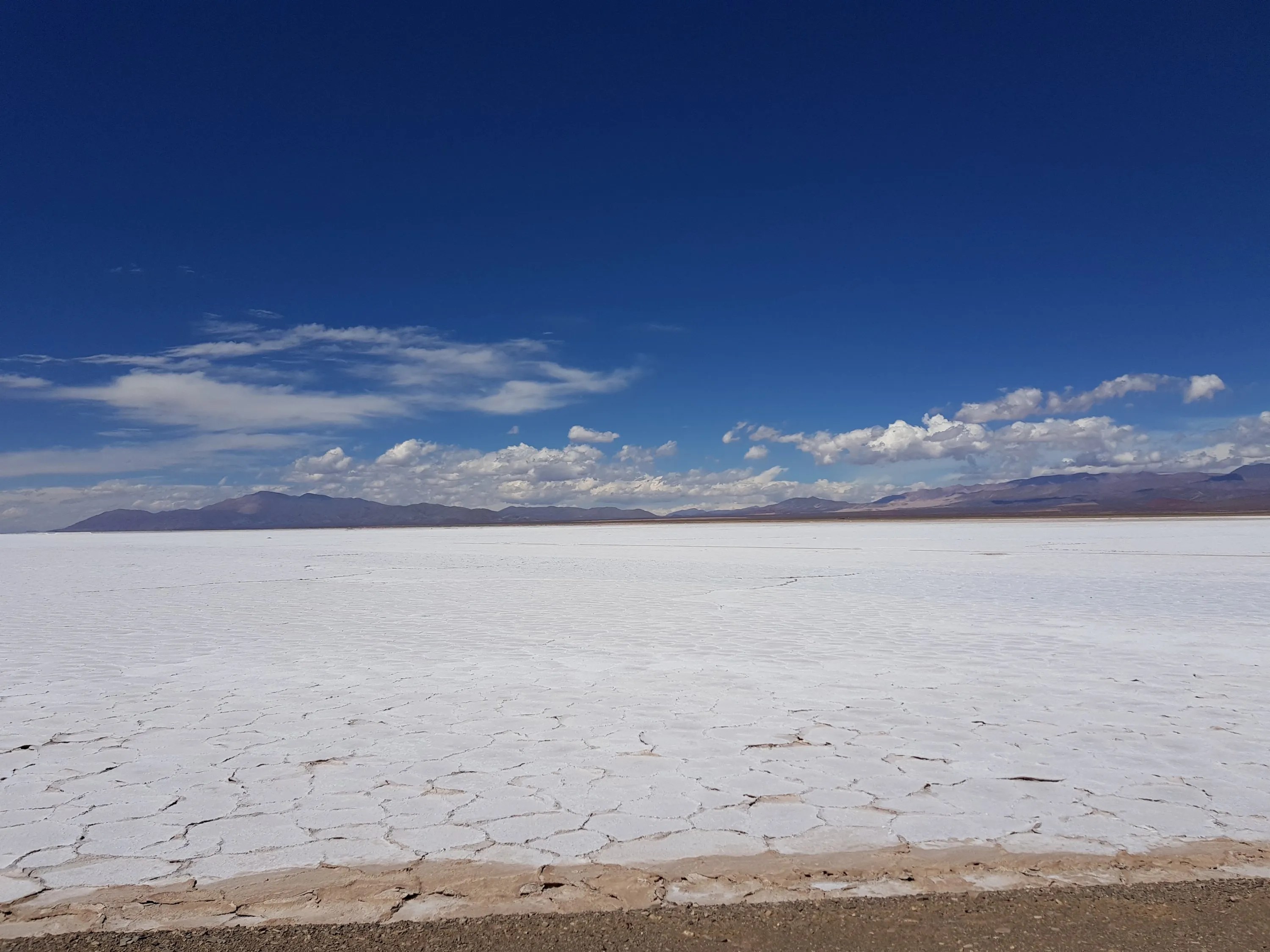
Driving across the salt flats in a 4×4 was pretty fun, and the view was like nothing else I’d seen before. SalardeUyuni is a dazzling dry lake of over 12,000 sq. kms, made of blinding white interlocking salt crystals. It is the world’s largest salt pan, and the white expanse was ridiculously bright; how one woman coped sans sunglasses I’ll never know!
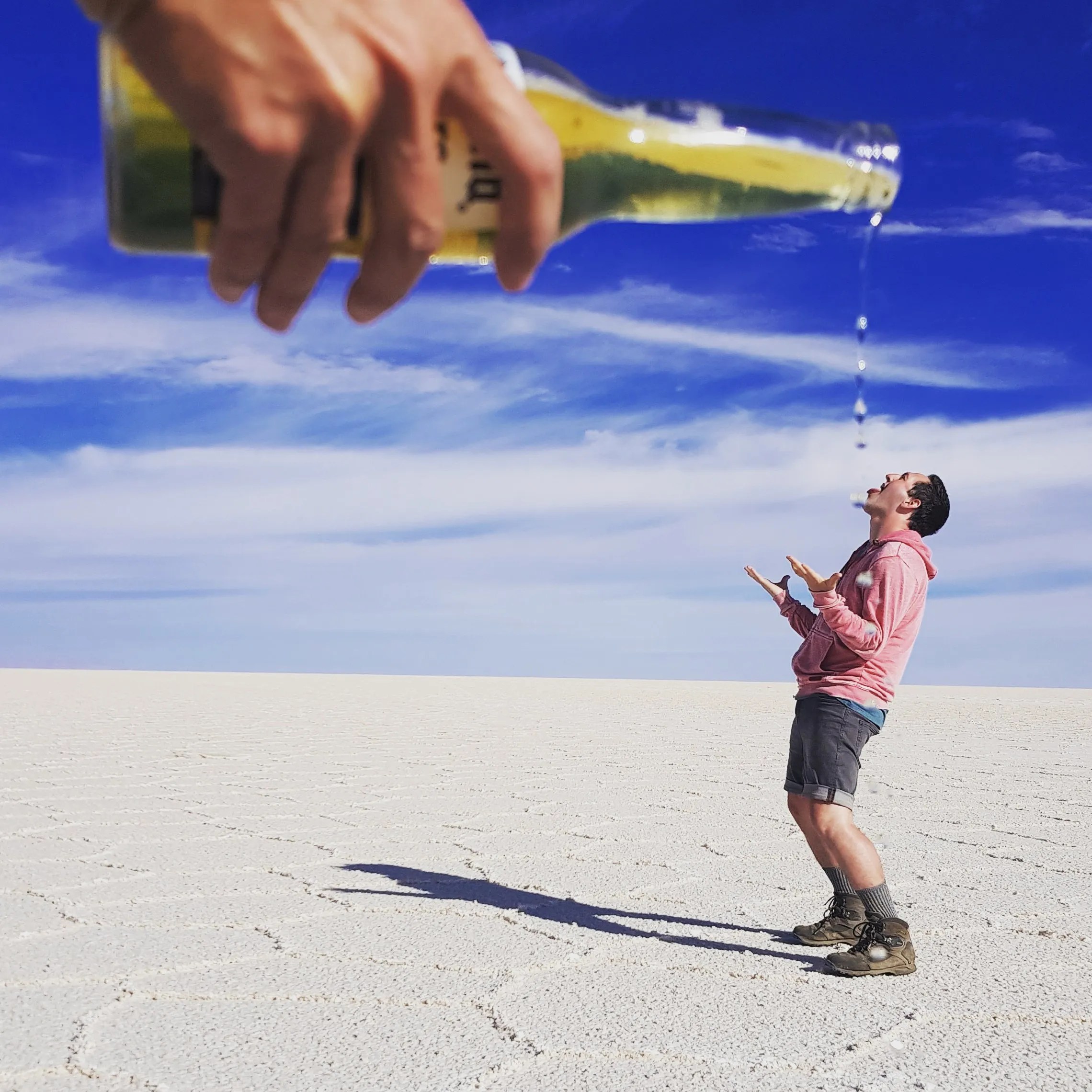
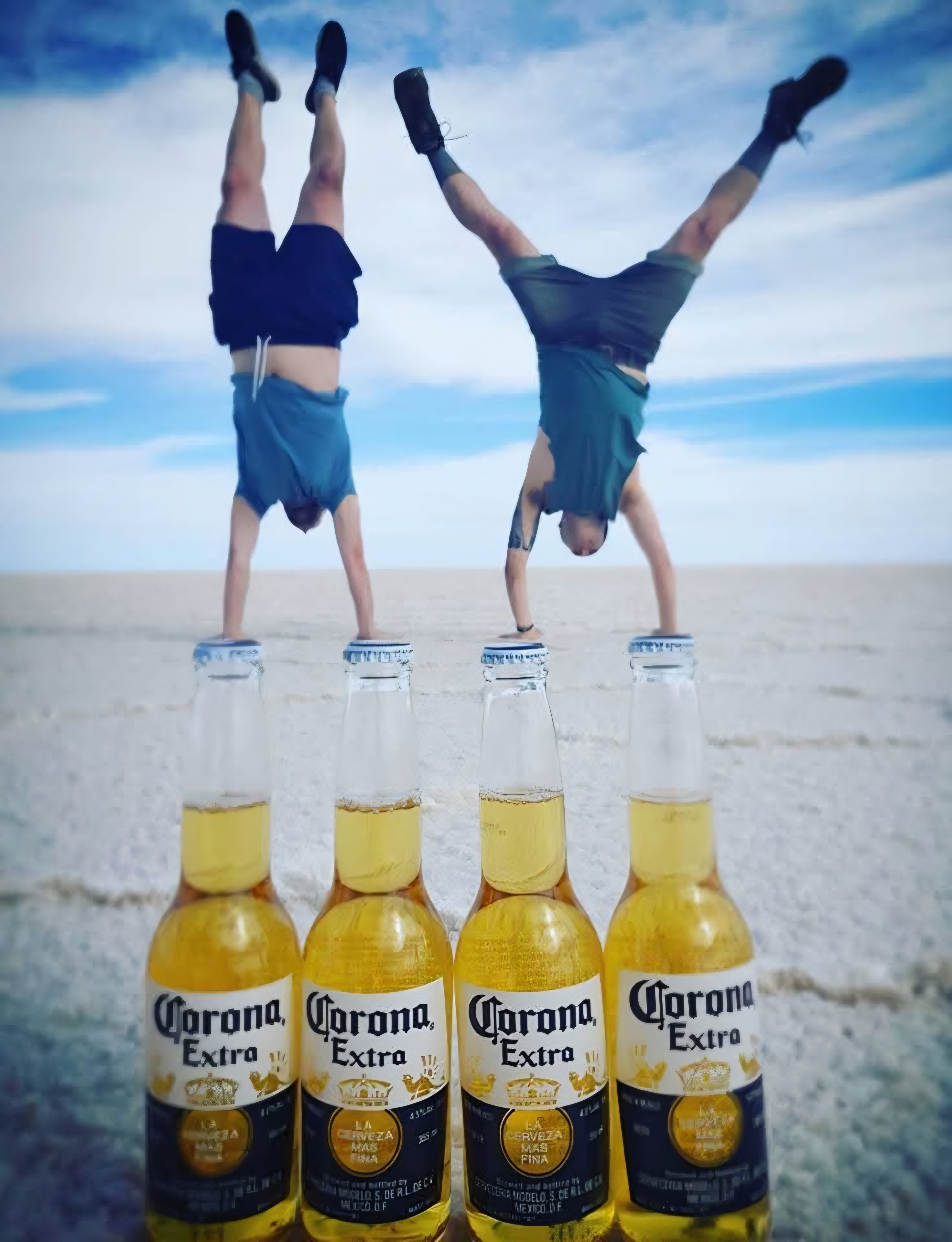
After a delicious lunch, we drove further out to unleash our inner David Bailey. Somehow I managed to fill a couple of hours with handstands on Corona bottles, while others were chased by Godzilla. I’m not sure what was more fun: being in the pictures or being behind the scene watching the weird set up and practice shots. If you’ve followed my blog from the start, you’ll know that I’m a fan of a jumping photo and this location didn’t disappoint as you can see.
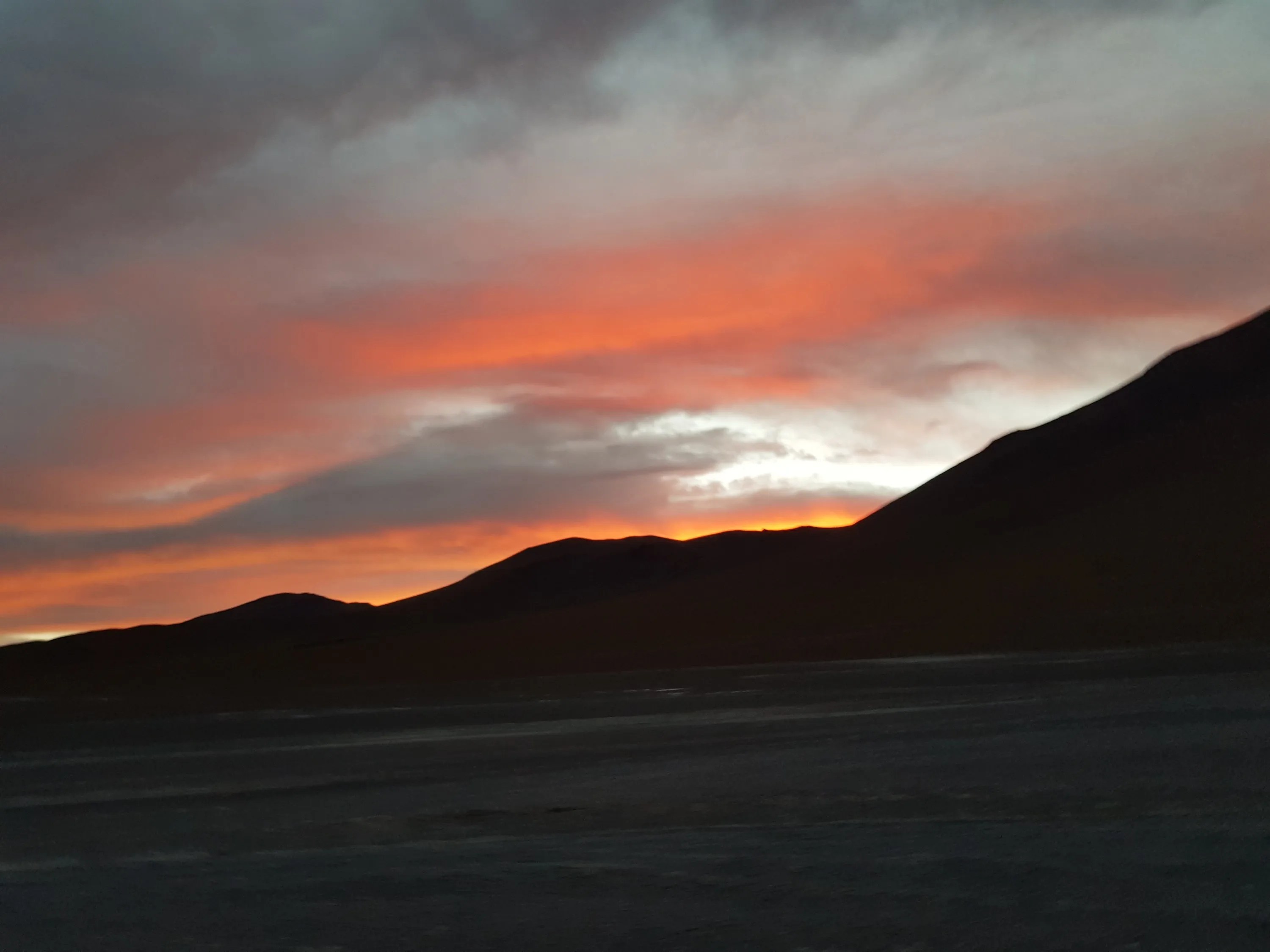
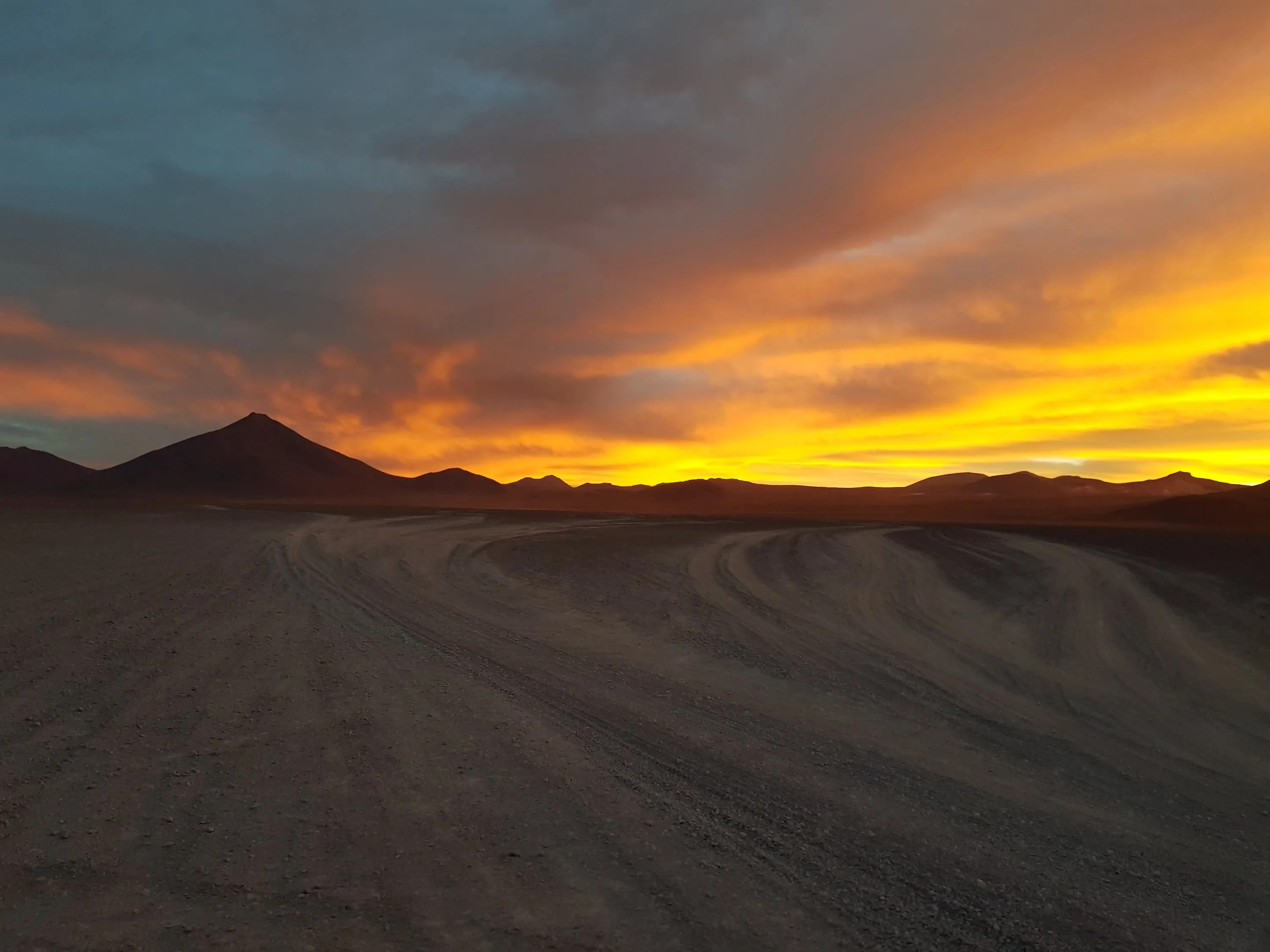
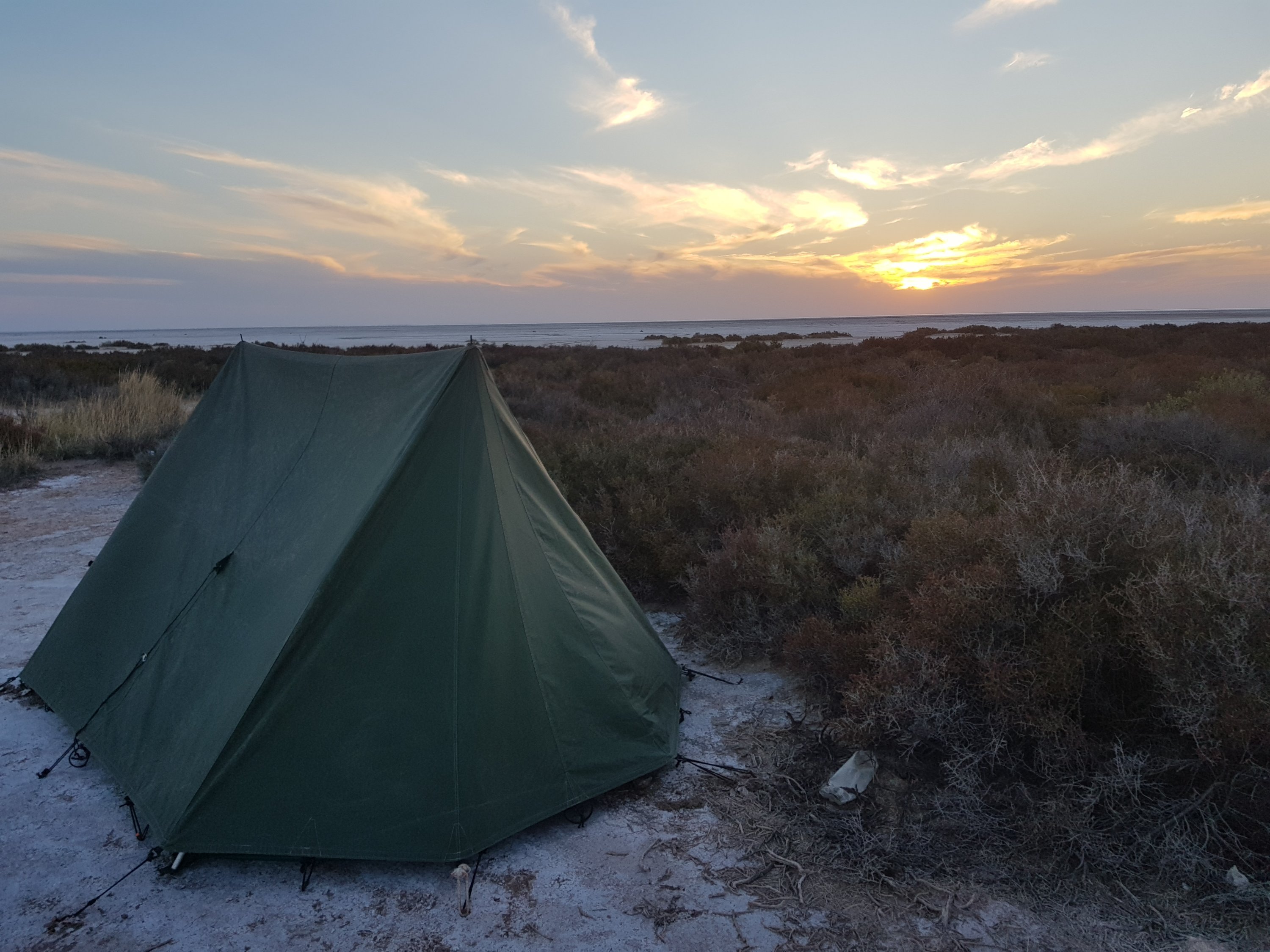
Once we packed up our photoshoot sets, we headed back towards the town, but not before appreciating an incredible sunset over the salt flats.
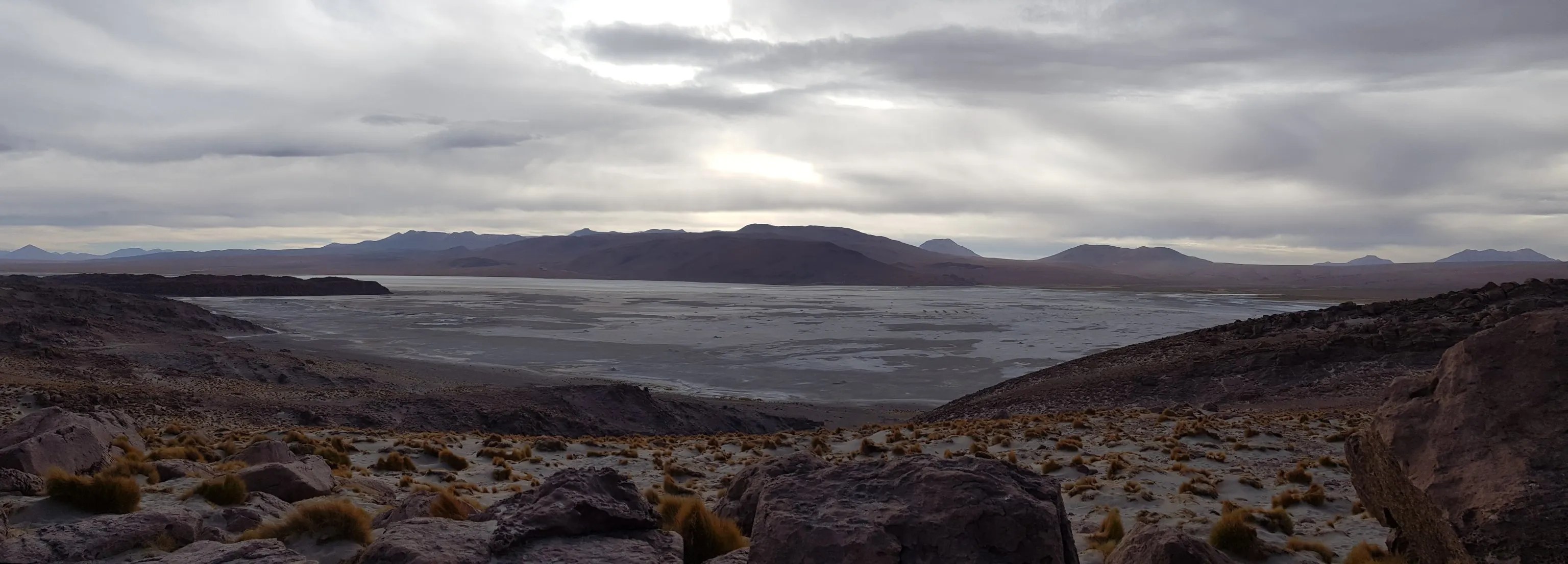
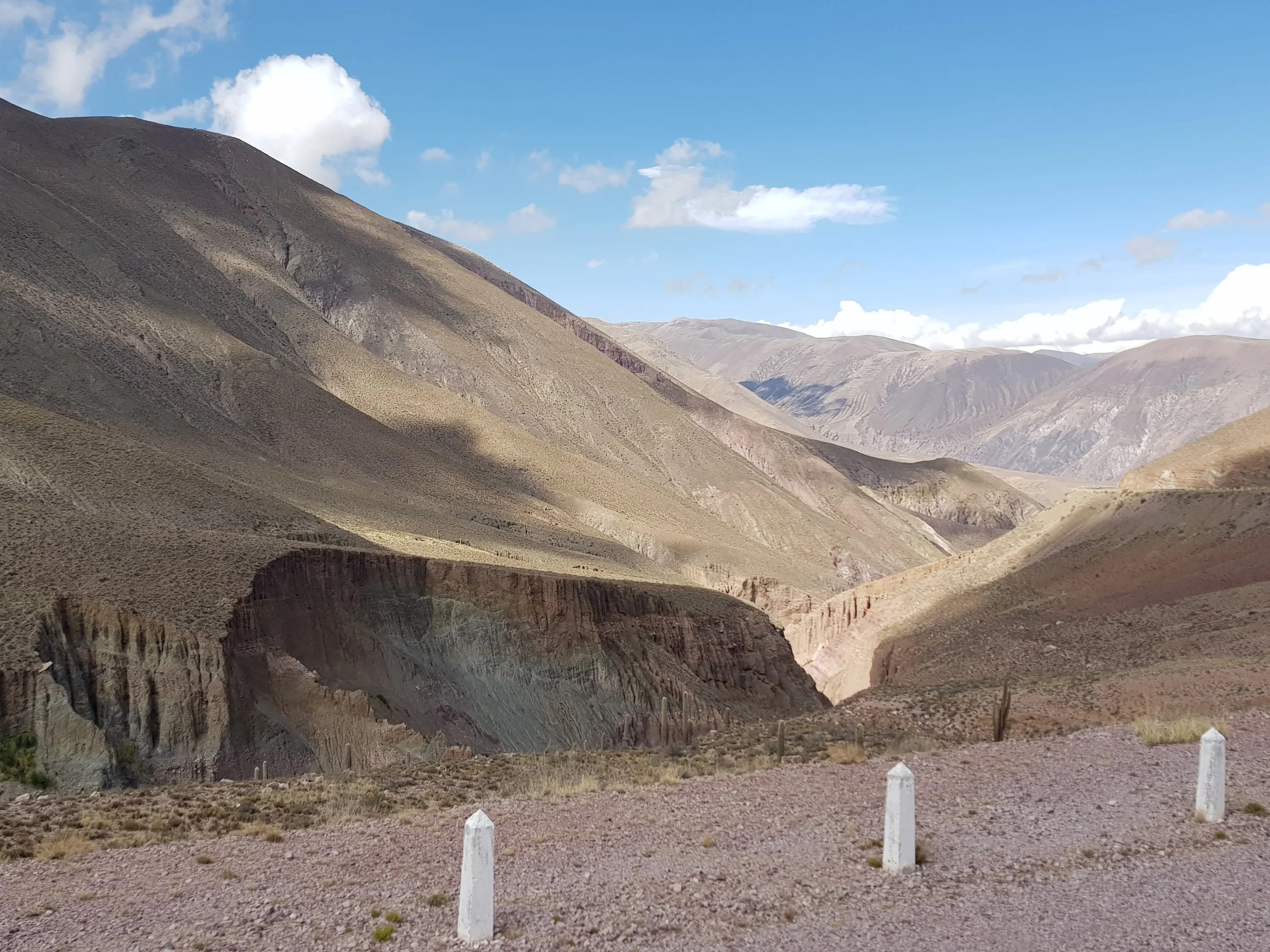
The following day we began the long drive into Chile, through the high Bolivian altiplano, a desolate landscape that is probably the most spectacular that we’ve been treated to on this trip. And that’s saying something! The journey, which took us past dazzling coloured lakes that were home to flamingos, llamas and vicuñas, was broken up with a night’s stay in a mountain refuge. After eleven hours on the road, the basic facilities were much welcomed, especially the dinner, although I tucked myself into bed well before the 85% Estonian vodka made an appearance!
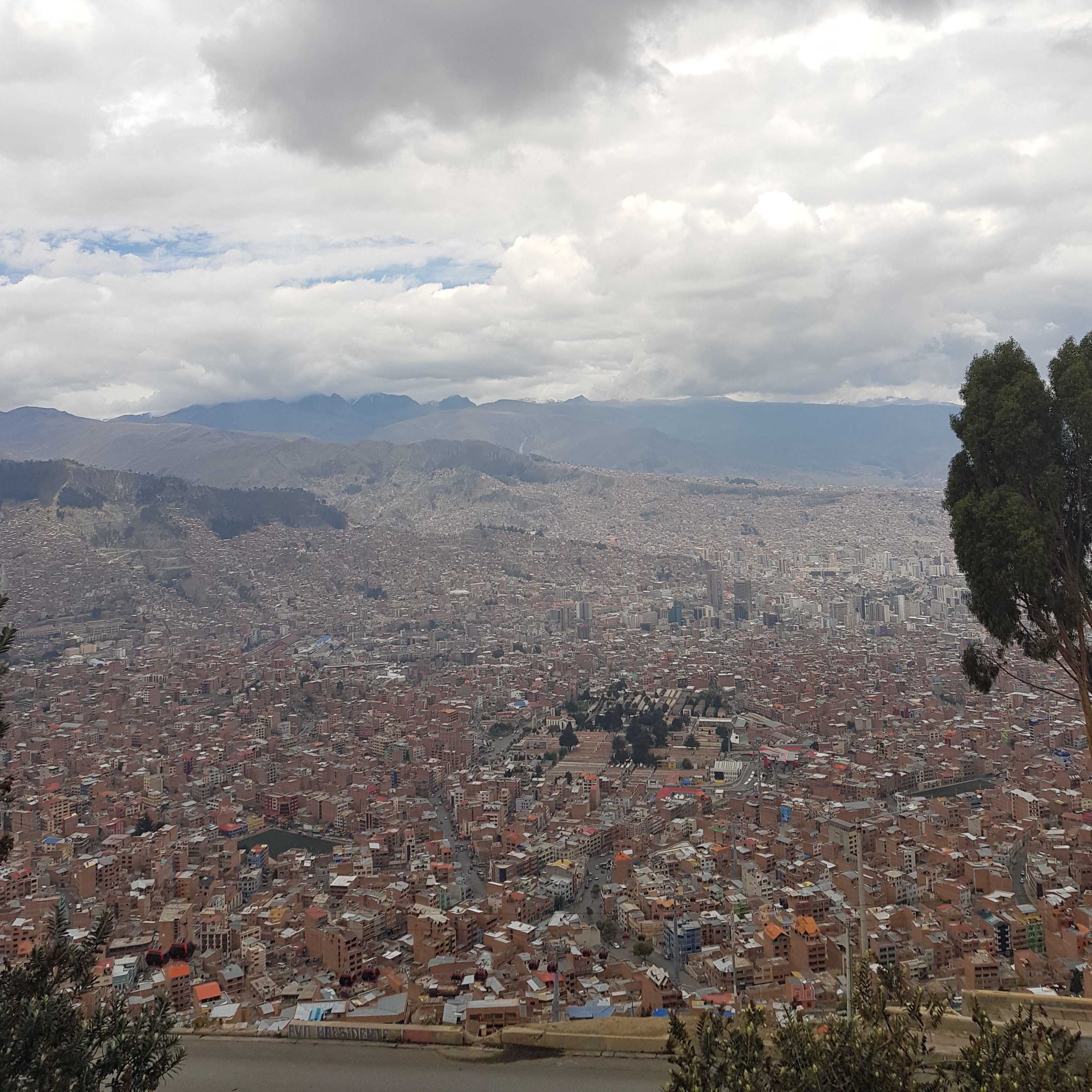
La Paz is the capital of Bolivia, and at 3,640m / 11,950ft, it is the highest administrative capital in the world. From a distance it reminded me very much of Quito, sitting as it does sprawled across a valley and encompassed by mountains. However, upon arrival downtown and on closer inspection, I realised the similarities ended there. It seemed to be a much more bustling city with more noise, traffic, dirt and people on the streets. After the last couple of weeks in sparsely-populated towns, it was an assault on the senses and quite welcomed. I met my Instagram buddy, Steven, for coffee and we wandered around the ‘Witches Market’ which is pretty much like most other markets in South America, apart from one rather macabre distinction: they sold llama foetuses, strung up at the entrance of the stalls. Some were large with fur and obviously removed just before birth, while others looked like bird skeletons and removed earlier on in the pregnancy. Steven is fluent in Spanish and we learned from the stallholder that the foetus is offered to the earth mother, Pachamama, when new buildings are erected. I think I’d prefer some champagne personally. It was fun getting to know Steven beyond Instagram pictures and we’ve promised to visit Mallorca and Amsterdam respectively once we’re both back in the real world.
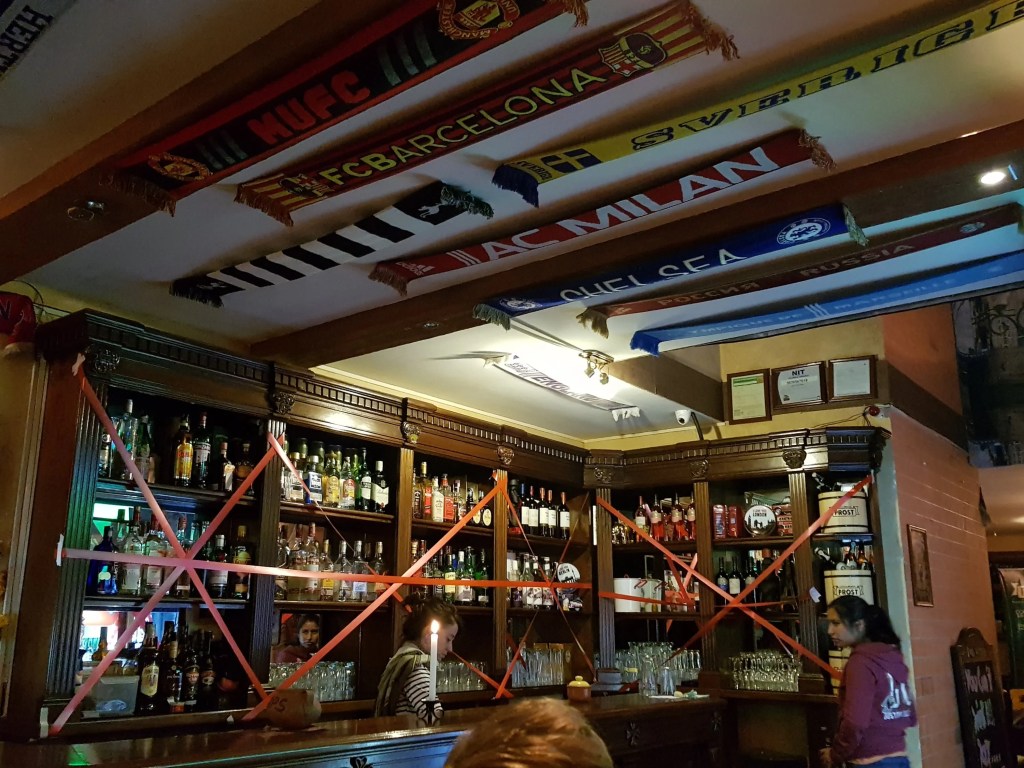
As it was the last night on the trip for many passengers, the hotel laid on a spread for us on the top floor restaurant which, with its neon orange and green colour scheme and formal matching tableware, looked like an Irish/Dutch wedding on speed. All crimes against interior design were soon forgotten once the free wine and food appeared, all of which was delicious. We were also treated to some traditional Bolivian dancing, although three of the four dancers looked like they’d rather be anywhere else than in the room with us, especially when their leader indicated it was time to pull up a gringo from our motley crew and teach them the movements. They were visibly relieved to be, um, relieved of their duties, and we headed into town to discover the city’s nightlife. We didn’t get too far as we were persuaded to visit ‘The English Pub, which was about as English as a native llama. A few too many pisco sours later and the group were either playing beer pong or dancing on the bar, which seems to be de rigeur on this continent.
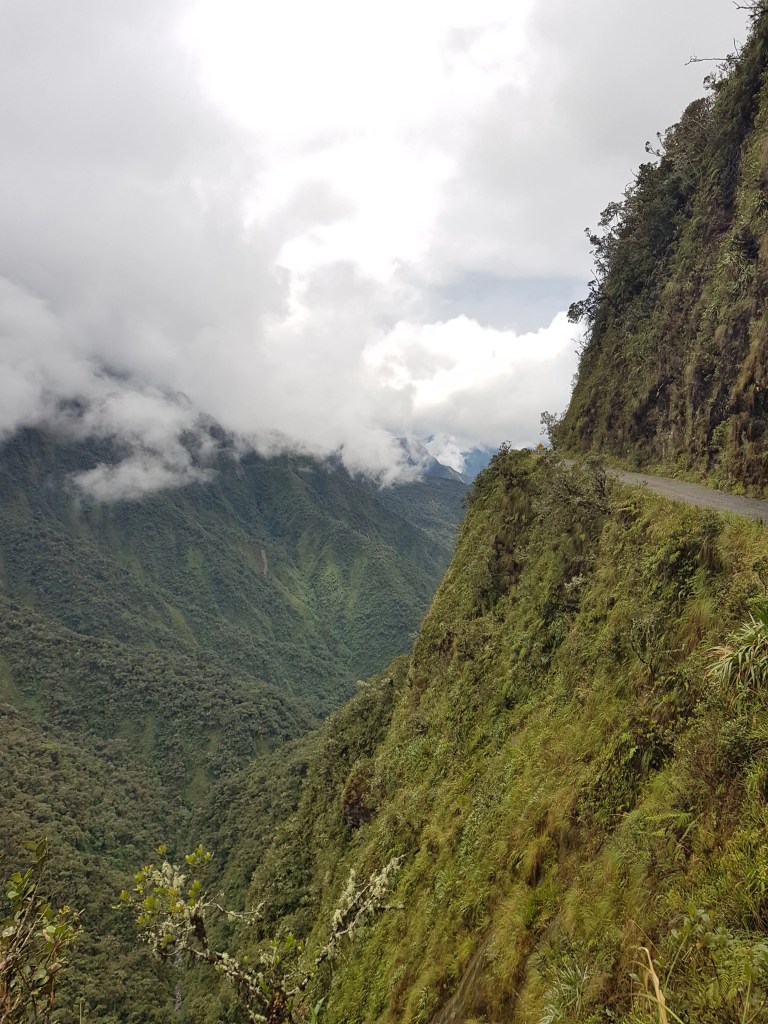
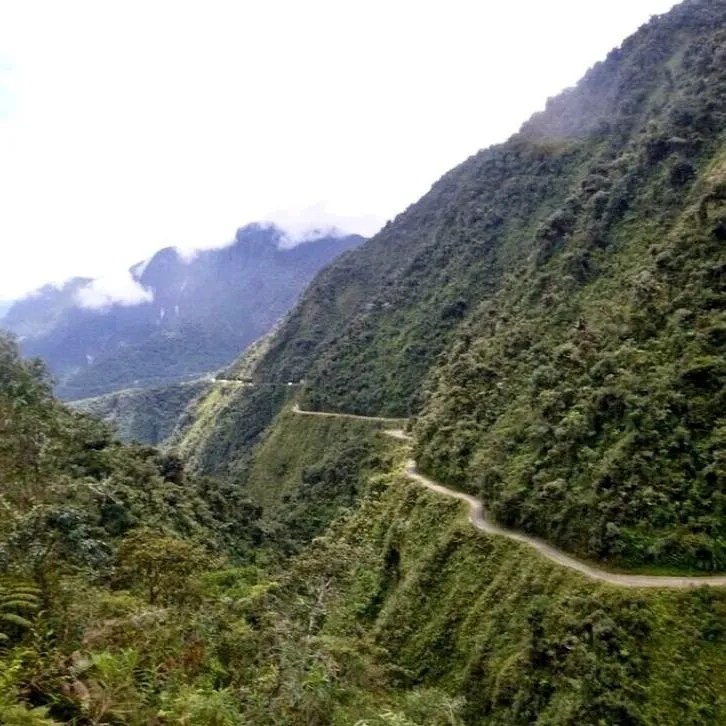
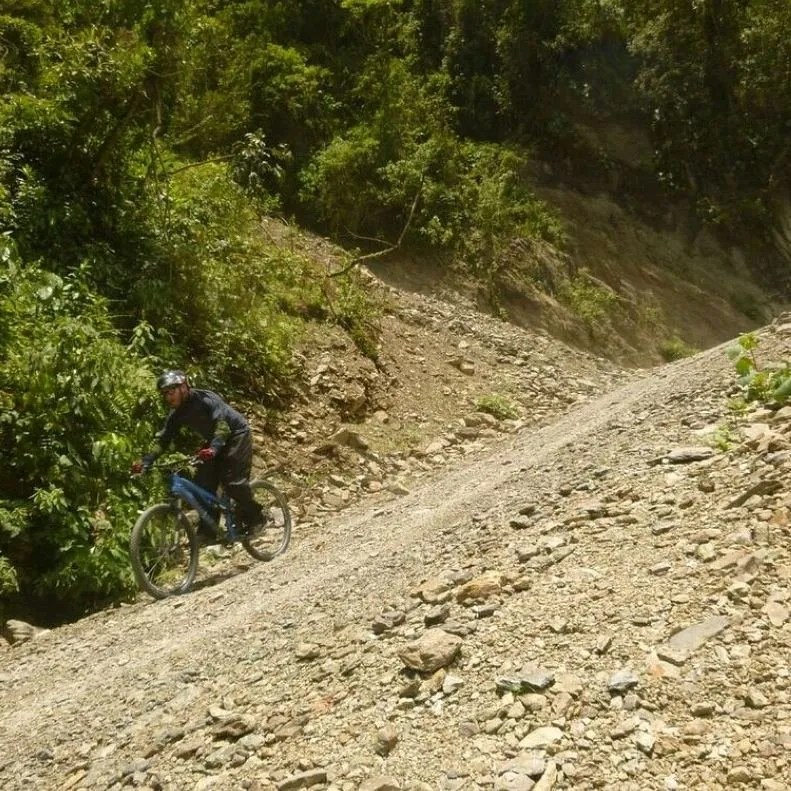
I called it a night at 0300 as my alarm was set for 0700 in order to join a mountain bike expedition along El CaminoDe La Muerte. In case your Spanish is as rusty as mine, allow me to translate: Death Road. We met our very sprightly guide, Linda from the Netherlands, and set off to the start of the route which would eventually descend 1,300m. Linda regaled us with stories of her very impressive cycling exploits while doling out protective gear, for which I would later become very thankful! The start of the ride was up in the clouds and bloody freezing, and was actually on the asphalt of the ‘new road’. For 22km we freewheeled down the winding road, taking in some stunning scenery, before reaching a tunnel which we bypassed to try our first ‘off roading’ of the day. We then jumped back on the bus for the short ride to the start of the ‘old road’ a.k.a. Death Road. The road winds itself down through the mountainside and several micro climates and is very narrow in parts, as in the width-of-one-car narrow! It’s incredible to think that it used to handle two-way traffic with various passing spots. Our other guide and photographer, Rodrigo, led the way and we gingerly followed, taking some time to learn to trust the bike over some pretty rocky terrain.
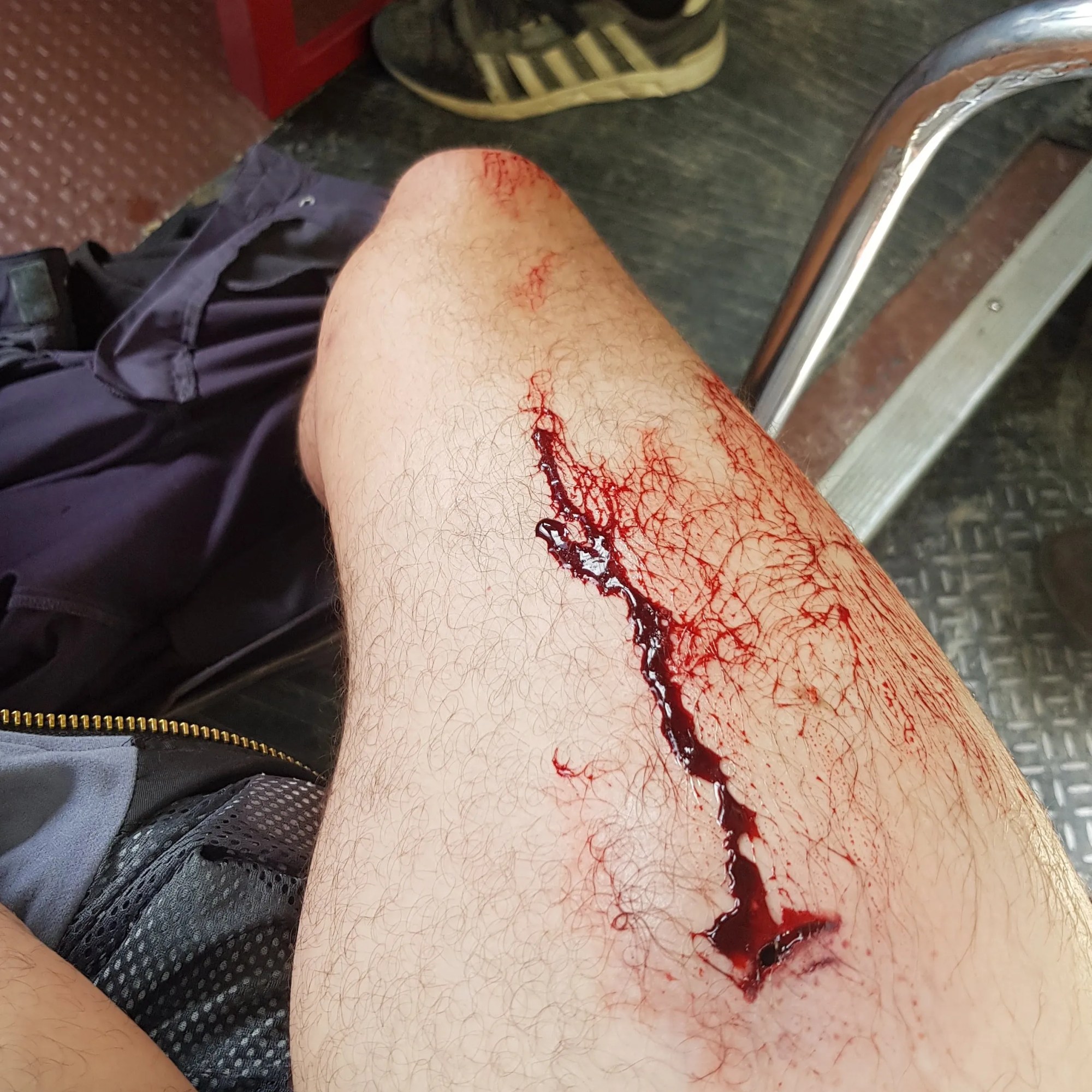
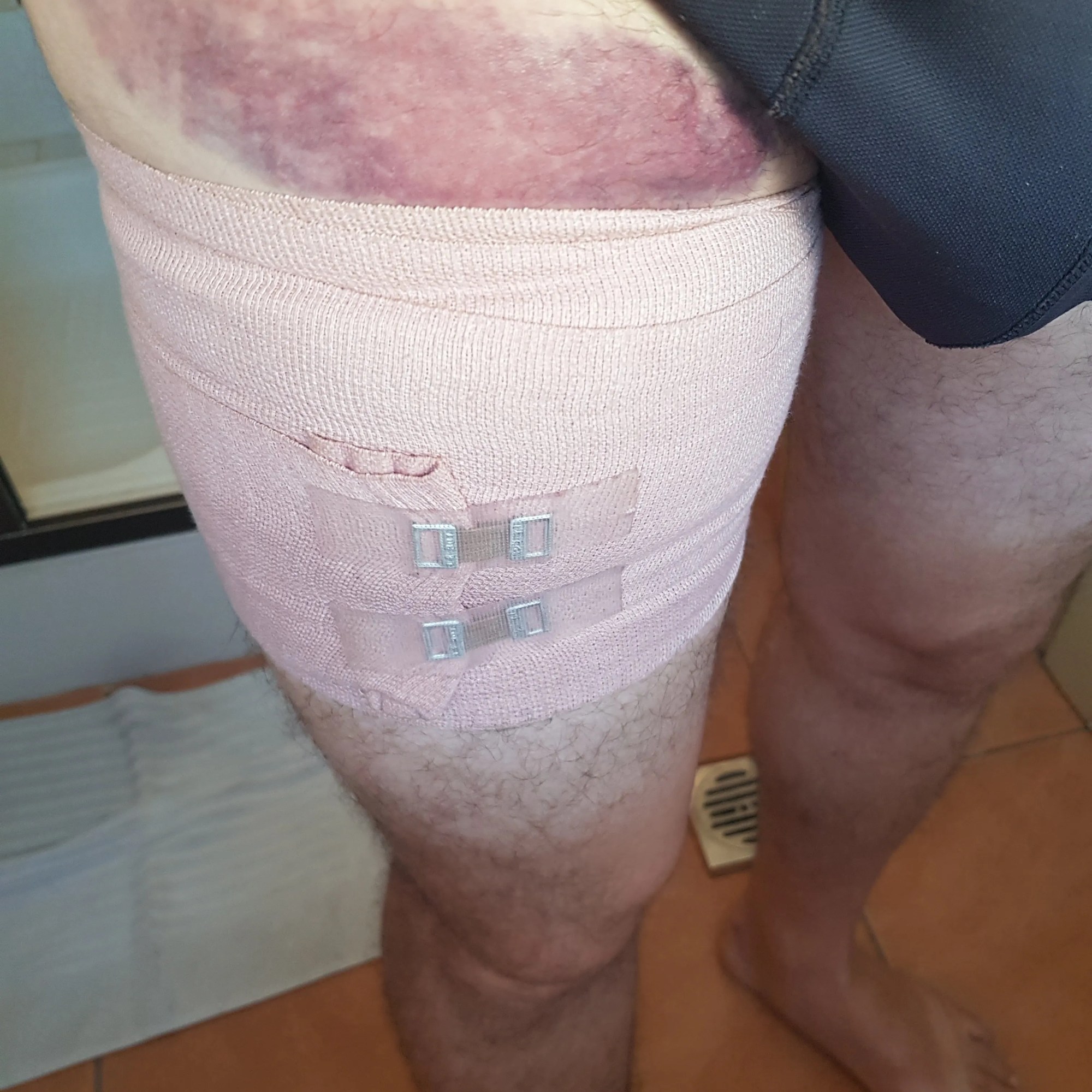
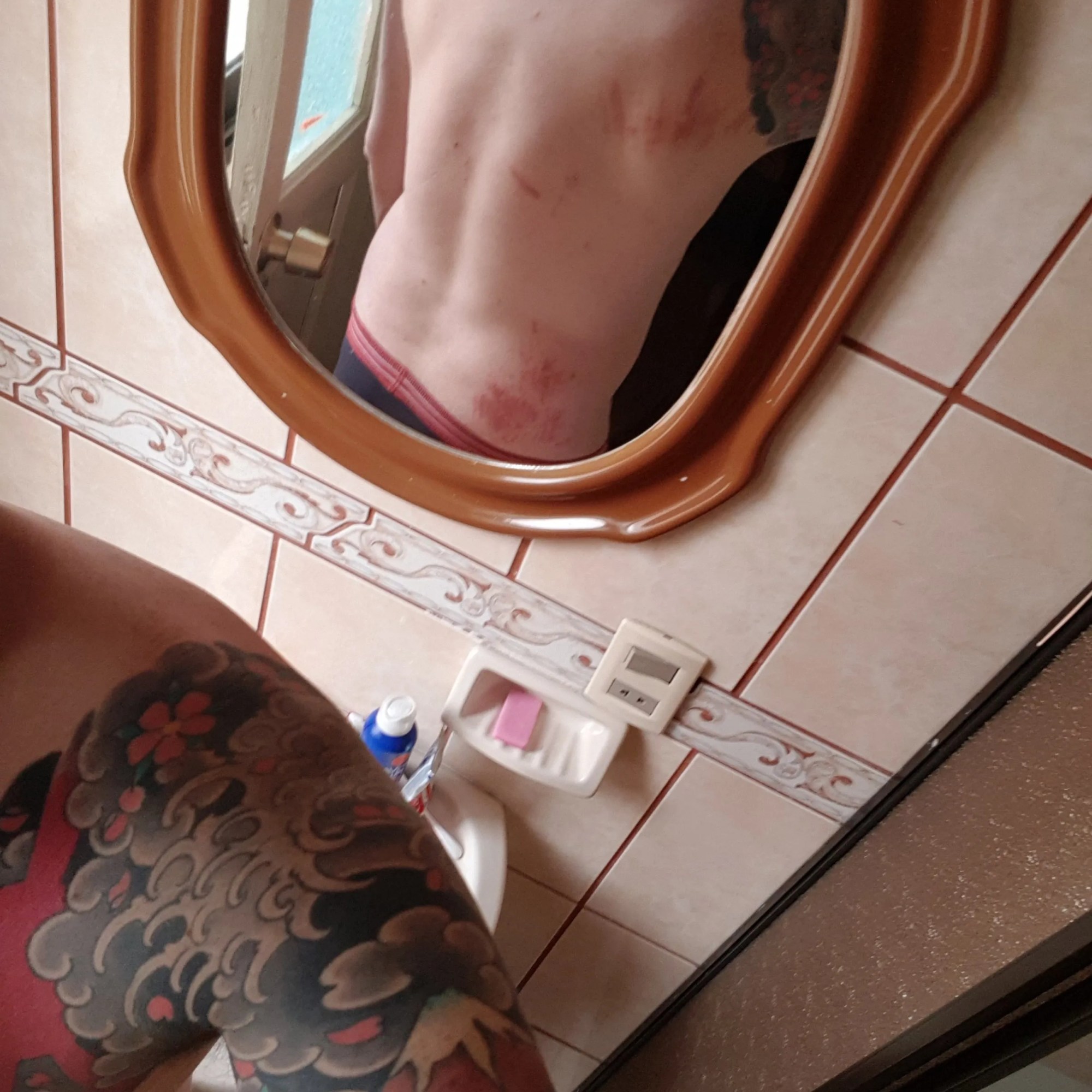
We all made it to the marathon point (42km) in one piece and stopped for snacks, after which we continued down the home stretch. On one of the fast downhill sections, my rear wheel got a puncture and luckily I managed to jump off the bike and land on my feet. Five minutes later, however, when the back wheel of my replacement bike skidded on a rock on a slow and innocuous section of the road, I was not so lucky. For some reason, as the bike fell it took me with it for several metres and we were locked in rather a painful embrace. Unlike at home in the Netherlands, I was wearing a helmet and therefore I folded my arms across my chest to protect my collarbone instead, which is often injured in a bike fall, and that meant Linda had to extricate me from the bike in which I was tangled. She was very calm as she asked me if anything hurt (yes; my leg and lower back), if anything was bleeding (I didn’t think so) and if anything felt broken (no). She asked if I could make it to our bus, which thankfully trailed behind us the whole way, and I thought I could. However, upon sitting up, we both saw the blood which was quickly soaking through the thick protective clothing and I realised (I guess the initial shock had masked this previously) that my right leg was in fact extremely painful. Linda and our driver, Santi, carried me to the bus and gently sat me down, before Linda proceeded to remove my trousers and shorts, giggling “it’s been a long time since I’ve taken off a guy’s pants”, to which I responded “me too love, me too”.
Once removed, we could see that the copious amount of blood (that thankfully was not spurting which Linda took to be a good sign) was coming from a narrow but deep cut in my thigh. We applied a compress and started the three and a half hour drive to hospital. I felt a bit ill and closed my eyes, each bump in the road bringing a louder ‘ouch’ than the one before. I was very impressed by the healthcare received in La Paz: I was met at the roadside by a porter with a wheelchair and was taken immediately to a ward where I waited all of forty seconds to be seen by Dr. Mayra. The medical staff all knew my name and why I was there thanks to the biking company who had obviously called ahead to forewarn them (“another stupid effing gringo who’s fallen off a bike” is how I imagined the conversation went). The whole experience was seamless. Thankfully Dr. Mayra’s first act of treatment was to give me some pain medication before inspecting and cleaning the wound. To be honest, cleaning the grazes was three most painful part of the treatment, more so than when I got my pretty large tattoo. Dr. Mayra was concerned that the depth of the wound may have resulted in a blood clot so I had to go for some tests, but thankfully all was clear, and three stitches, $173, and two hours later, I was in a taxi back to the hotel. A taxi ride which was more frightening than anything I encountered on the death road if I’m honest.
Ian had very kindly accompanied me to the hospital, and paid the bill as I didn’t have my bank card with me. We found a pharmacy near the hotel and went to collect the four sets of tablets prescribed. They wouldn’t take Ian’s card and asked if we could pay cash, in response to which I took out a wad of notes that were stuck together with congealed blood, demonstrating why I was there in the first place. Miraculously, the pharmacist said she would take the cash, albeit with a disgusted look on her face.
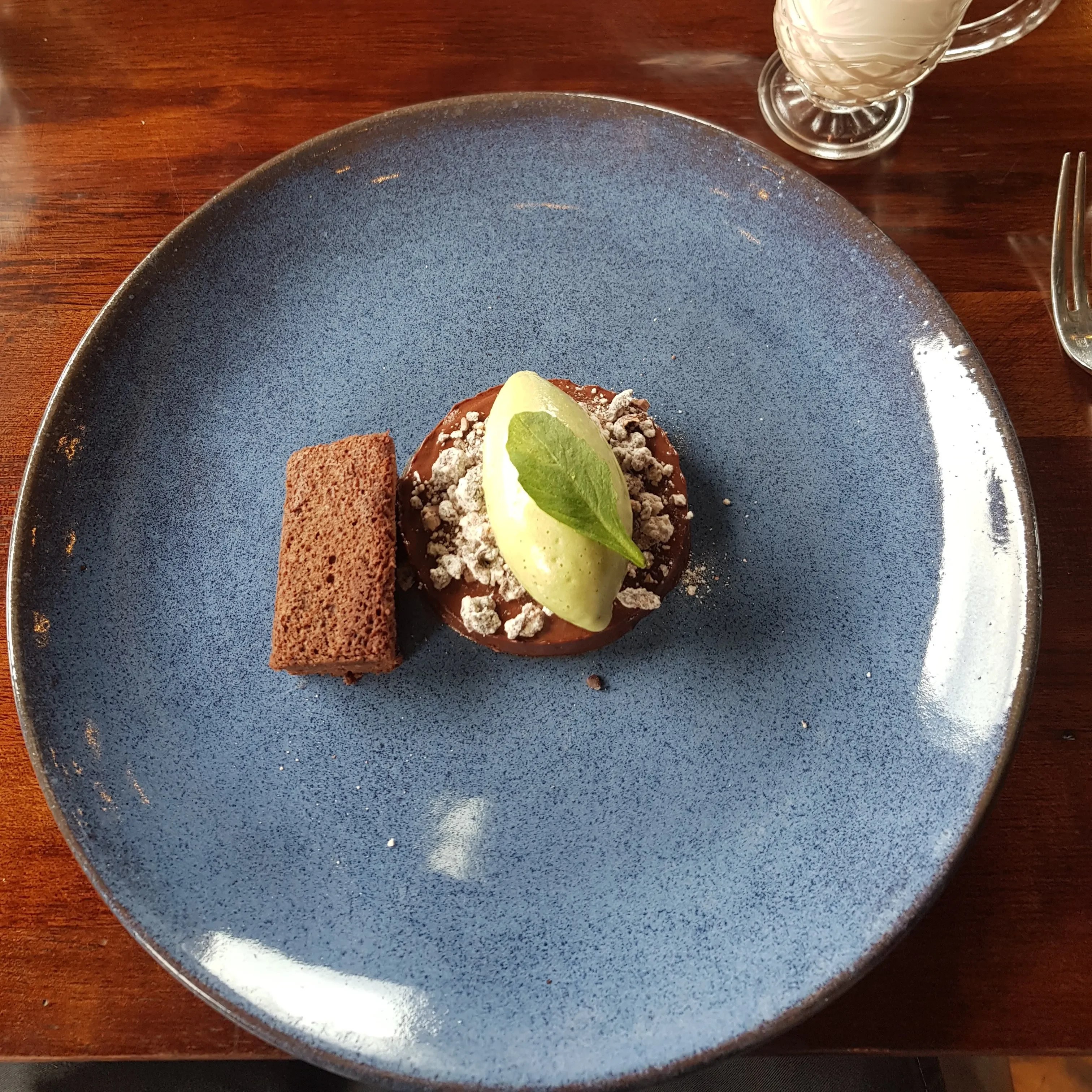
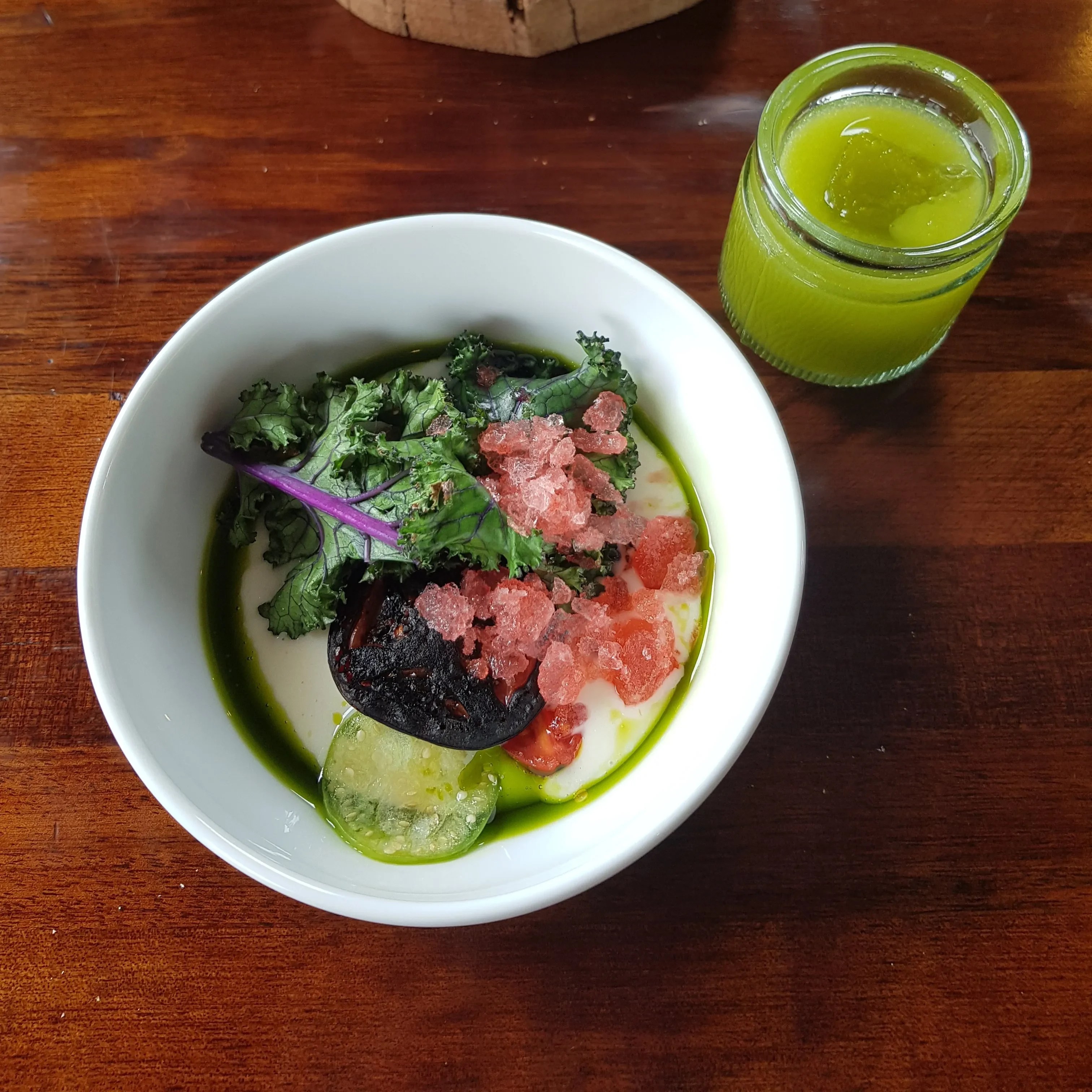
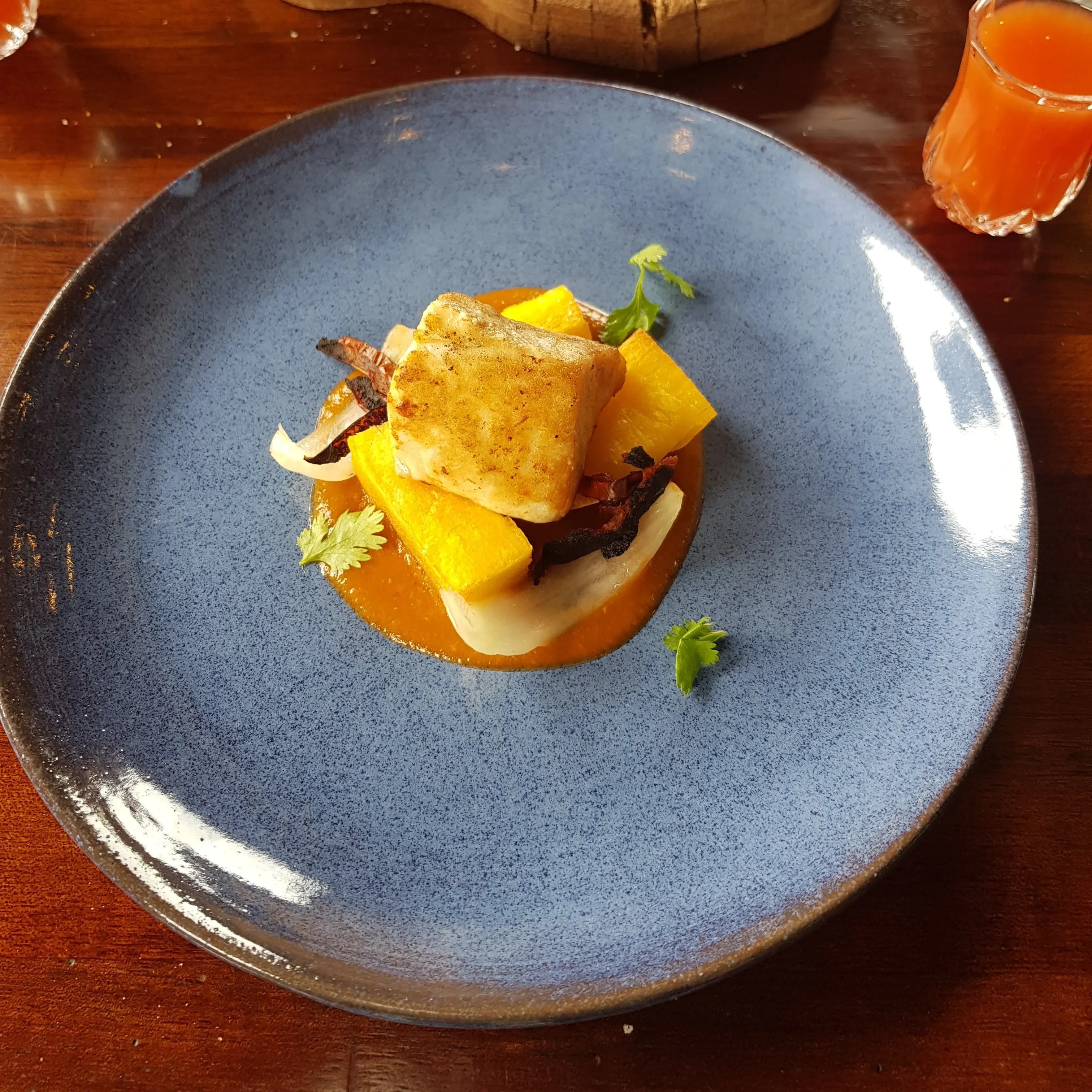
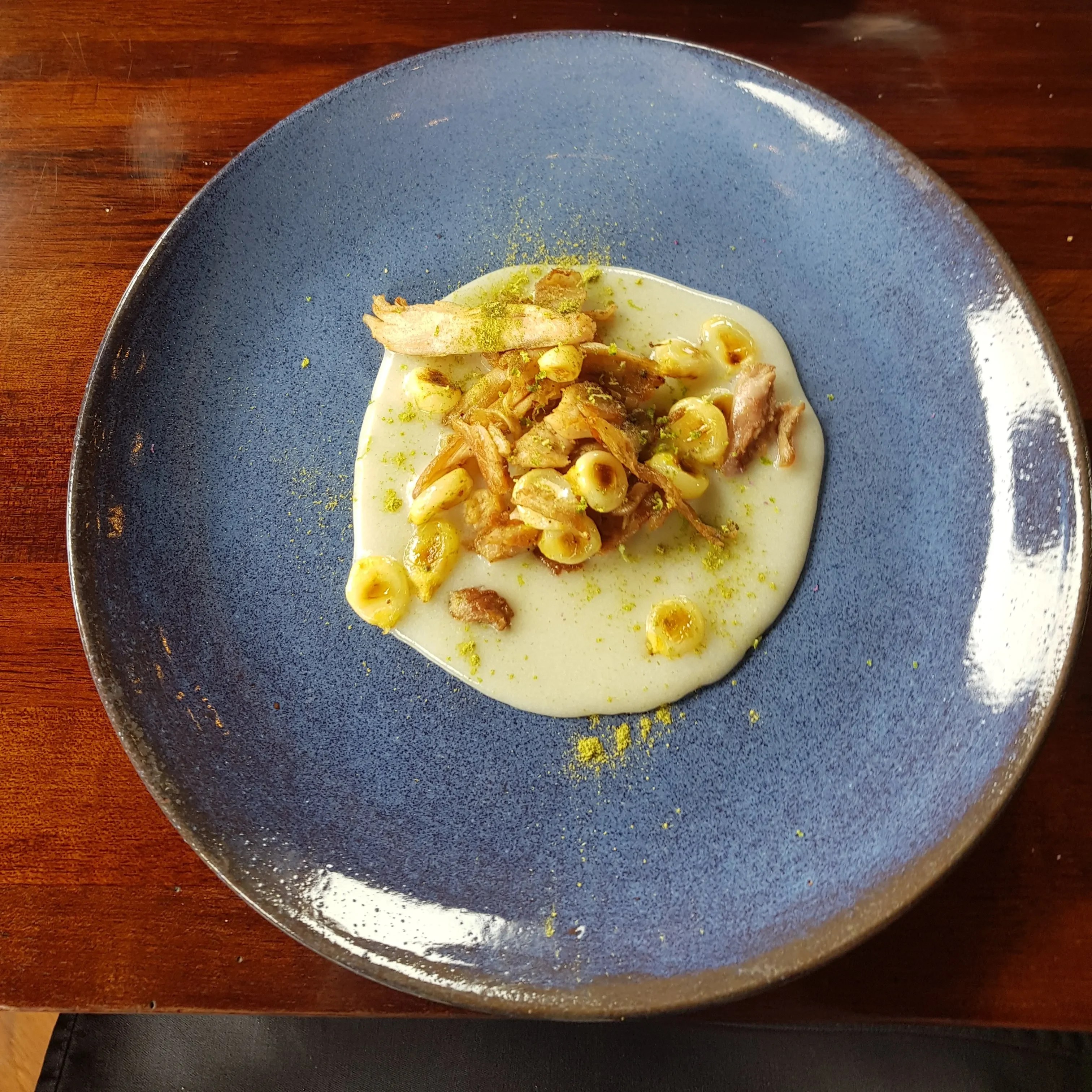
On a previous trip, Ian met a girl called Cat, who joined our tour in La Paz and is staying with us for three weeks until Santiago. Cat is lovely and I felt really guilty at monopolising Ian on the first day of their reunion. Thankfully, the opportunity to make it up to them both presented itself the very next day when I took them for lunch at Gustu, La Paz’s only Michelin starred restaurant. We opted for a tasting menu, although the wine pairing was ‘prohibido’ due to the election on the following day. The meal was delicious, as were the soft drink pairings, and I was pleased to hear lots of exclamations of pleasure coming from Cat’s mouth (although I’ve since discovered this happens pretty much any time a plate of food is put in front of her).
The following day another group from our tour decided to tackle the Death Road, this time resulting in one person fracturing their collarbone and requiring a three day stay in hospital to insert a metal plate; and one woman went over the side of the cliff and had to be roped up by the guides. Miraculously she only ended up with a few grazes on her leg. A couple of others also fell off the bikes but thankfully received no injuries. Our tour leader said that he’s never had any fallers before and I’m guessing he wasn’t expecting five in two days! I have to say that the touring company, Dragoman, and the cycling company, Gravity Tours, were both amazing. If this blog post hasn’t put you off, I’d highly recommend both.
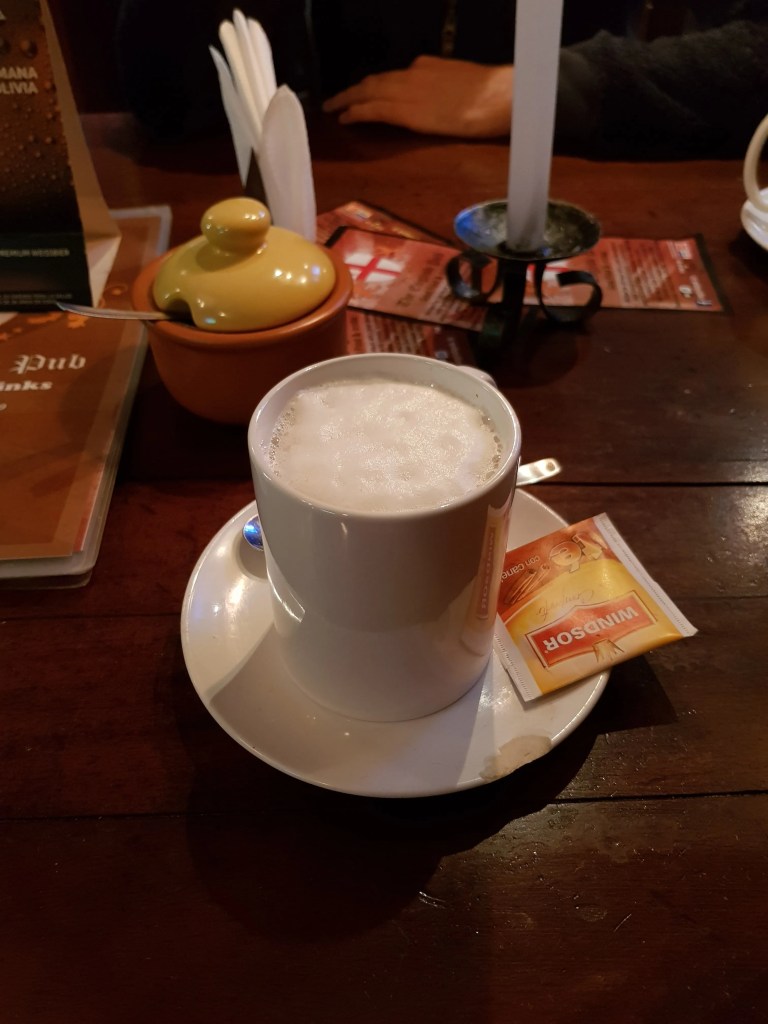
Needless to say the next couple of days were spent resting in a drug-induced fug, although I did manage to make it to the restaurant next door for a plate of picque machu, a meat and eggs dish, that I shared with Cat, and which was delicious. I really fancied a beer – for medicinal purposes of course – but unfortunately, the three day alcohol ban was still in force. Or so it seemed until our waitress waved a piece of paper under our noses advising we could have beer, but it will be disguised as a coffee. As you can see from the photo below, the ‘beeracino’ was quite convincing, although the unused tea bag which adorned the saucer kinda gave the game away!!
Having spent two incredible days in Chile, it was time to head to Argentina, but thankfully the final seven weeks of my trip will be spent criss-crossing the two countries and I’m already looking forward to seeing more of Chile. After a short drive, we crossed the border at Paso Jama. Well, we attempted to cross the border, but the Argentinean authorities weren’t playing ball for some unknown reason so we went back to the truck and entertained ourselves by eating lunch and playing football. After some enquiries by the tour leaders, we were eventually allowed to drive through, some three hours after arriving. It was then another six hours or so on the road to Salta where we would stay for a couple of nights. I wasn’t feeling particularly energetic during our time there, although I was entertained watching a Manchester United fan watch the Manchester derby in a local bar (they lost, hurrah!).
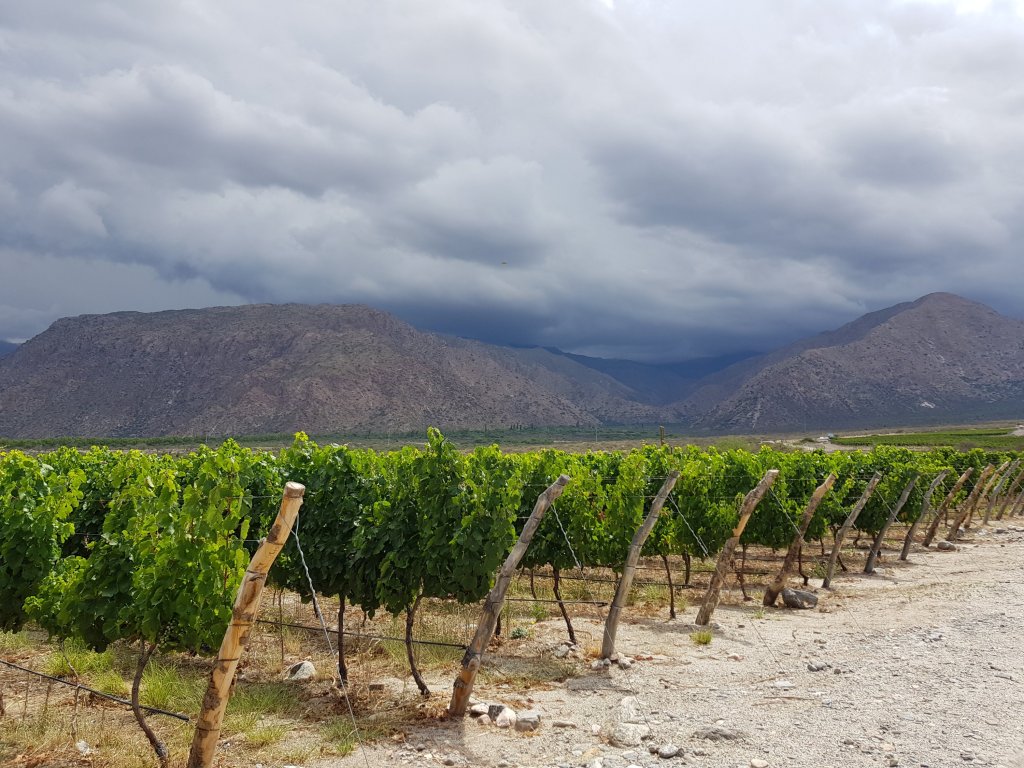
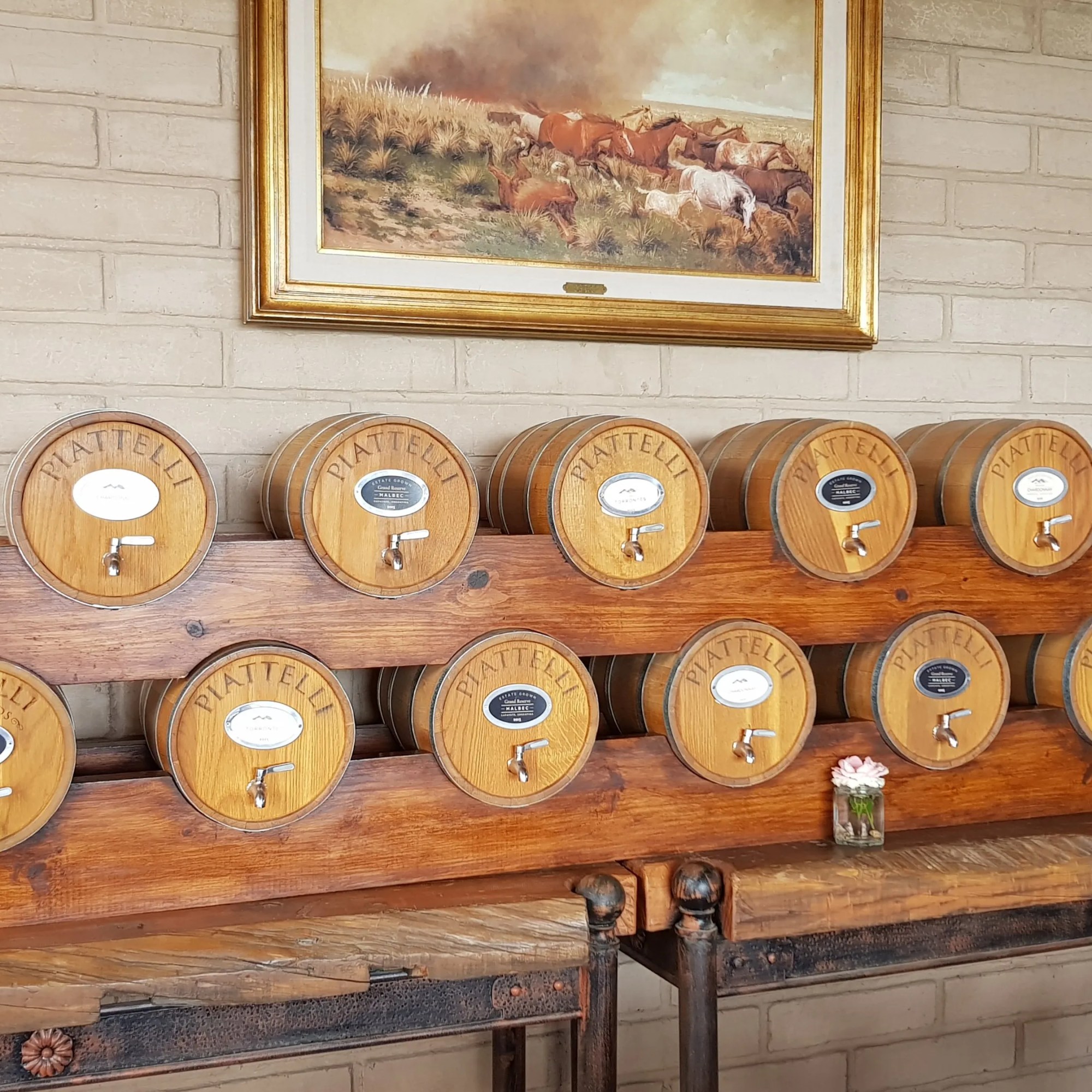
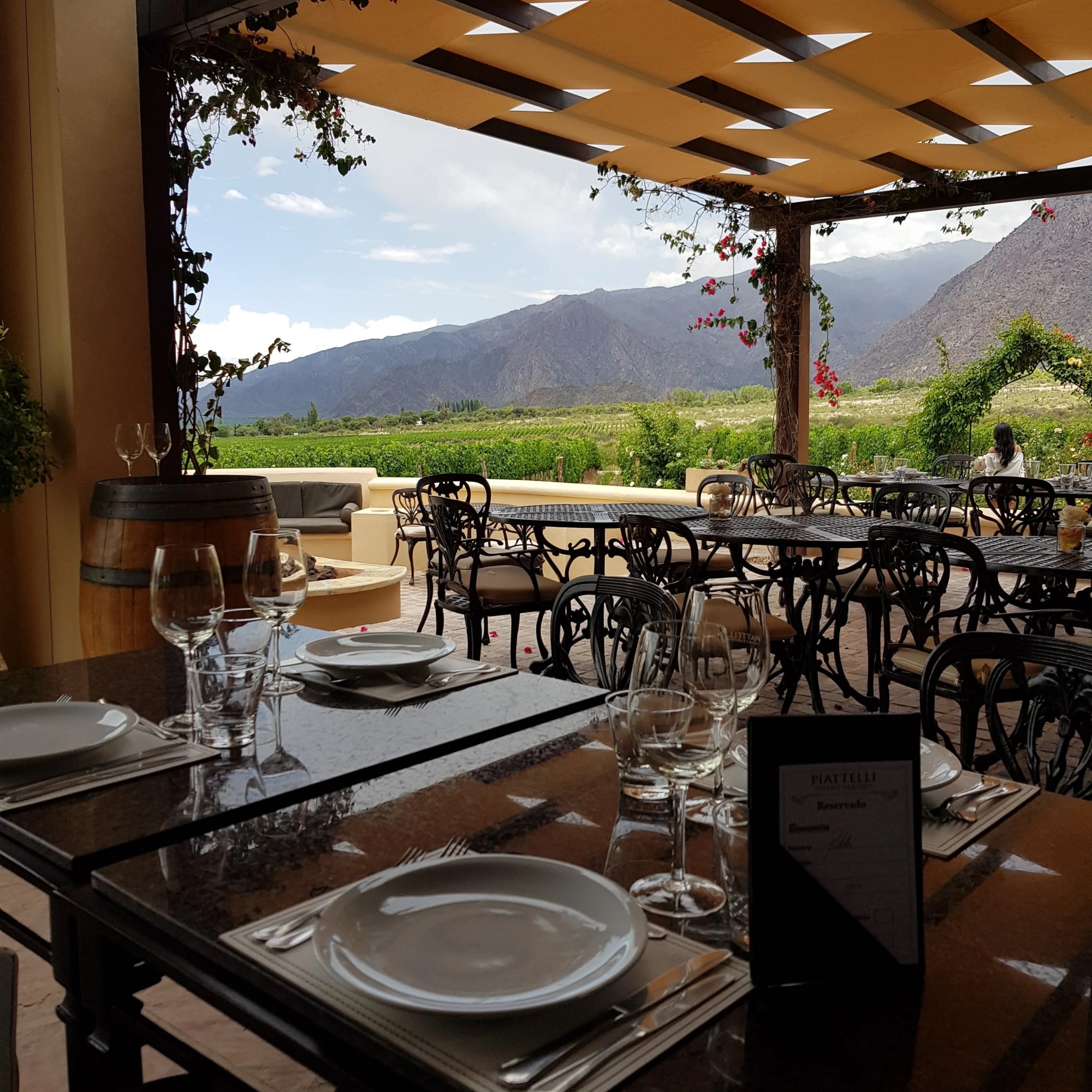
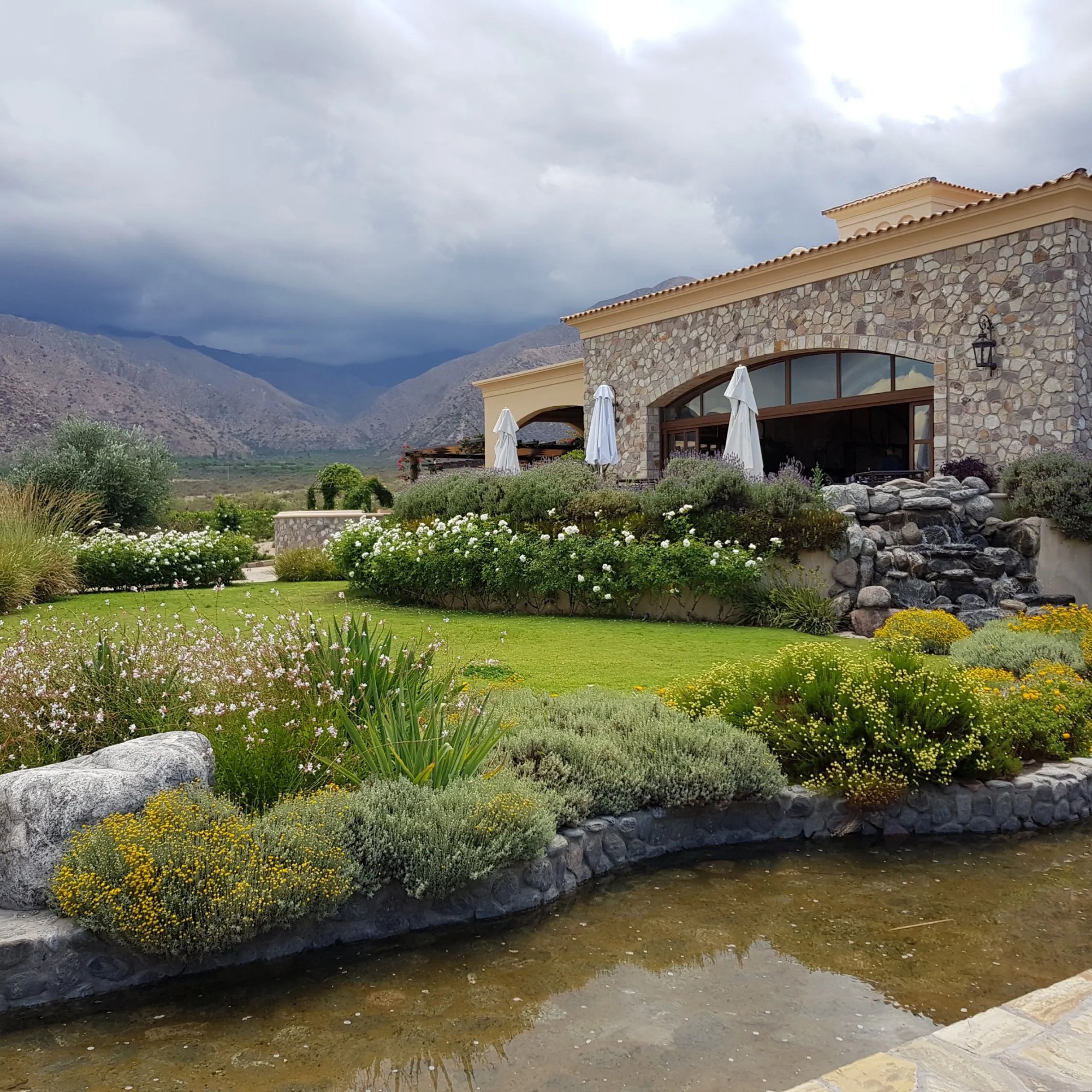
We then drove through the spectacular rock formations of the Quebrada de las Conchas, with a night’s bush camping on the way, to reach the peaceful town of Cafayate. The small town is the centre of one of Argentina’s principal wine producing regions, famous for the quality of its Torrentes and Tannat wines, although I wasn’t a fan of either. However, just to make sure, we went to a local producer, Piatelli, for a delicious lunch and wine tasting.
My roommate, Riley, doesn’t drink and the waiting staff didn’t realise to begin with, but I ensured no wine went to waste. The grounds of the vineyard were beautifully kept and it felt like a real treat, especially given that we were staying at a very basic campsite that evening. However, THE BEST THING TO EVER HAPPEN IN MY 38 YEARS HAPPENED THERE!
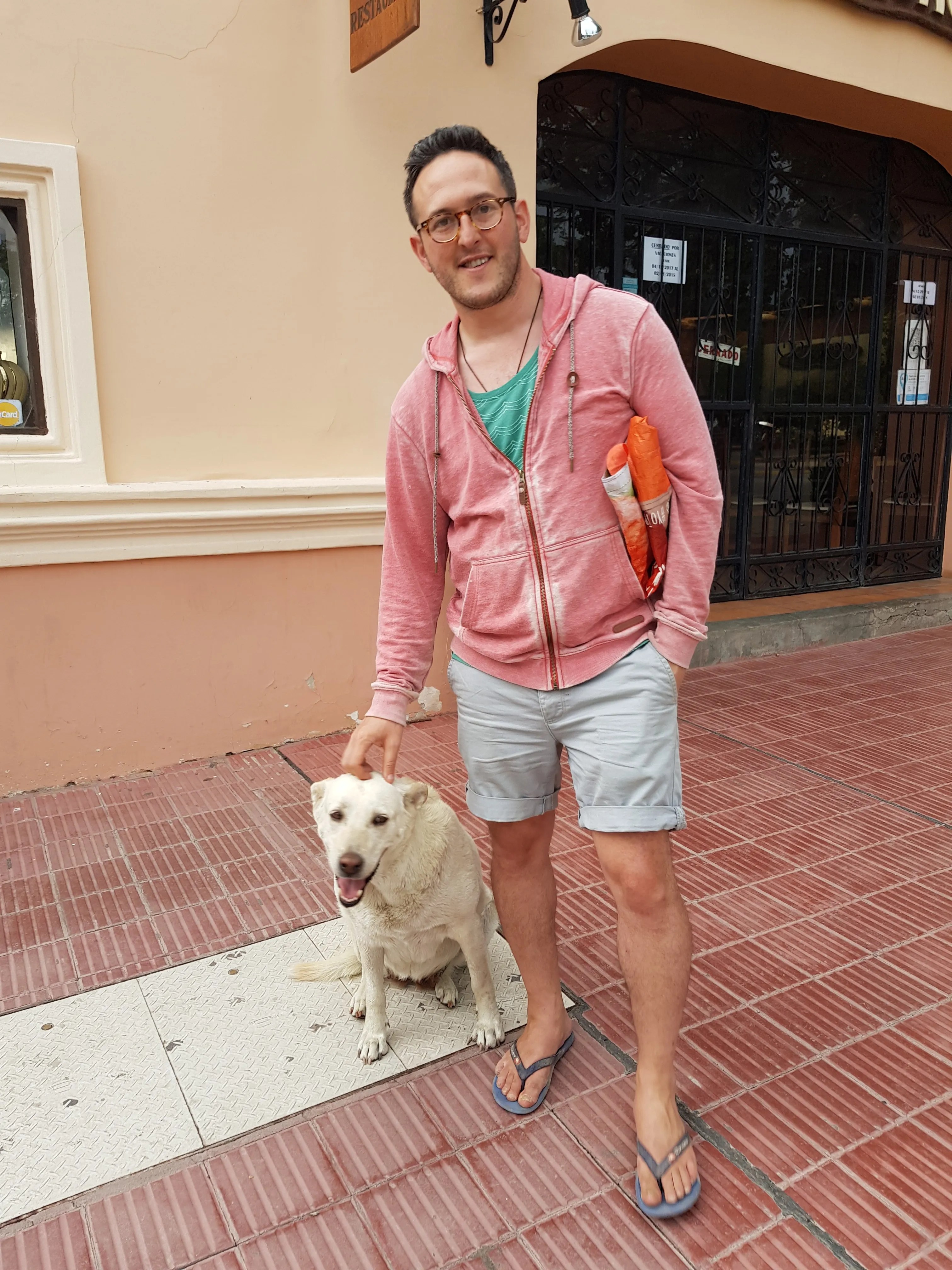
There were a few dogs at the campsite and, as usual, they were very placid and friendly. One bitch seemed to take a particular liking to me and as we left to go to the supermarket she decided to follow. At one point, she ran off barking at another dog on the opposite side of the road, but with one yell from me she came back to us. I was pleasantly surprised. Upon arriving at the supermarket, I assumed she’d sit outside awaiting our return, BUT NO! SHE CAME INTO THE SUPERMARKET WHILE I SHOPPED.
I never want to shop any other way. It’s really lovely to see how well dogs are treated here (well, the further south you go from Ecuador at least). You see them hanging around in and outside of stores and there are often old food containers full of water for them.
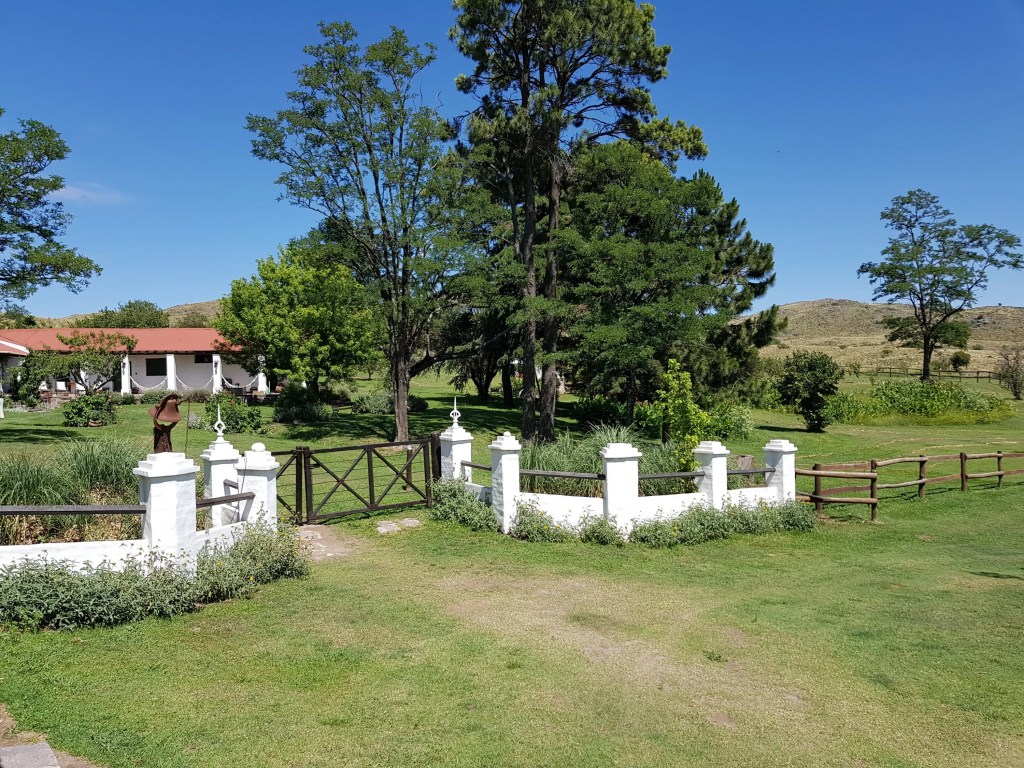
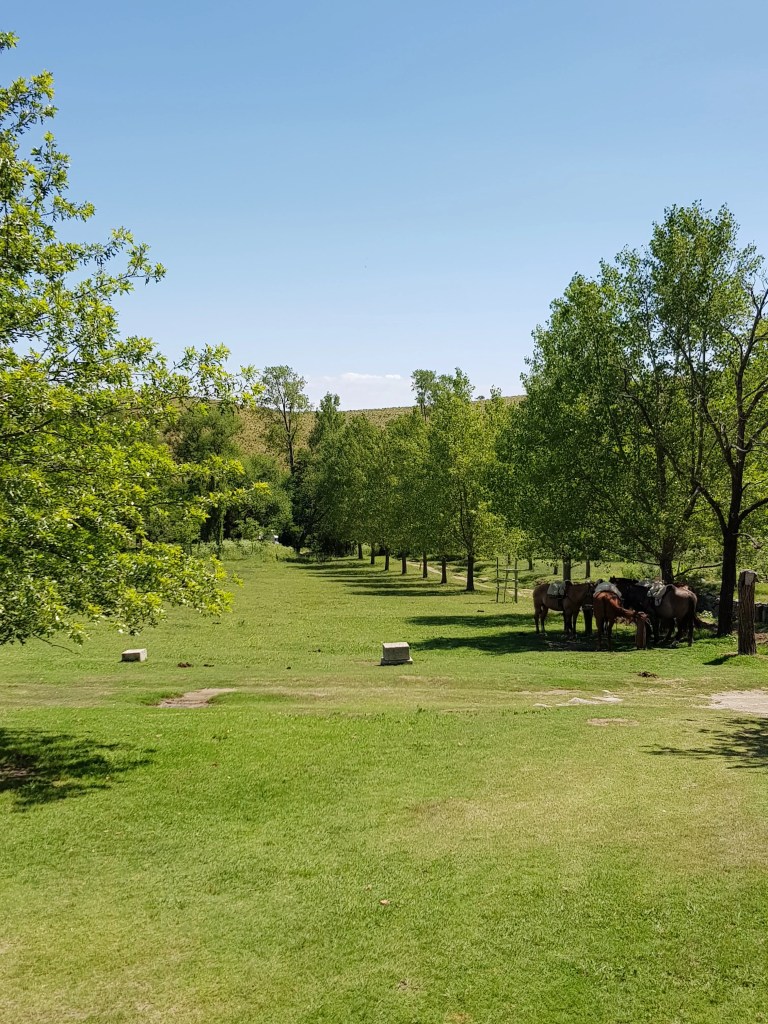
It would be hard to top that day a.k.a. the best day of my life, but thankfully the next three days would be spent on a working estancia which meant horse riding and multiple doggies. The dogs on the farm were all super friendly, especially Clyde, one of the border collies who was addicted to playing football and could run around all day. I particularly liked one of the old black labradors who would roll over for belly rubs if you dared to pass within ten feet of her. Needless to say, I was generally found laying within two feet of her at most times.
On the first night we were treated to a tasting of wines which were grown nearby, along with a competition to see who had the best nose. Our host produced multiple mini-bottles of scents commonly found in wine – from something called Le Nez du Vin – and we all had to guess its identity. Ian won the champagne prize on a tiebreaker of rose after several of us drew. It was a very entertaining and engrossing evening with lots of fun debate over the smells: “it’s burnt toast, no it’s oak, no it’s caramel”.
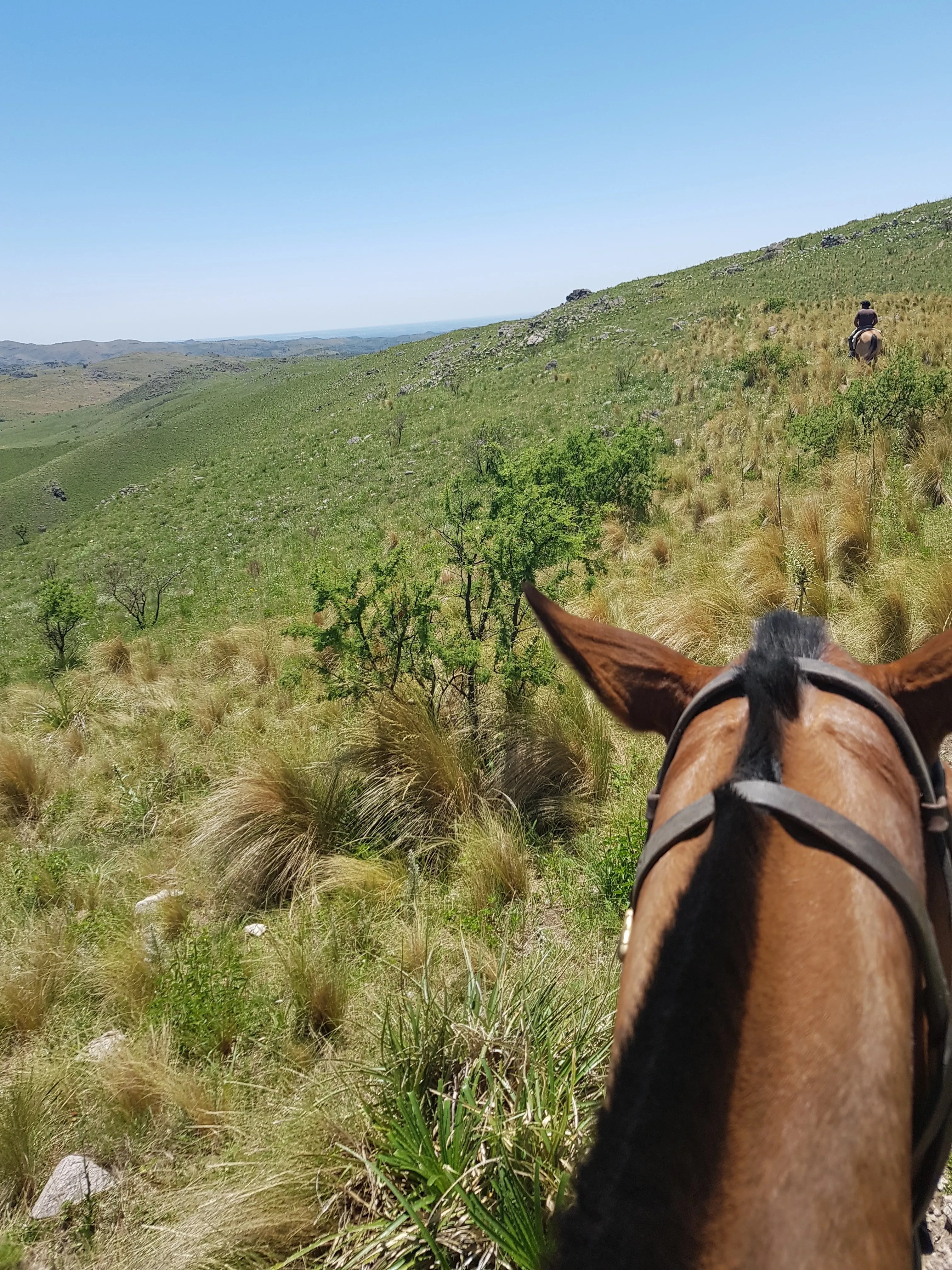
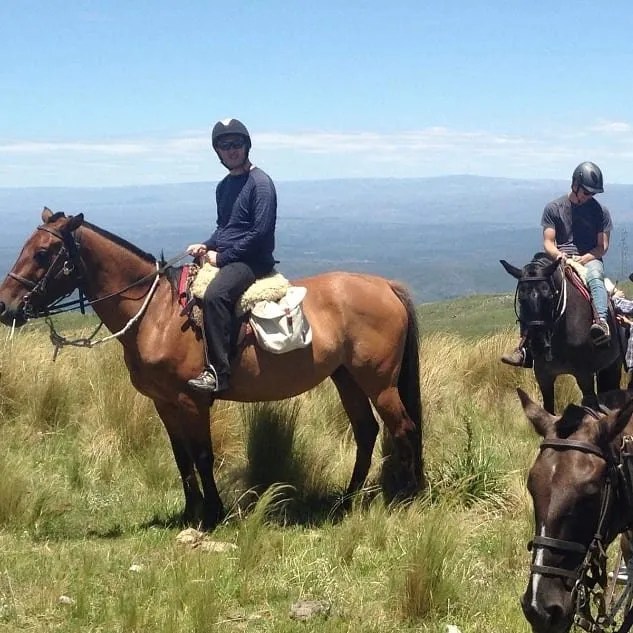
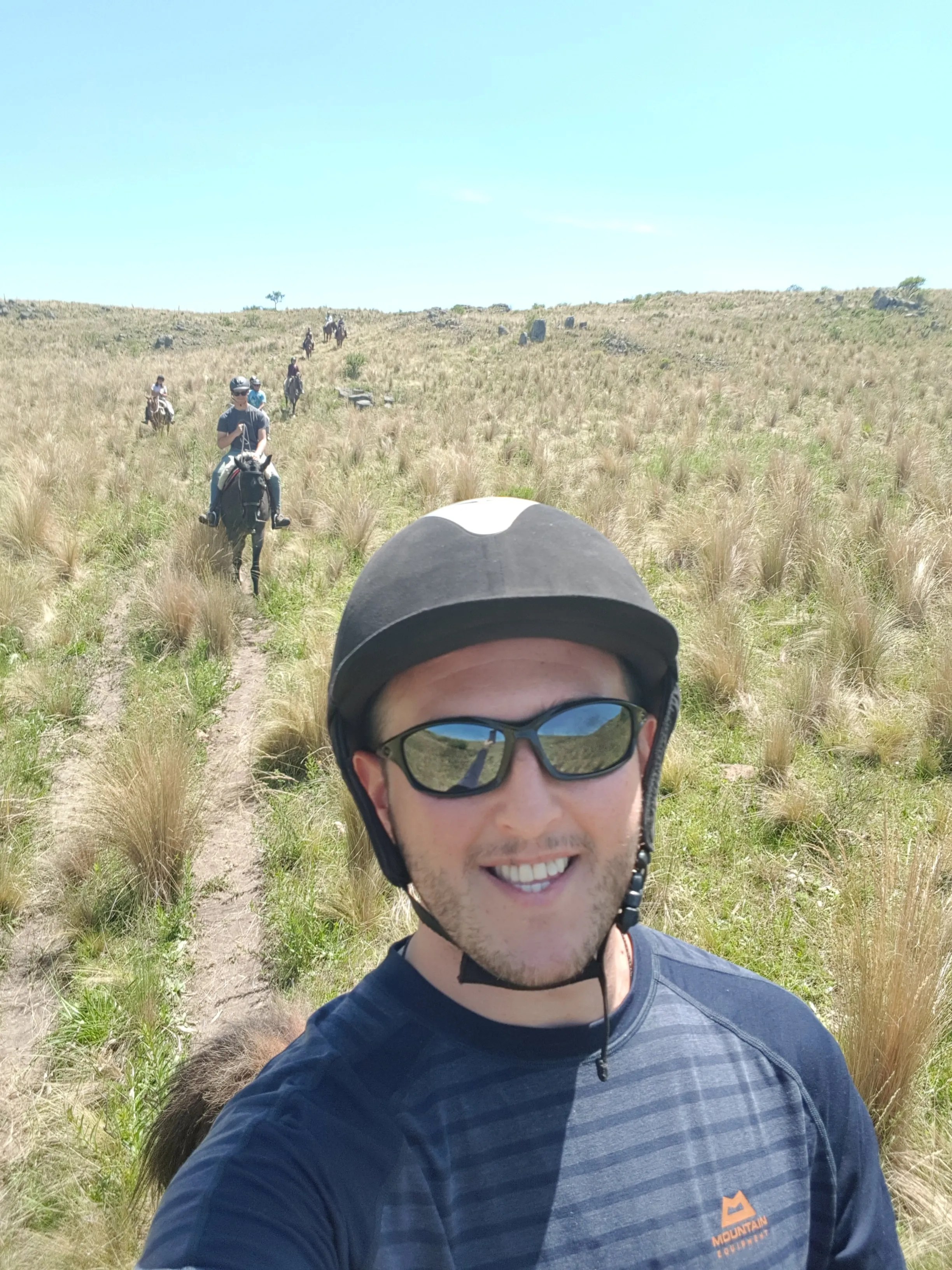
The following day we explored the estancia on horseback. That is as long as you weighed under 95kg. The public weigh-in was somewhat embarrassing, especially as I came out as the heaviest rider at 90kg! I was more distressed that despite all the activities I’ve done over the past couple of months, I’ve actually gained weight! I wonder if there’s a parasite I can host for a couple of weeks to shift some pounds. The horse ride was a lot of fun, galloping across the surrounding hillsides felt so far away from my daily life in Amsterdam, which I guess is kinda the point of this trip. I used to ride in the school holidays as my aunt stabled some horses and it soon came back to me. I quickly remembered how much I loved being on horseback and I’m looking forward to more opportunities while on the trip. There’s also a riding school in Amsterdam which is very close to my apartment so I think I’ll check it out when I get home.
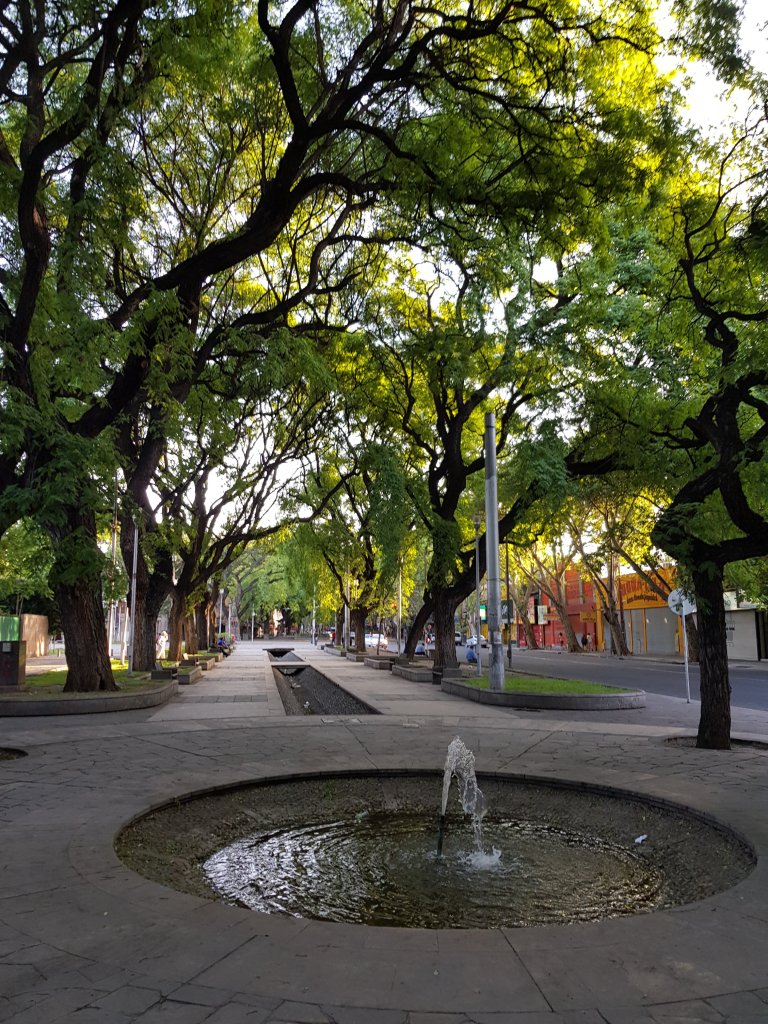
After the estancia, we headed to Mendoza, the wine capital of Argentina, however, beyond cranking out a blog post over a Starbucks soy latte one morning, I spent most of my time making friends with the hostel toilet. Perhaps my parasite wish came true after all!!
Leaving Cusco behind was a wrench as it was the site of so many cool experiences, but onwards we must go, this time towards Bolivia. The journey to Puno, a town near the border,was uneventful, much like the town itself which seemingly consisted of one plaza and one street. A couple of us treated ourselves to a slap up meal of fried chicken and chips from a street vendor for the princely sum of four soles (€0.80) and headed back to our ‘hotel’. I use that word loosely as the smell of petrol and the suspicious white stains on the bedding did not exude an air of salubrity. We had an early start the following morning, although not as early as scheduled. This was due to one passenger deciding to choose breakfast as the appropriate time to shout at the tour leaders about the standard of accommodation on the trip. She also had (non-existent) issues with what she saw as a lack of truck decorum. I’m not usually one for getting involved in petty dramas, but when she said “half of the people on the truck want to leave the tour”, I had to speak up and tell her not to speak for me under any circumstances, especially when nothing could’ve been further from the truth. I left the breakfast room to finish packing so wasn’t sure how the ‘meeting’ concluded, but it seems that it didn’t, as upon arrival at our lunch destination, the disgruntled passenger decided to end her tour early and leave the truck. There was a collective, audible sigh of relief when everyone found out, no doubt because she had been disruptive and annoying to everyone since the day she joined the trip.
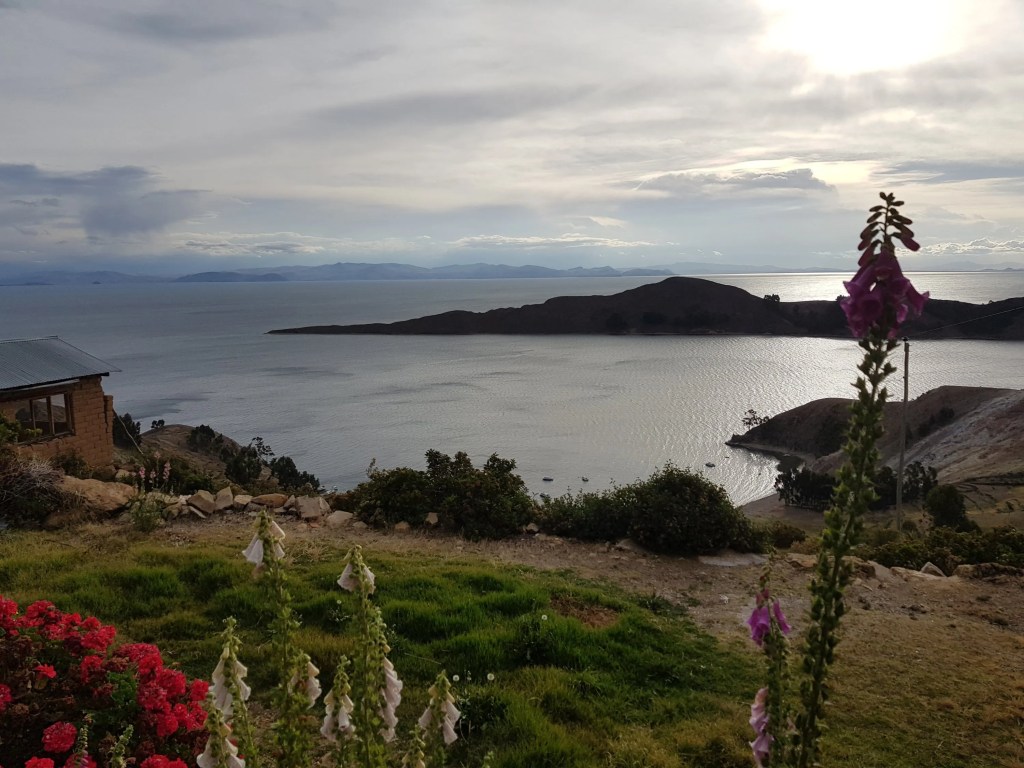
I doubt many border crossings have this view
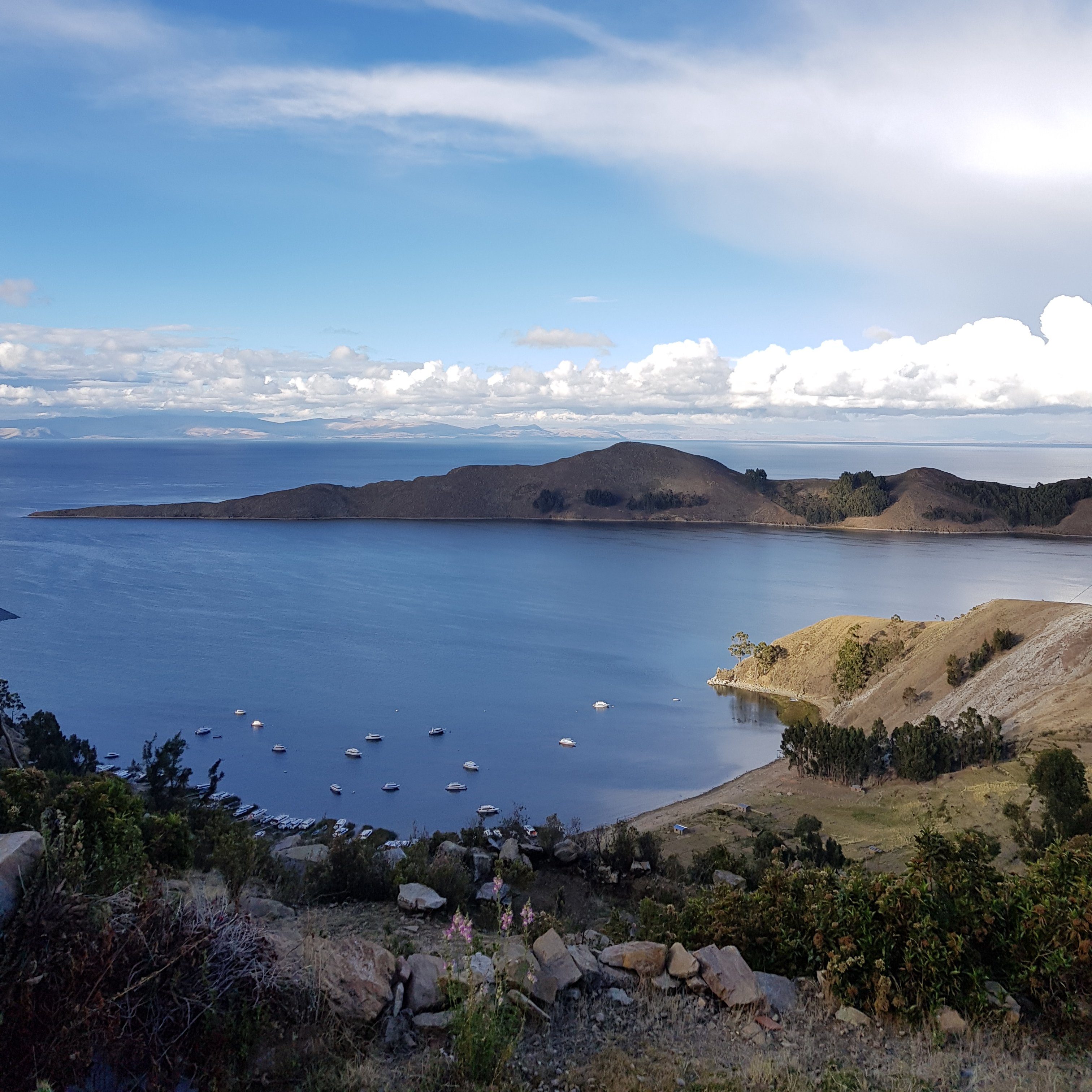
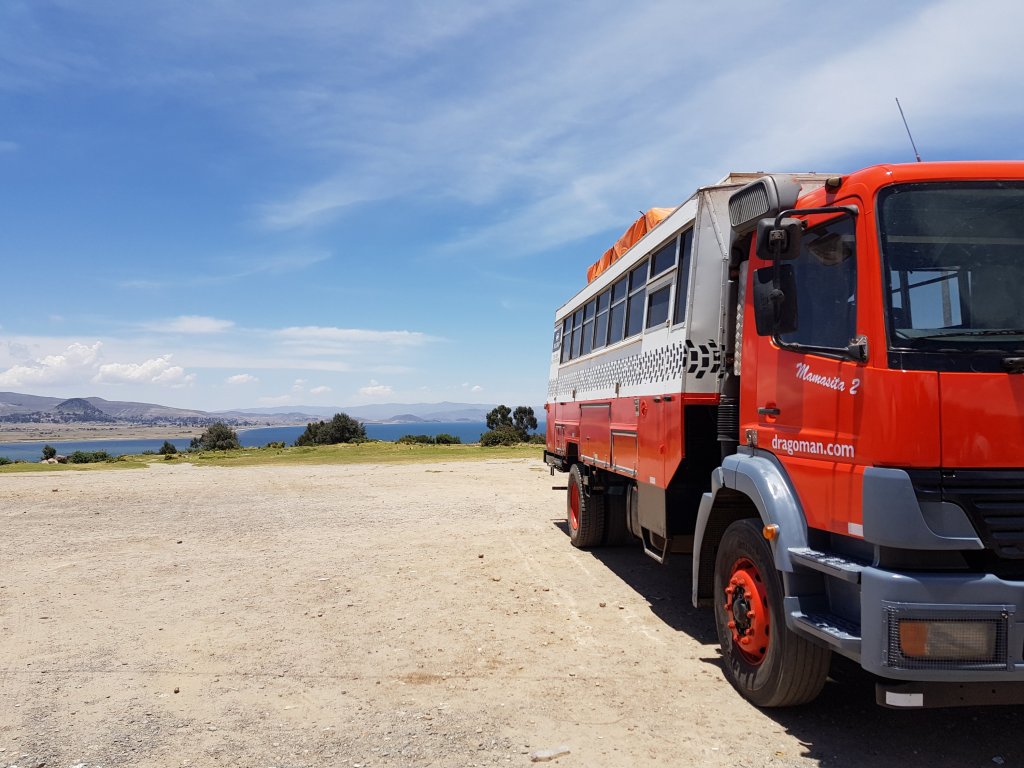
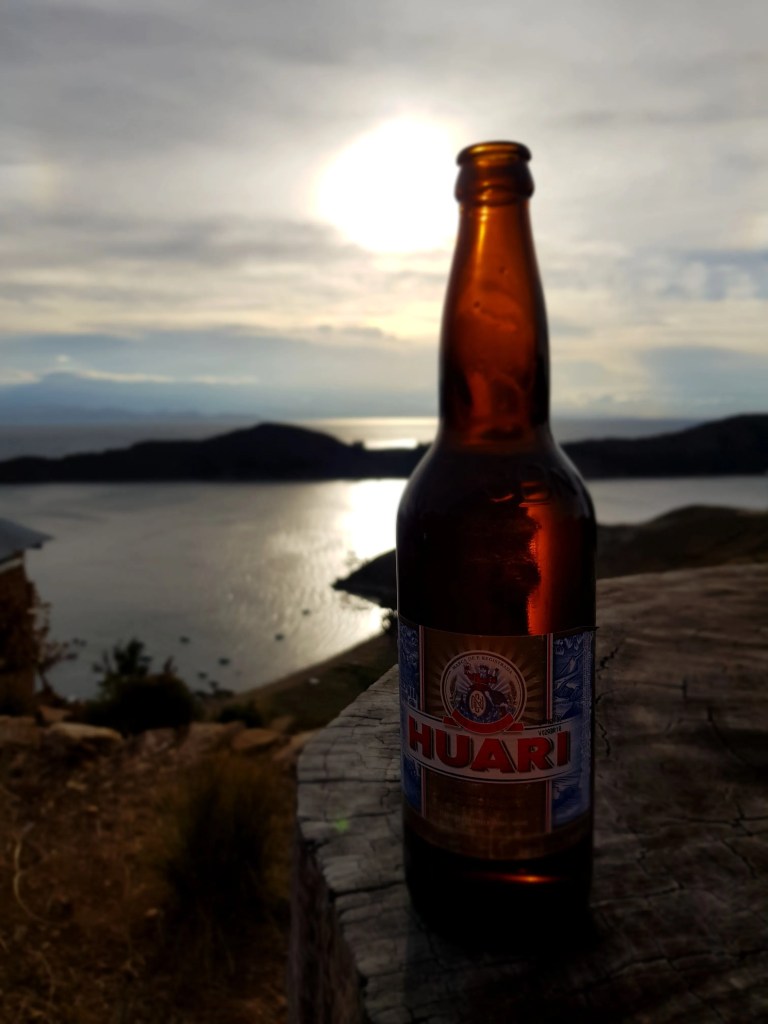
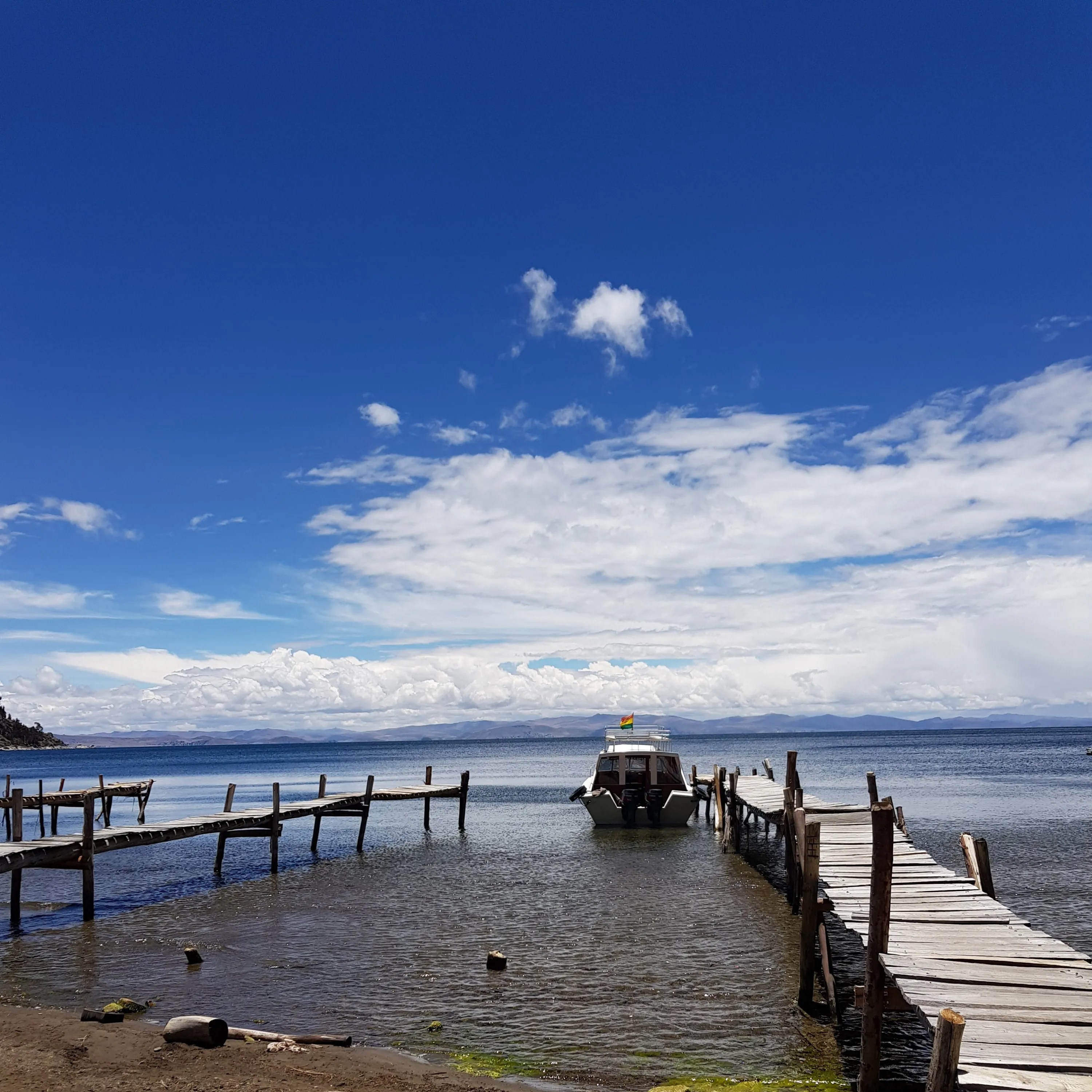
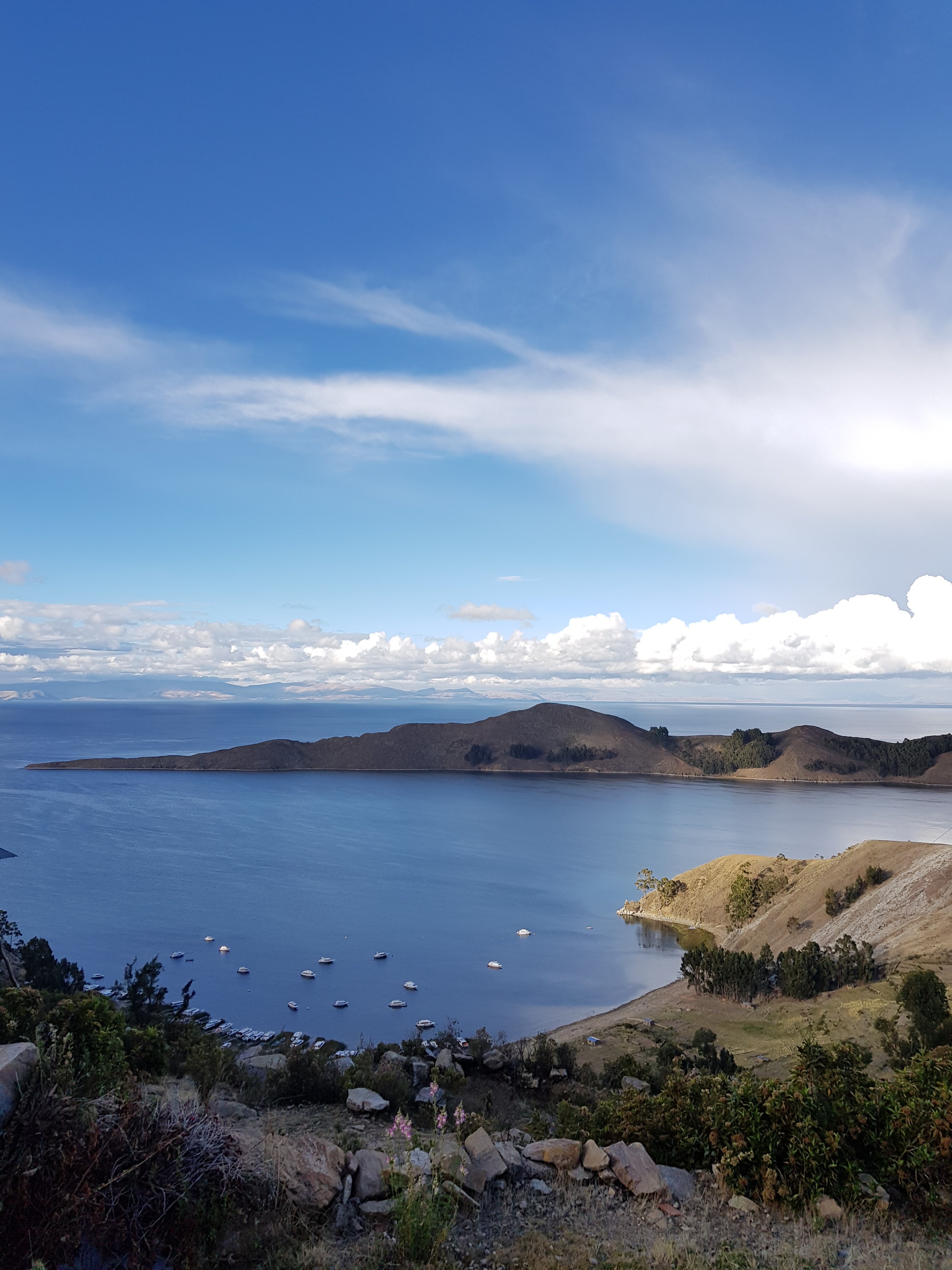
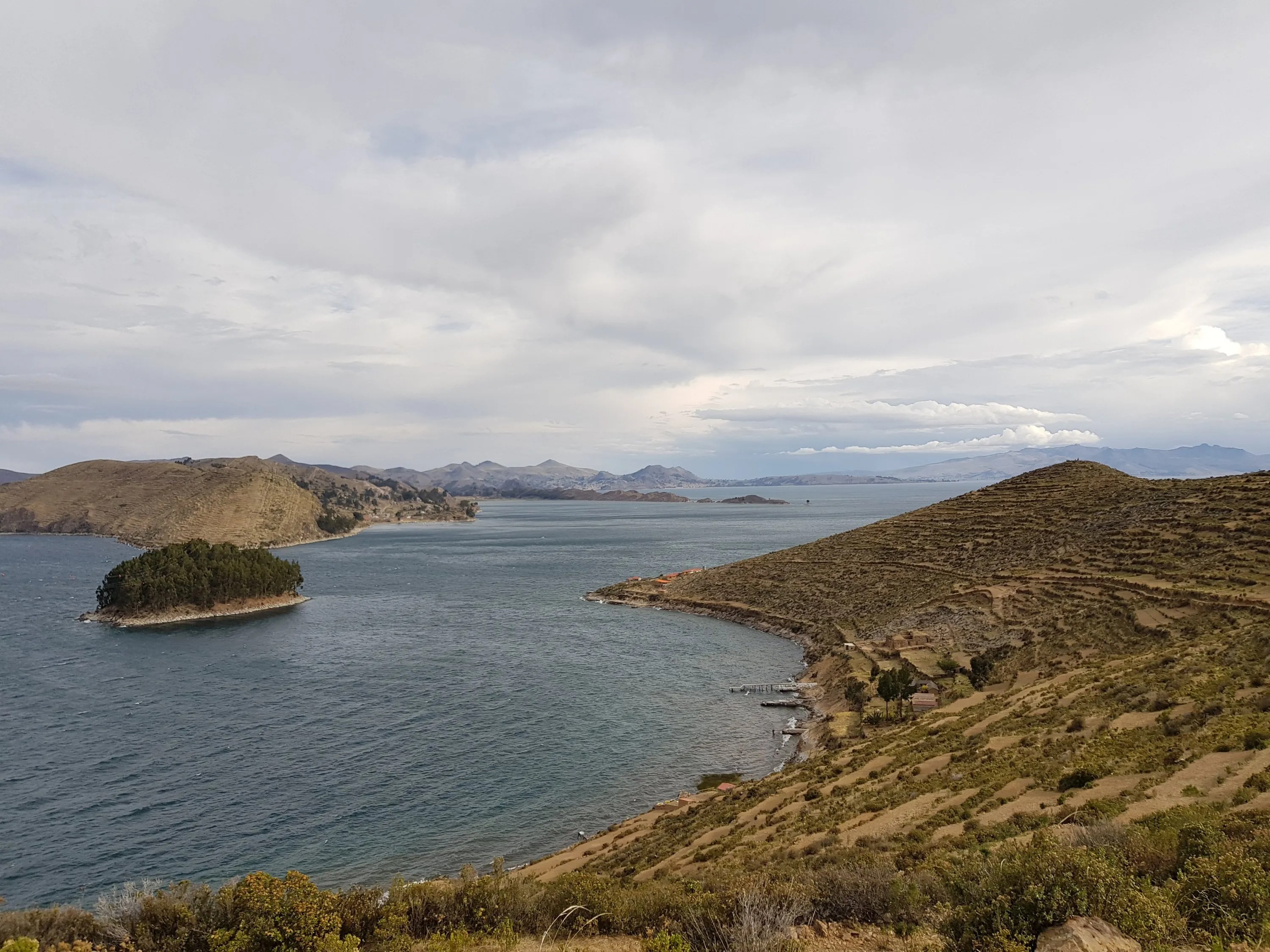
We drove into Bolivia and I think it may be the nicest border crossing ever. The view across Lake Titicaca was beautiful and the immigration process took all of 46 minutes for 16 of us and the truck. We continued on to Copacabana (no, not that one), a quaint little town situated right on the lake, and enjoyed a cheap and delicious lunch, washed down with a litre of Judas beer. We then boarded a boat to Isla del Sol, one of several islands on the lake which, by the way, is the highest navigable lake in the world.
The crossing was very choppy and silence soon descended as everyone concentrated on not throwing up. Everyone except the two qualified sailors who instead decided to try and outdo each other with their yachting experiences. The conversation certainly helped send some of us to sleep which was appreciated given the rough water.
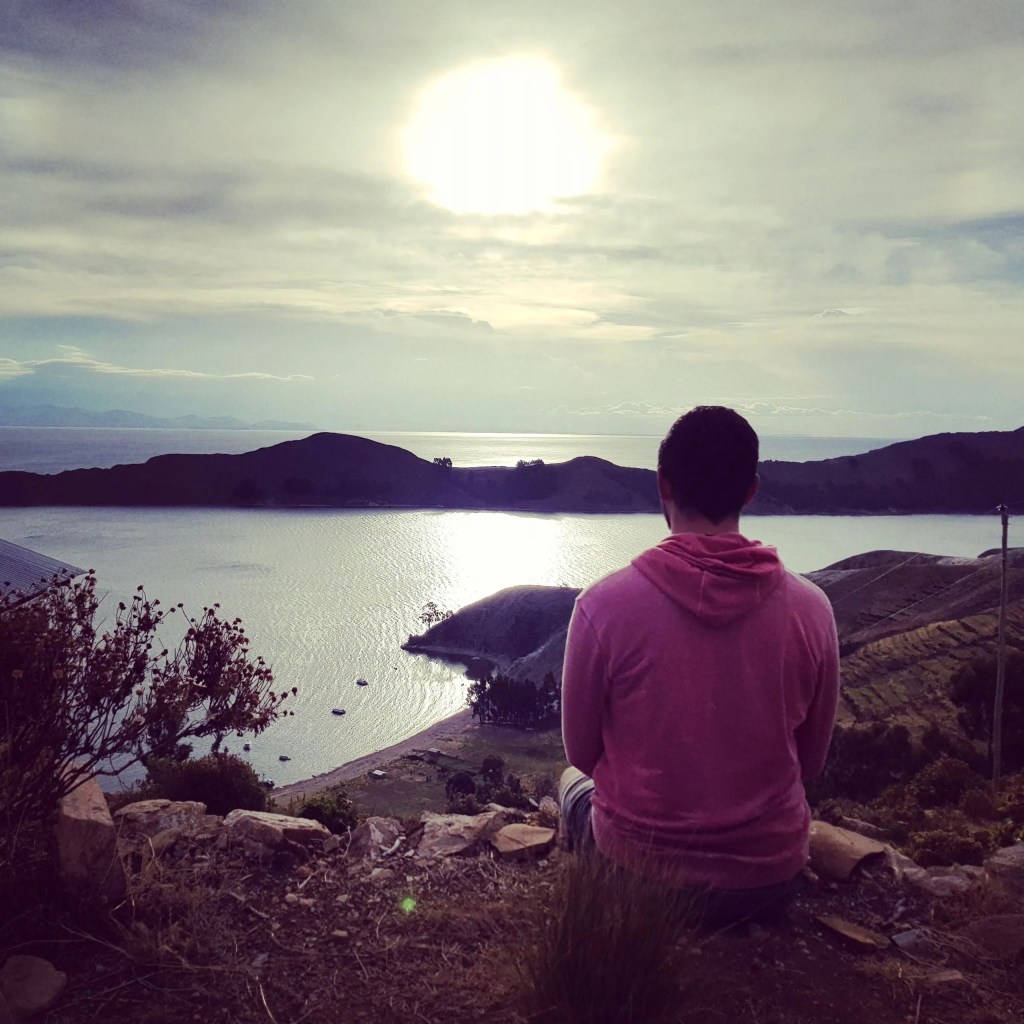
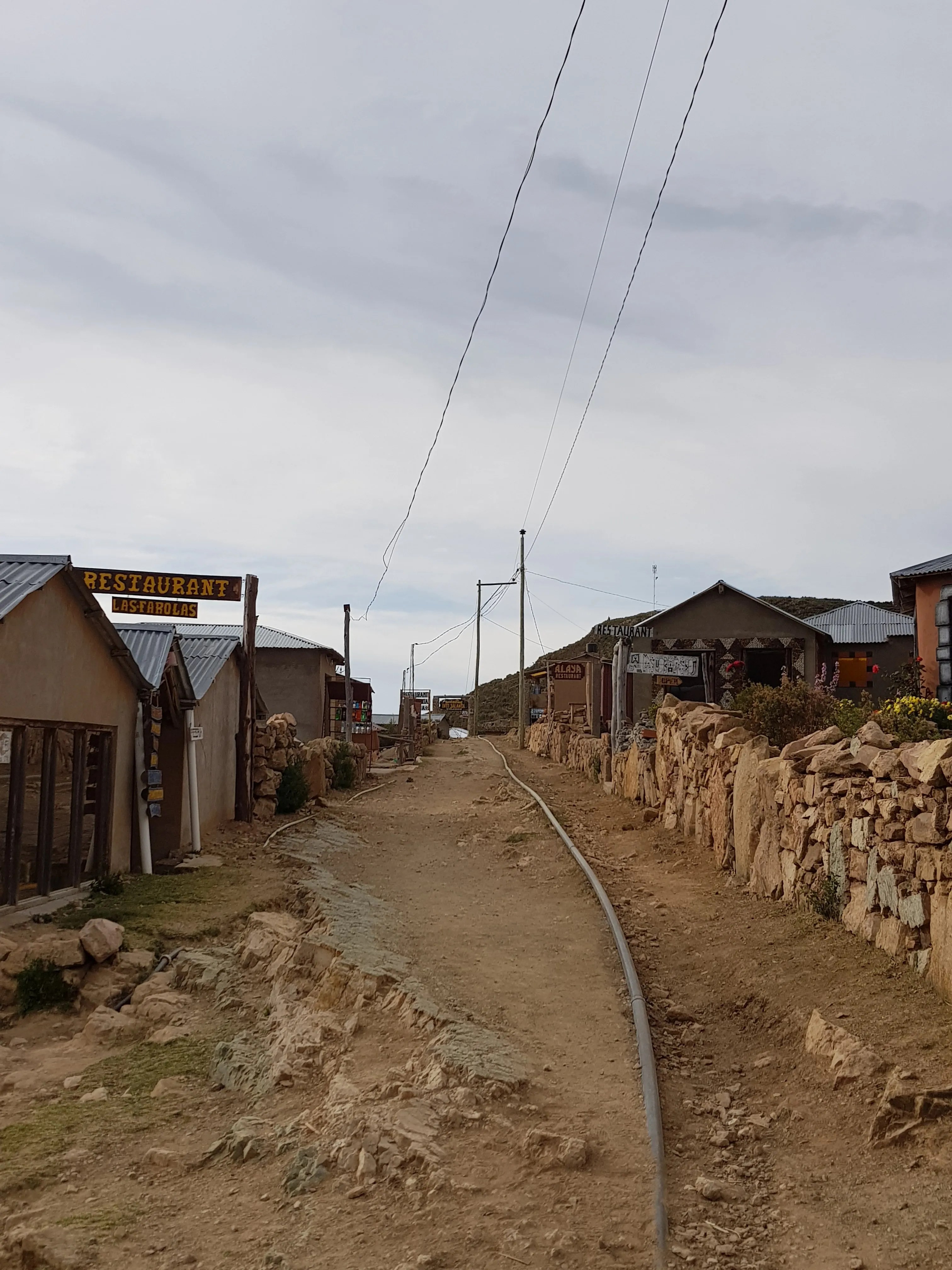
Our hostel was a 45 minute hike up to the top of the island, and it’s location meant we were treated to a wonderful view across the glistening water. Hunger was calling so a few of us decided to grab a pizza – sidebar, pizza in South America is, so far, without fail, amazing – at a local, hilltop restaurant. Upon entering, I bumped into an Instagram follower who lives in Spain, and who had messaged me a couple of weeks previously saying he would be in Peru, but we kept missing each other by a day or two. We chatted until my food arrived and he left amid promises of meeting up for a beer in La Paz where we would again cross paths in a few days.
The next morning we boarded the boat again, this time in the direction of Moon Island, where a 12km hike awaited us. Having not slept well the night before on account of snoring by my fellow roommates, I decided to laze about on the beach and soon made friends with a local dog with whom I shared my packed lunch. Once the hiking masses had returned, we made our way back to Copacabana for a group dinner before heading to bed. I slept soundly, no doubt dreaming of a drama free bus ride, a dream that became a reality the very next morning as we headed to the Bolivian capital of La Paz, where once again, new passengers awaited.
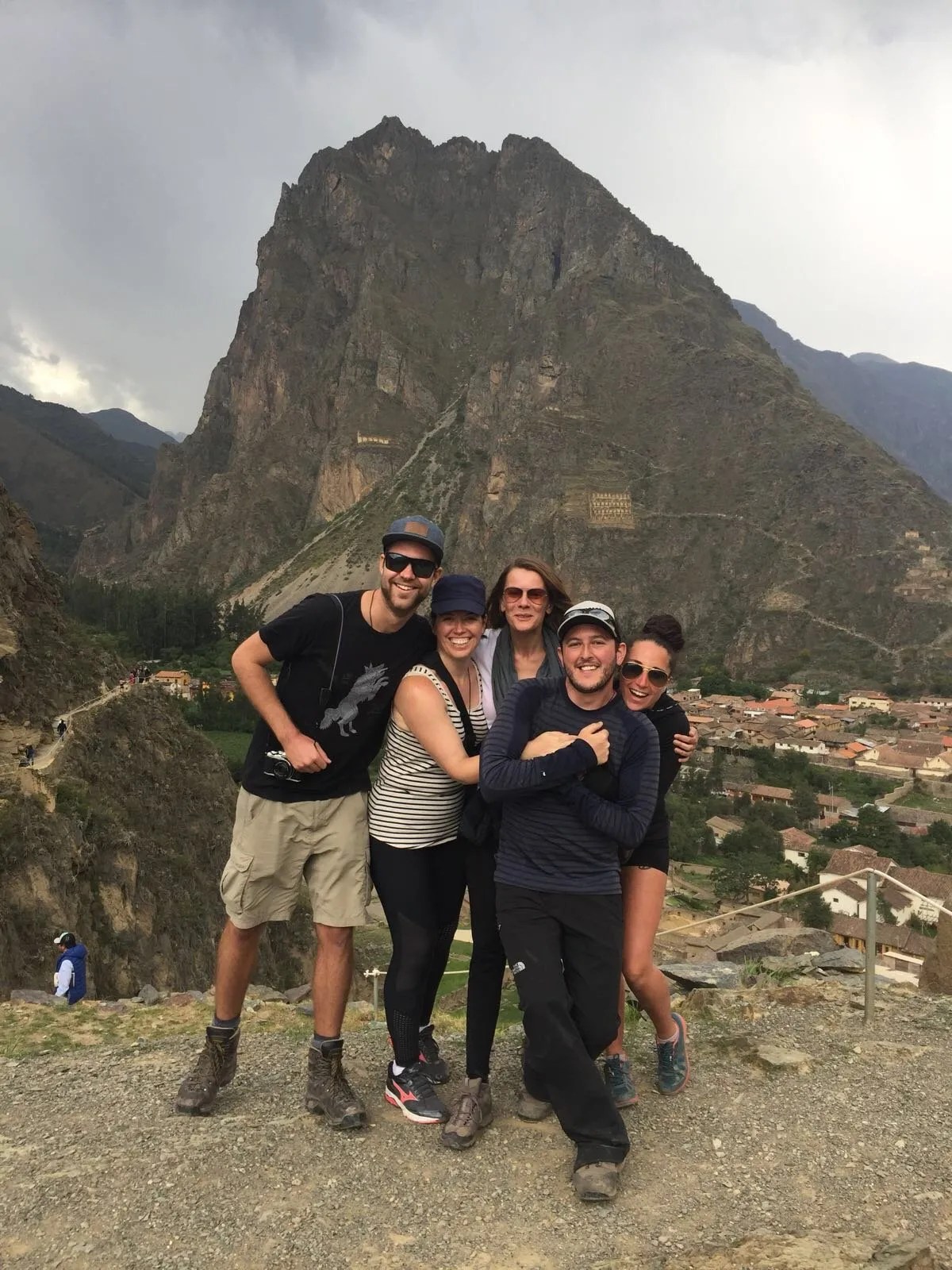
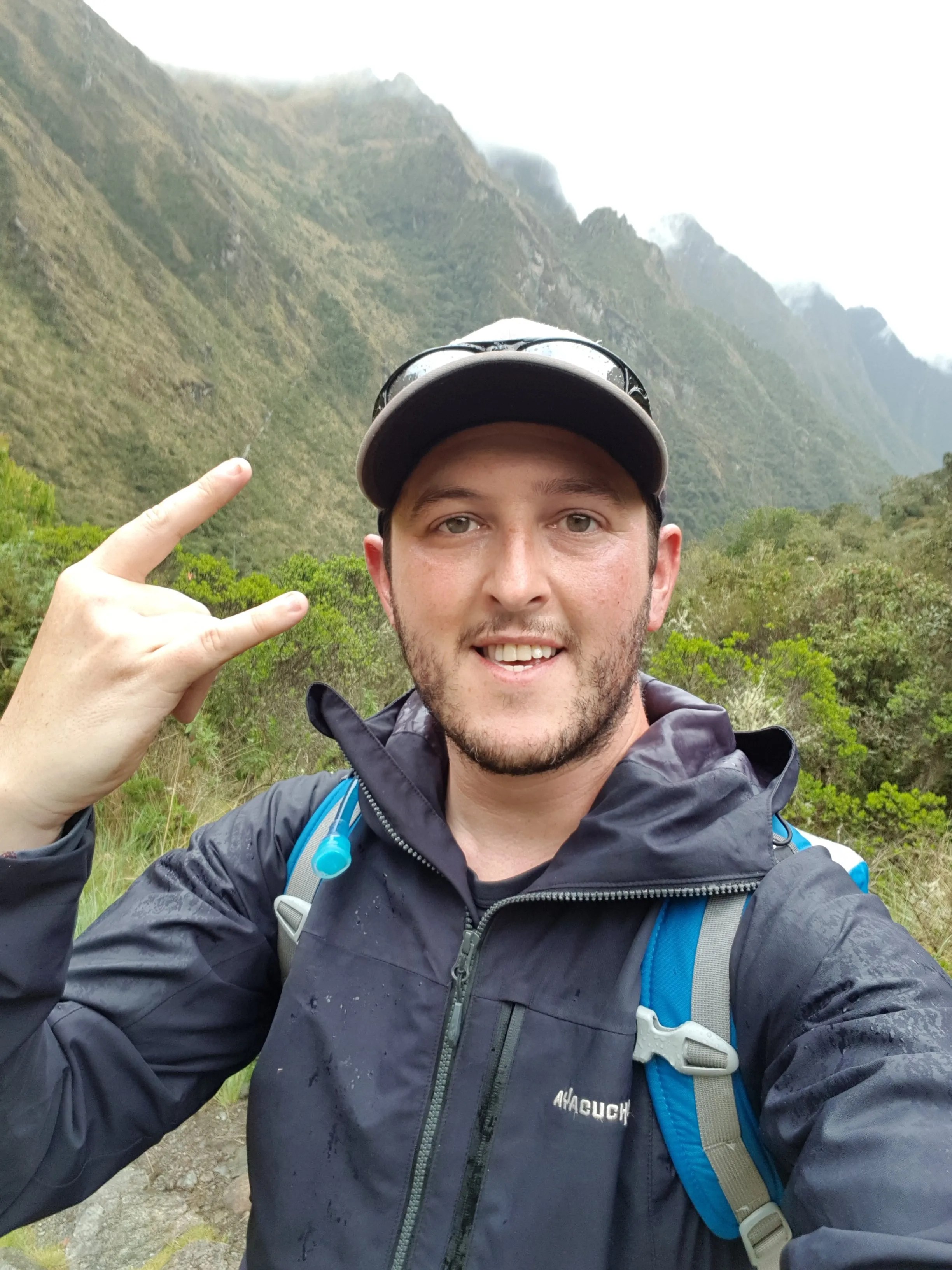
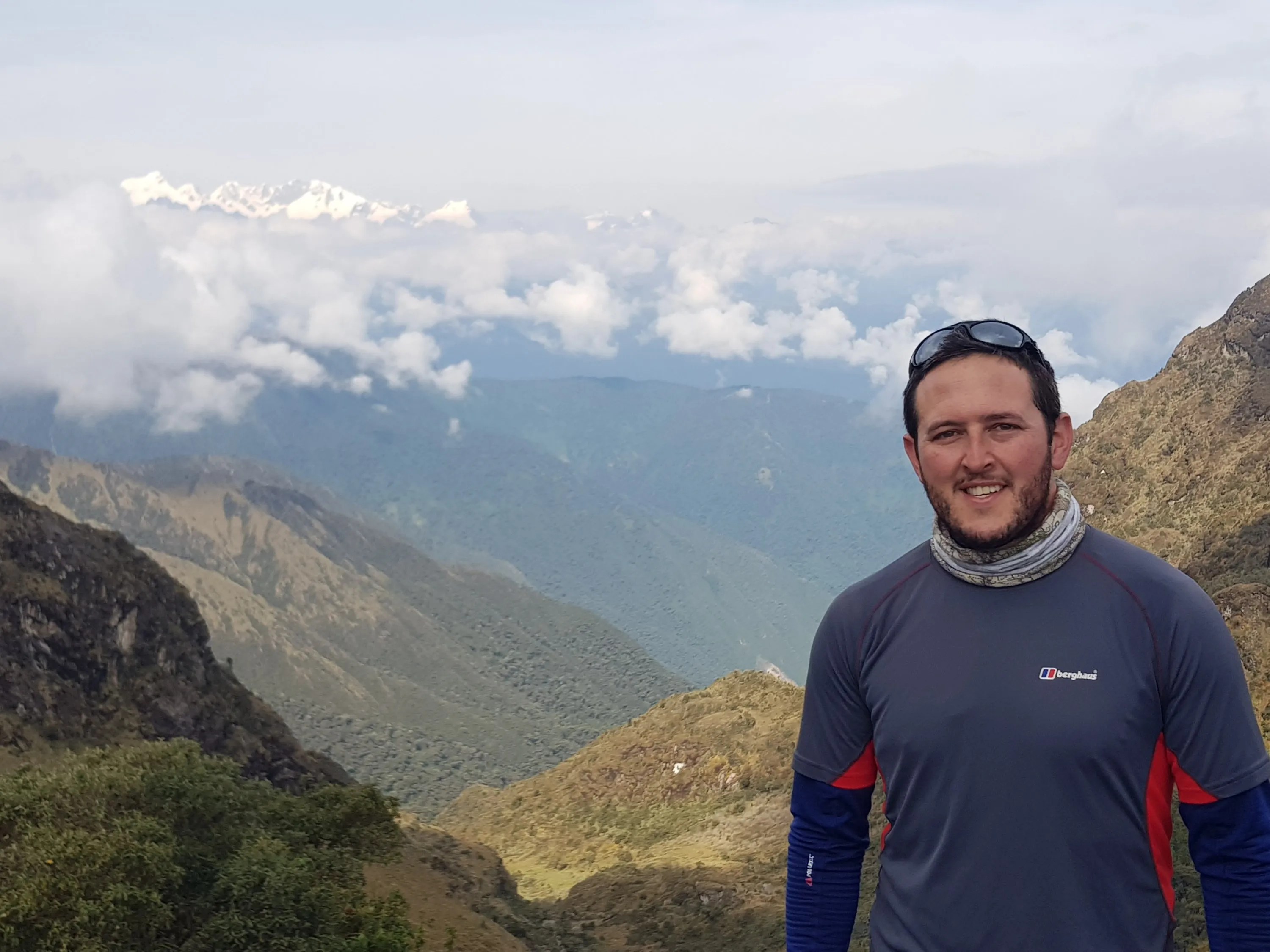
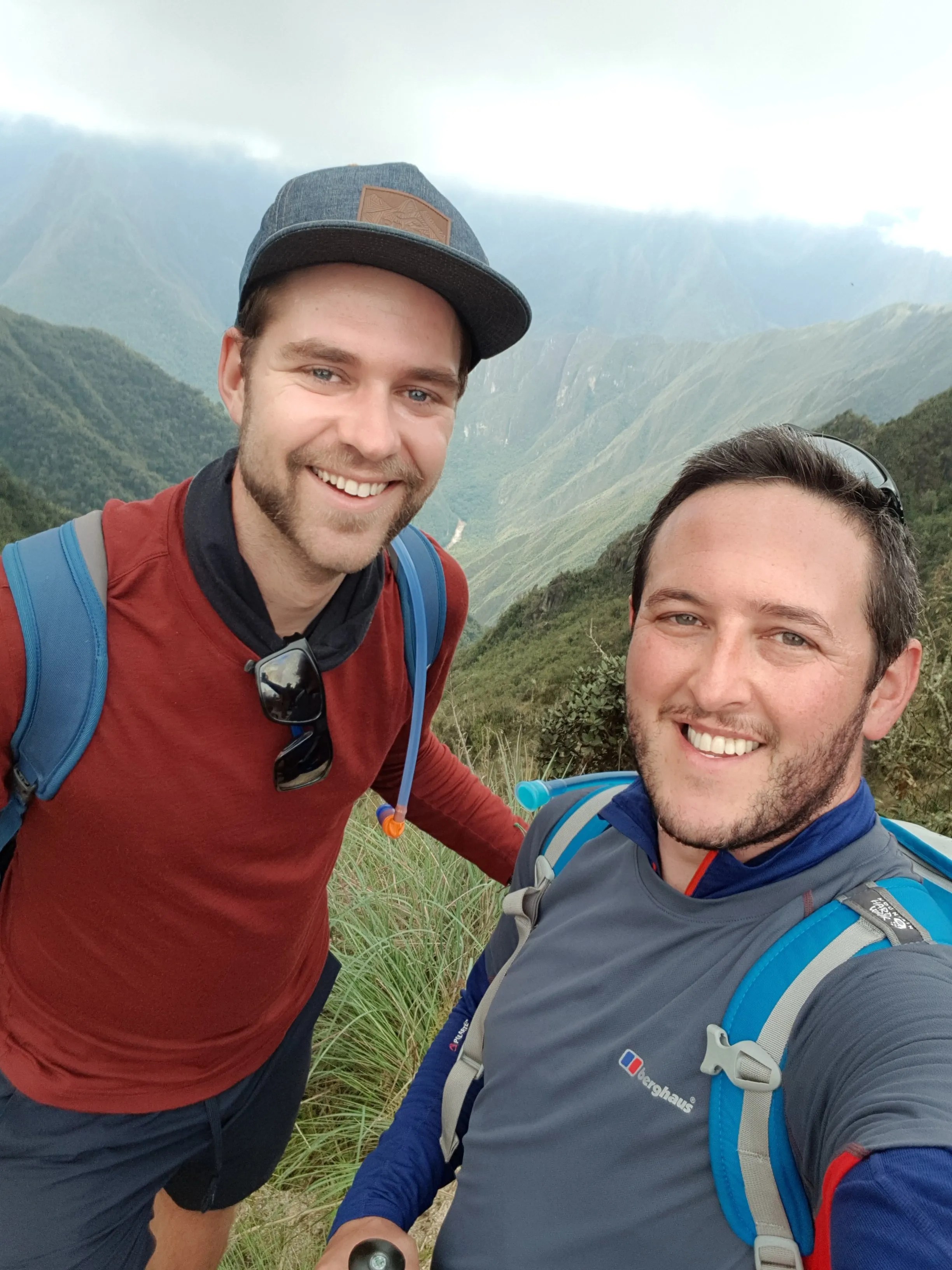
So, the day is finally here: Macchu Picchu here we come. For many, this is the thing to do during their time in South America, and while it was amazing, I think I’ve preferred discovering the less well documented, but no less impressive sights such as Lake Quilotoa or Rainbow Mountain. Nonetheless, it was an incredible four days and one that won’t be forgotten in a hurry.
500 people are permitted to start the trail each day, but this number includes approximately 300 support staff in the form of porters, cooks and guides. I chose the Classic trek because the equipment is carried by humans who choose to do so, as opposed to pack animals which are used on other treks. The porters are truly incredible; they carry up to 30kg of equipment on their backs, while I struggled with my daypack weighing 7kg. Having finished our breakfast, we would set off on a day’s hiking, only to be overtaken by running porters who would then have lunch ready for us upon our arrival. This was repeated for dinner when we would arrive at the campsite to also find our tents and bed all set up.
DAY ONE: PISCAYCUCHO TO WAYLLABAMBA
Distance: 12km
Starting elevation: 2,700m
End elevation: 3,000m
Start time: 1103
End time: 1627
# of showers: 0
# of poos: 0
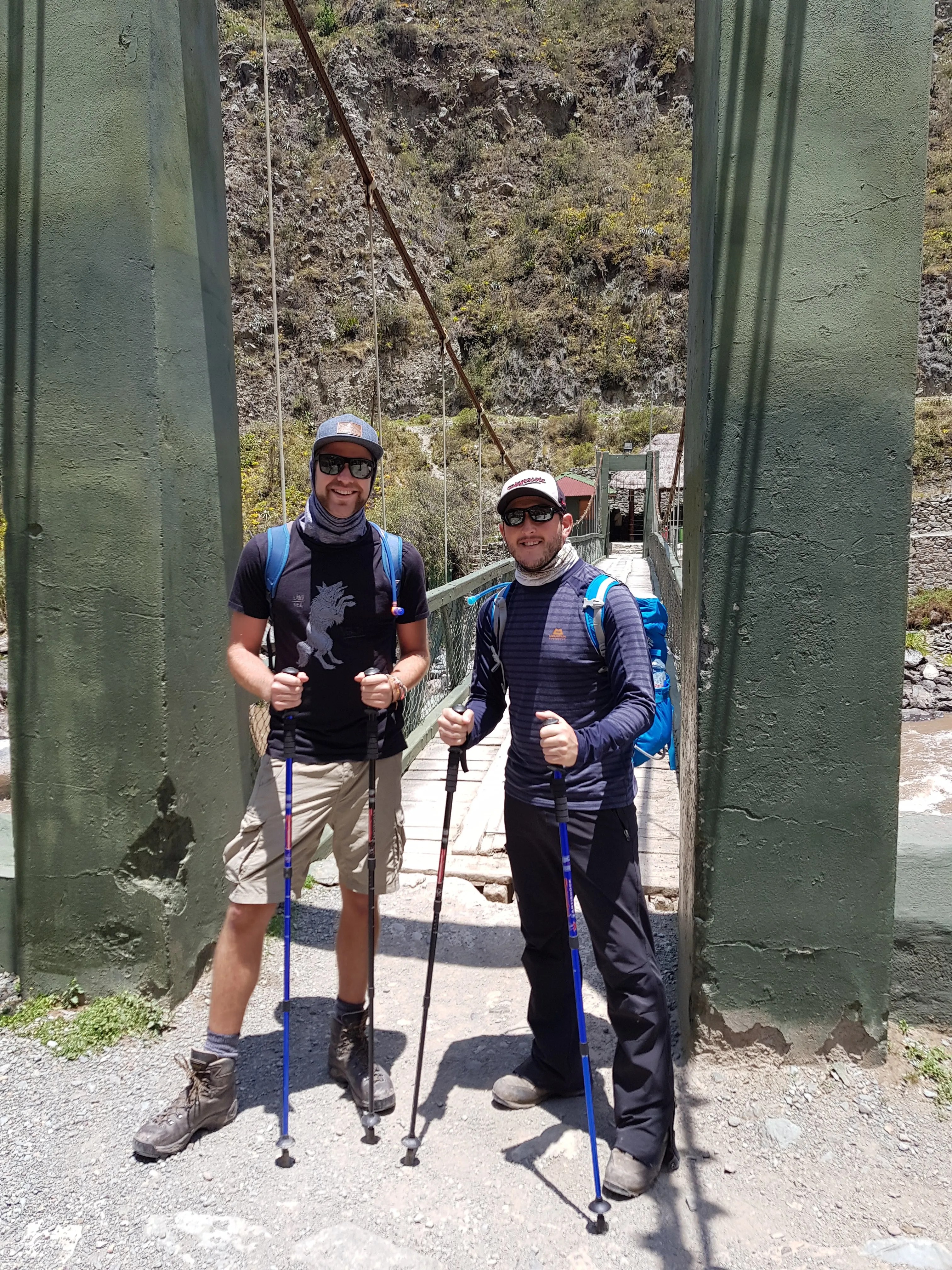
We started the Inca Trail at KM82 in Piscaycucho, where we met our team of porters and guides. Having shown our passports and permits, we crossed the Urubamba River, following the shoreline through lush farmland before gradually climbing for the next few hours. The walk today was relatively easy, and we were treated to some stunning views of Mount Veronica (named after a woman who went missing on the mountain and was never found).
DAY TWO: WAYLLABAMBA TO PACAYMAYO
Distance: 11km
Starting elevation: 3,000m
Highest elevation: 4,200m
End elevation: 3,650m
Start time: 0643
End time: 1429
# of showers: 0
# of poos: 0
# of coca leaves chewed: countless
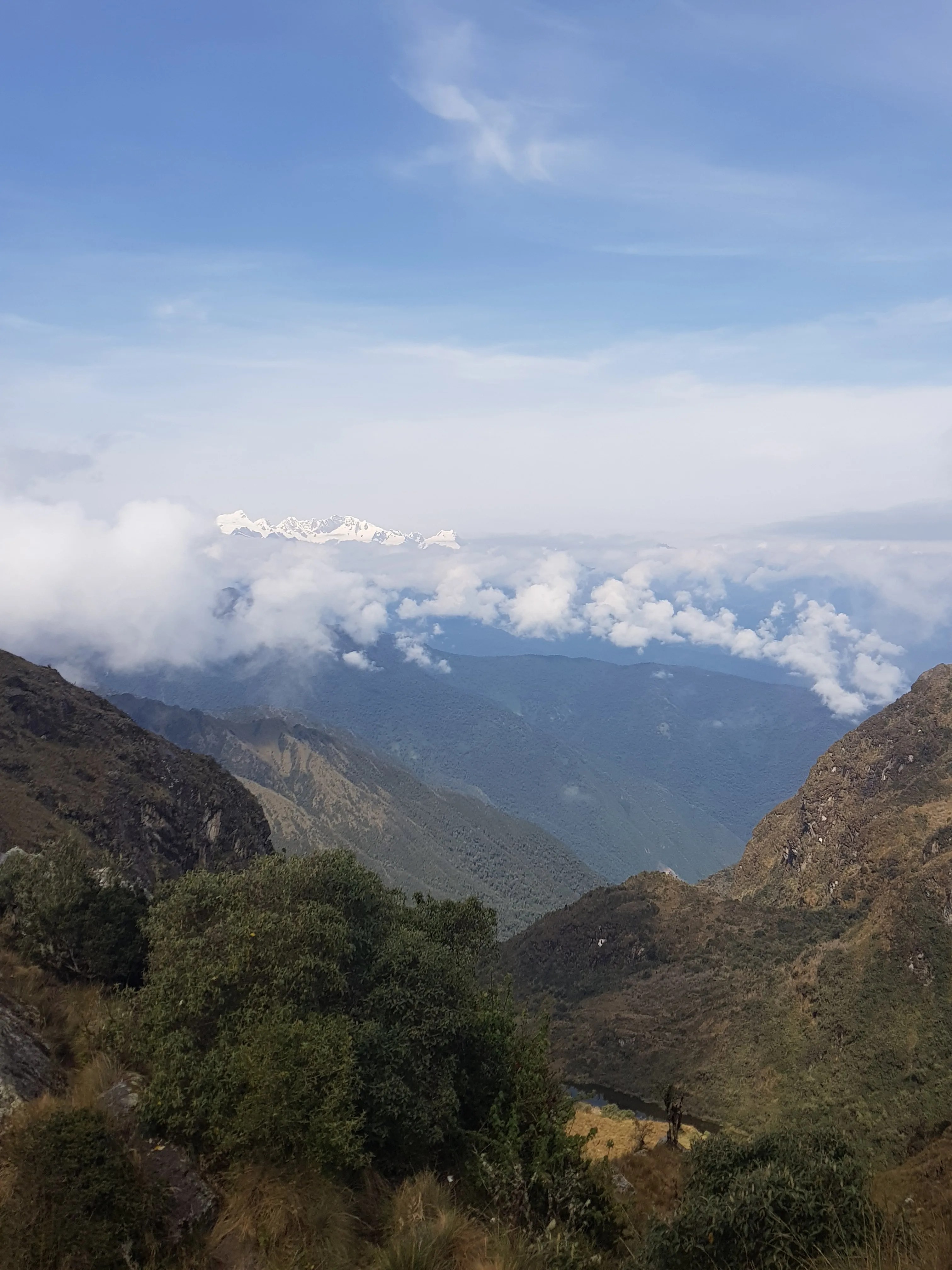
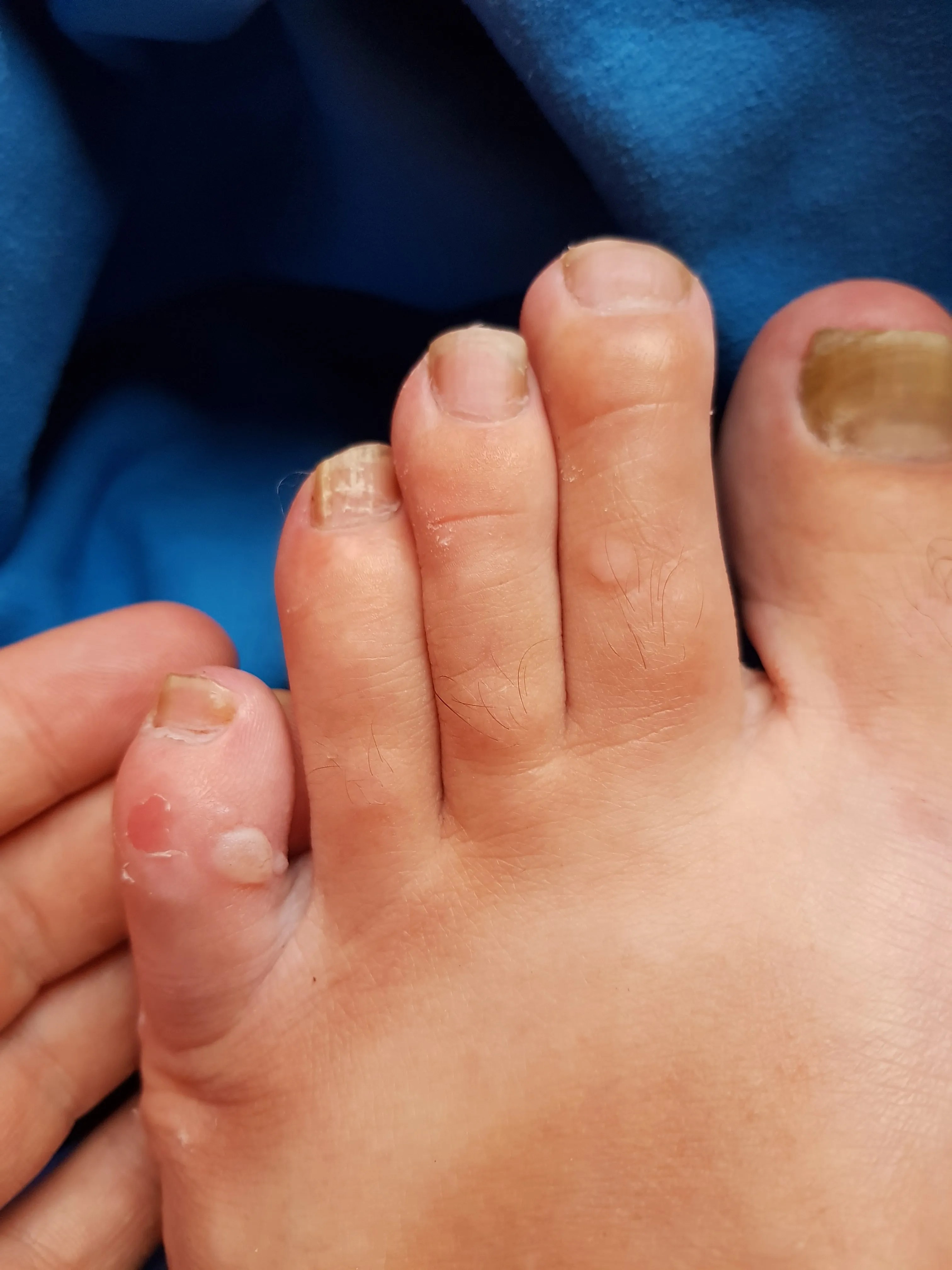
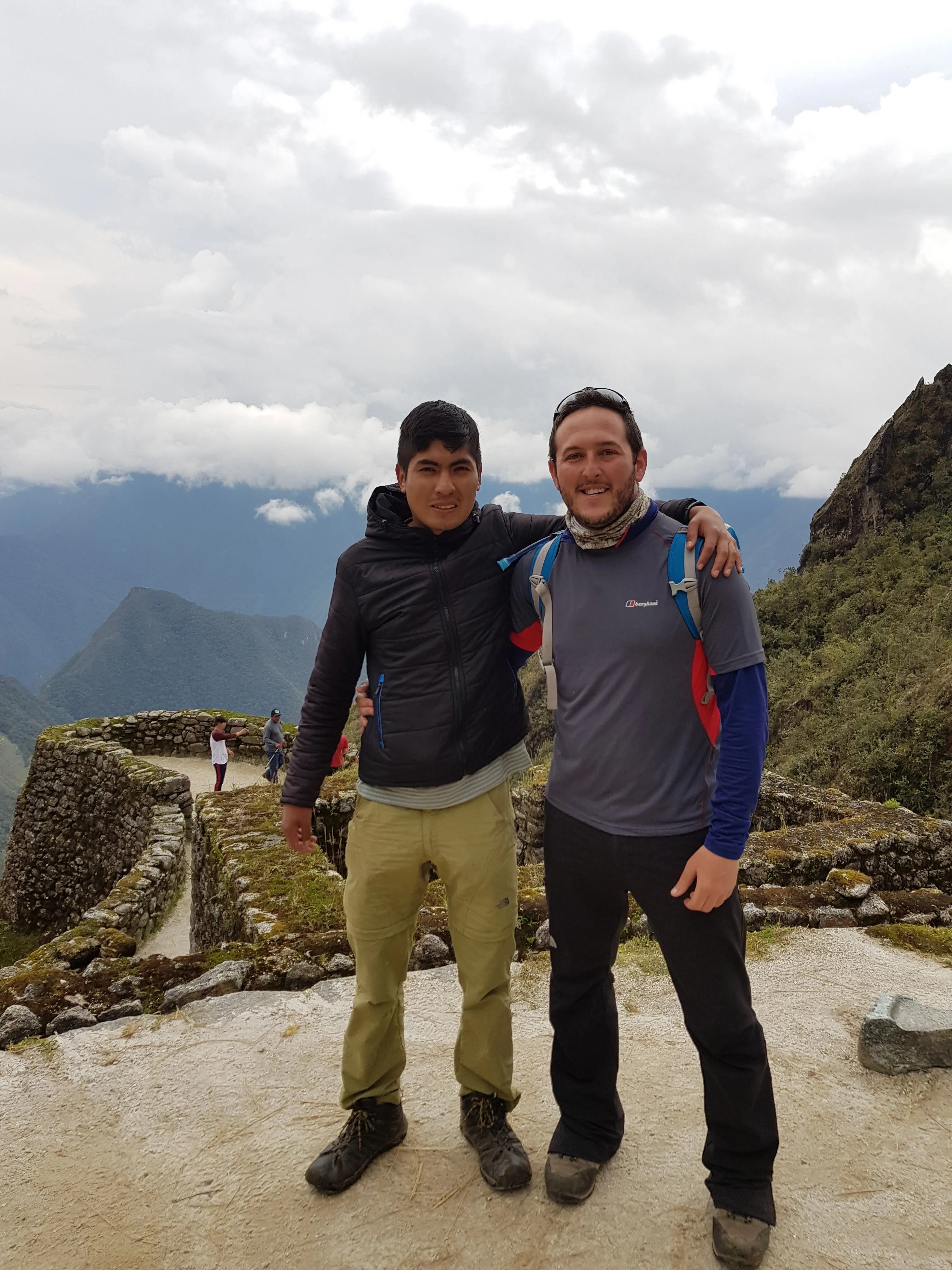
Today was by far the hardest of the four days, with the hike being almost entirely uphill with steep inclines. The scenery made the effort worthwhile, although I had to consciously remind myself of that at times, especially when I felt the formation of several blisters on my feet. The group made good progress first thing and were therefore treated to a two hour lunch, during which I took the opportunity of a nap. However, upon waking I felt decidedly ropey but unable to put my finger on why. We started walking again but I was quickly beset with a splitting headache. Lauren – a.k.a. Wonder Woman on account of the fact she was doing the Inca Trail only three months after surgery to repair het ACL – confided that she was feeling something similar and we decided to try chewing coca leaves which we’d been told would help. The first taste was revolting. Having chewed five leaves, we stored them in our cheeks like hamsters and waited for them to work their magic. We were told to change the leaves every ten minutes and counting the time helped me concentrate on something else besides my throbbing forehead. The leaves are indeed magical as within twenty minutes, both Lauren and I felt much better, even putting on a bit of a spurt. We reached the highest point on the trek, Dead Women’s Pass, and stopped for some celebratory photos. Thankfully, it was downhill to that evening’s campsite where, upon arrival, I promptly slept for several hours before dinner.
DAY THREE: PACAYMAYO TO WINAY WAYNA
Distance: 16km
Starting elevation: 3,650m
End elevation: 2,650m
Start time: 0635
End time: 1437
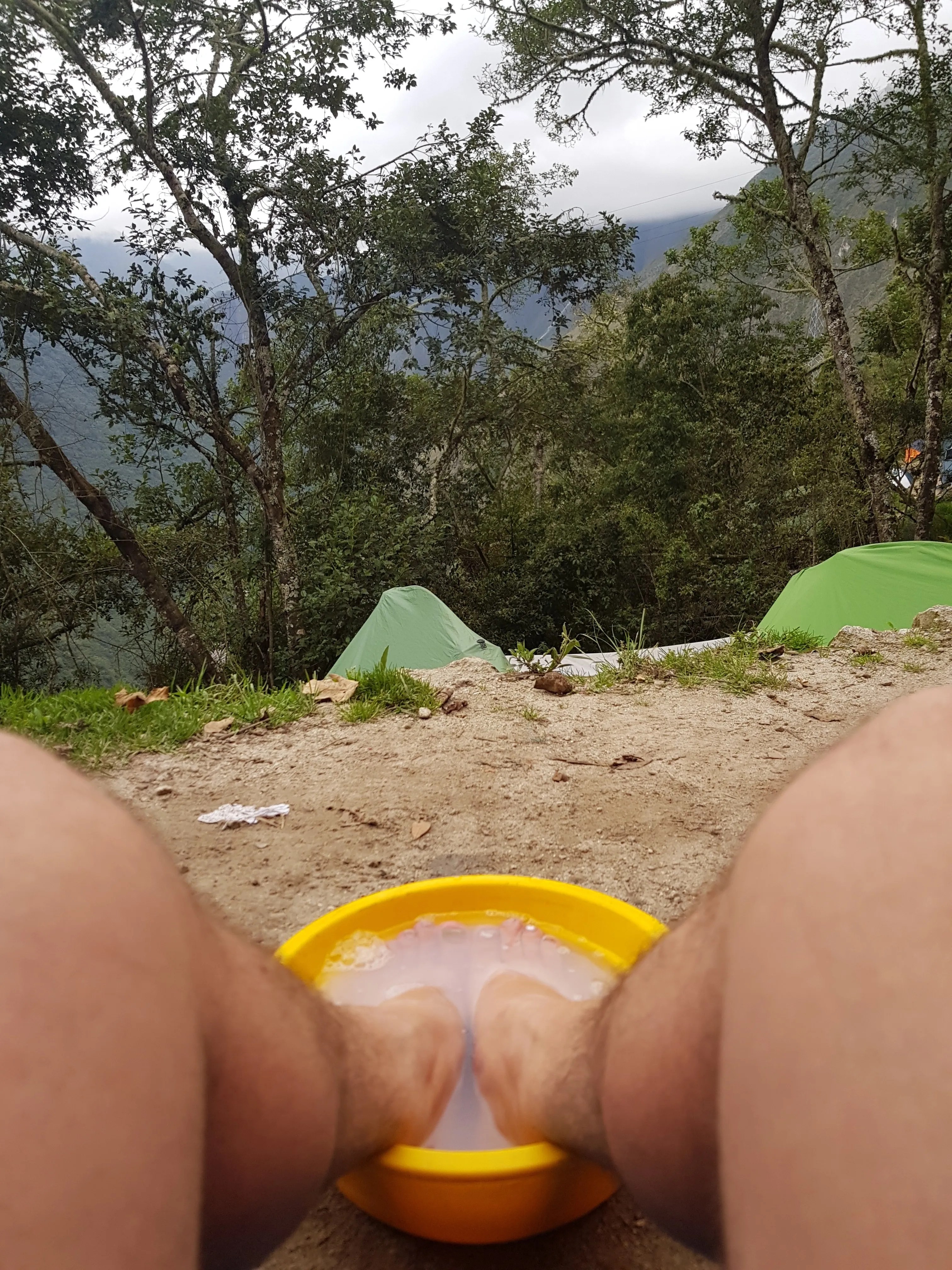
# of showers: 1 (if you count dipping one’s balls in a bucket of warm soapy water)
# of poos: almost 1 (despite repeated attempts in the bush)
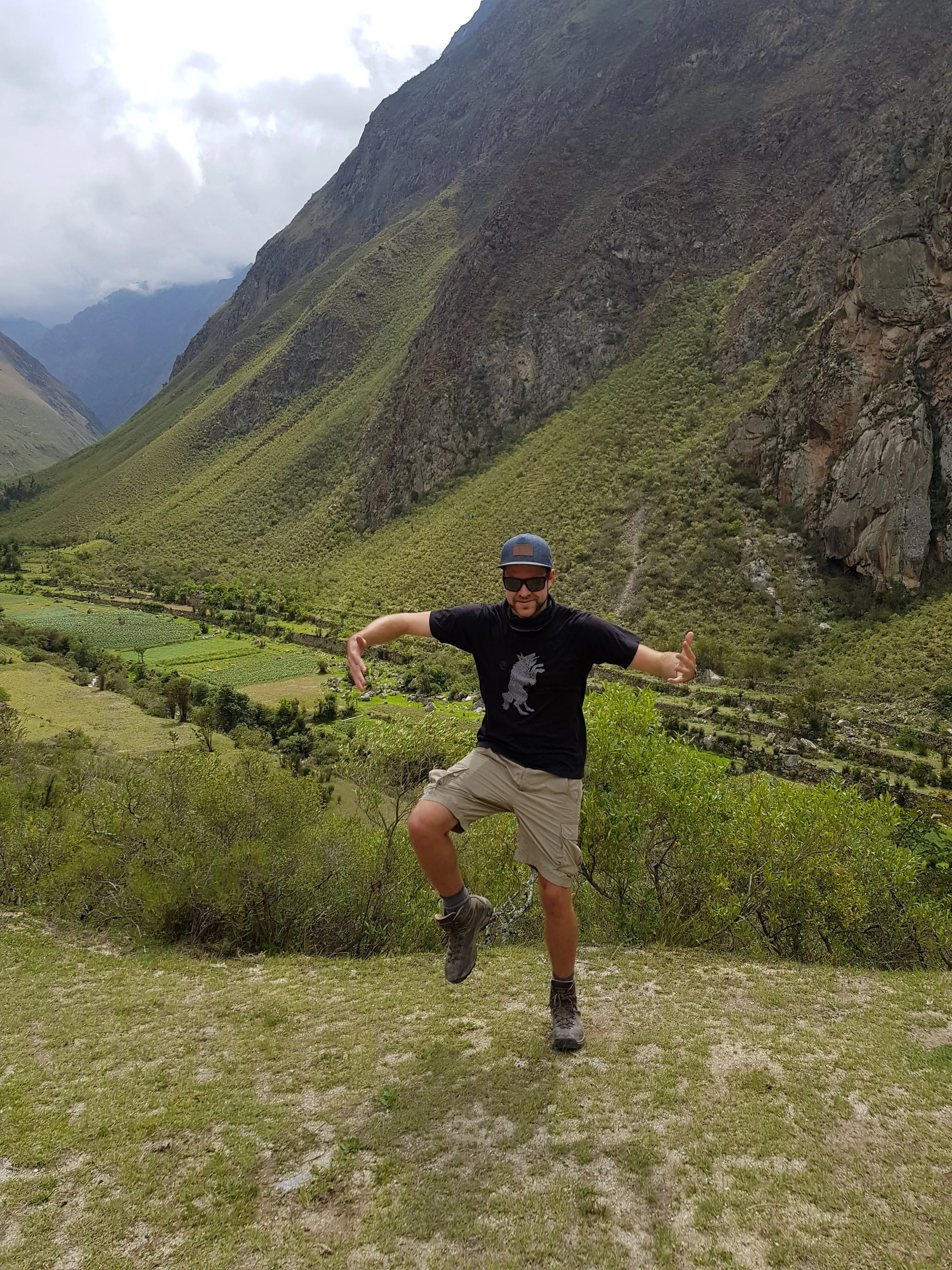
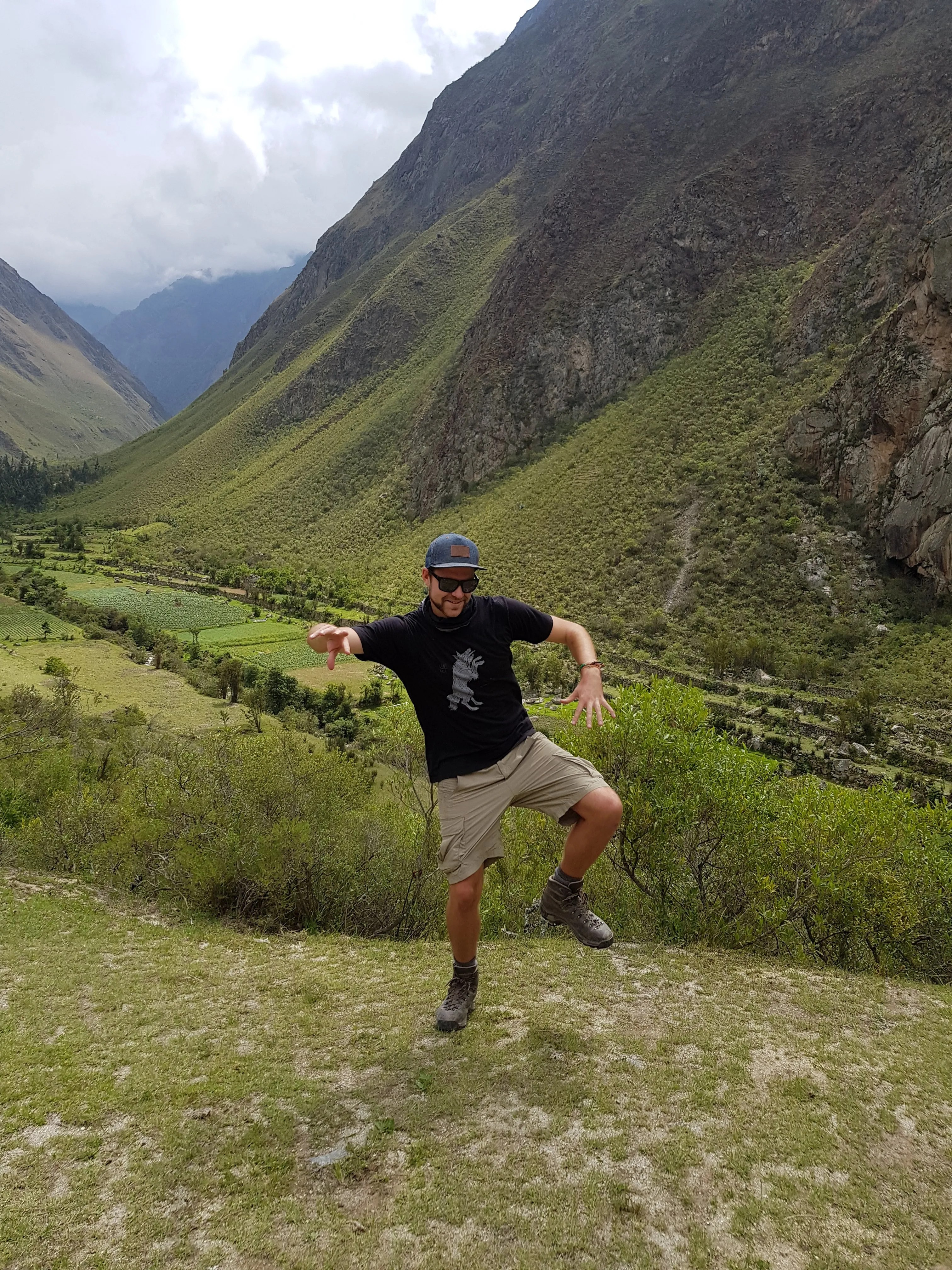
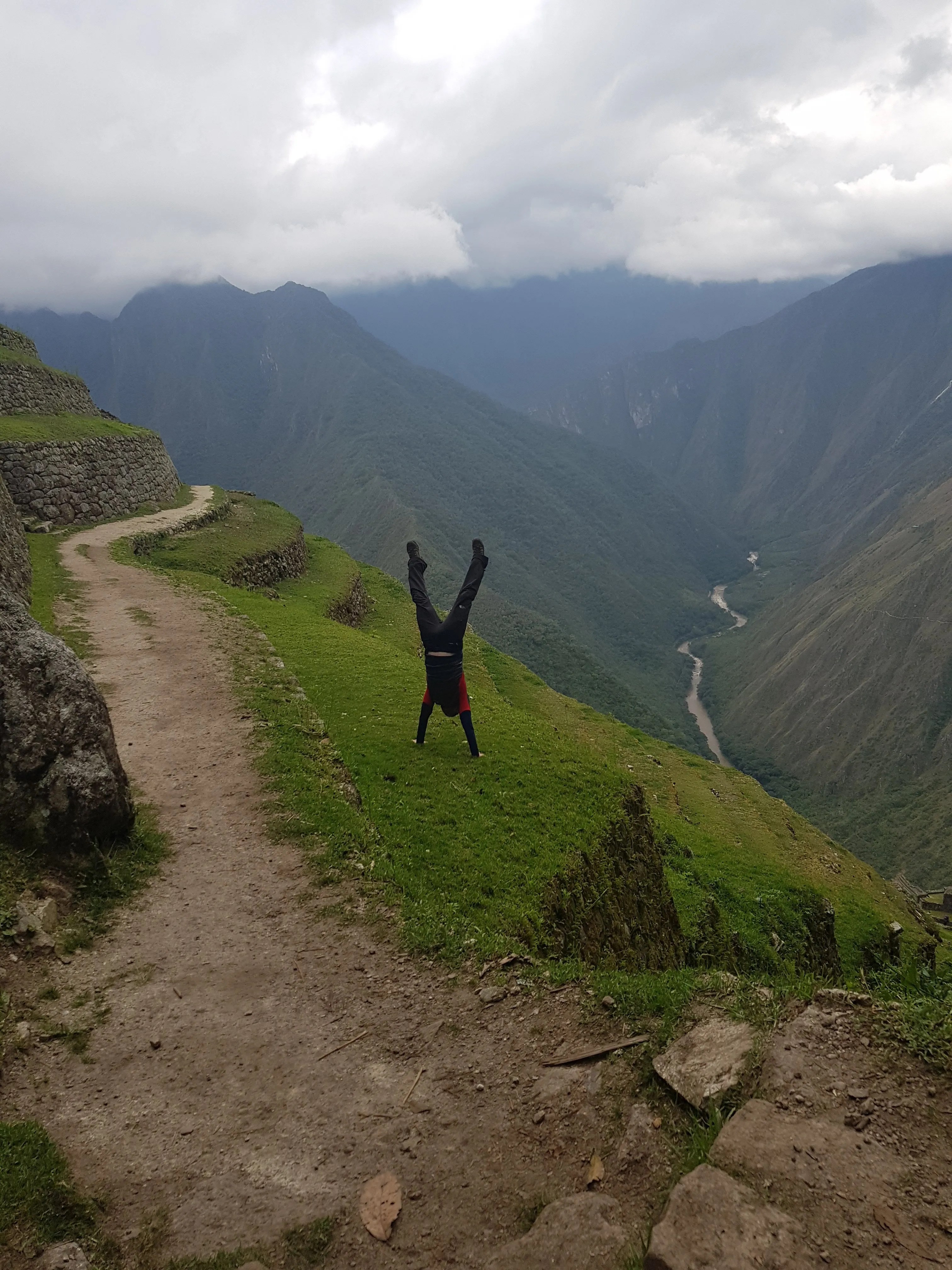
Today was my favourite day of the trek. Up to now I could generally be found at the back of our group of 14, with one of the guides, Willian, who was great at making us take breaks and not go beyond our limits. However, today was mostly downhill which suits me much better. Several of the group struggled more today because of the impact on their knees, but for me this was much preferable than the ascents. At one point, a small group of us, inspired by the amazing running porters, decided to run down the ancient stone steps with them, for about 30 minutes. It was exhilarating and I had a massive smile on my face when we reached our next checkpoint, the ruins at Phuyupatamarca and waited for the others, filling the time by doing some handstands above the valley. The drop in elevation meant that I felt fine and my breathing and heart rate returned to normal almost immediately upon stopping. It felt bizarre given that I’m usually out of breath for a few minutes having run twenty minutes for a tram in Amsterdam!!
DAY FOUR: WINAY WAYNA TO MACCHU PICCHU
Distance: 4km
Starting elevation: 2,650m
End elevation: 2,430m
Start time: 0330 (!!!!)
End time: 0730
# of showers: 1 (upon return to hotel at 1930)
# of poos: lots (also upon return to hotel and its functioning, clean toilet)
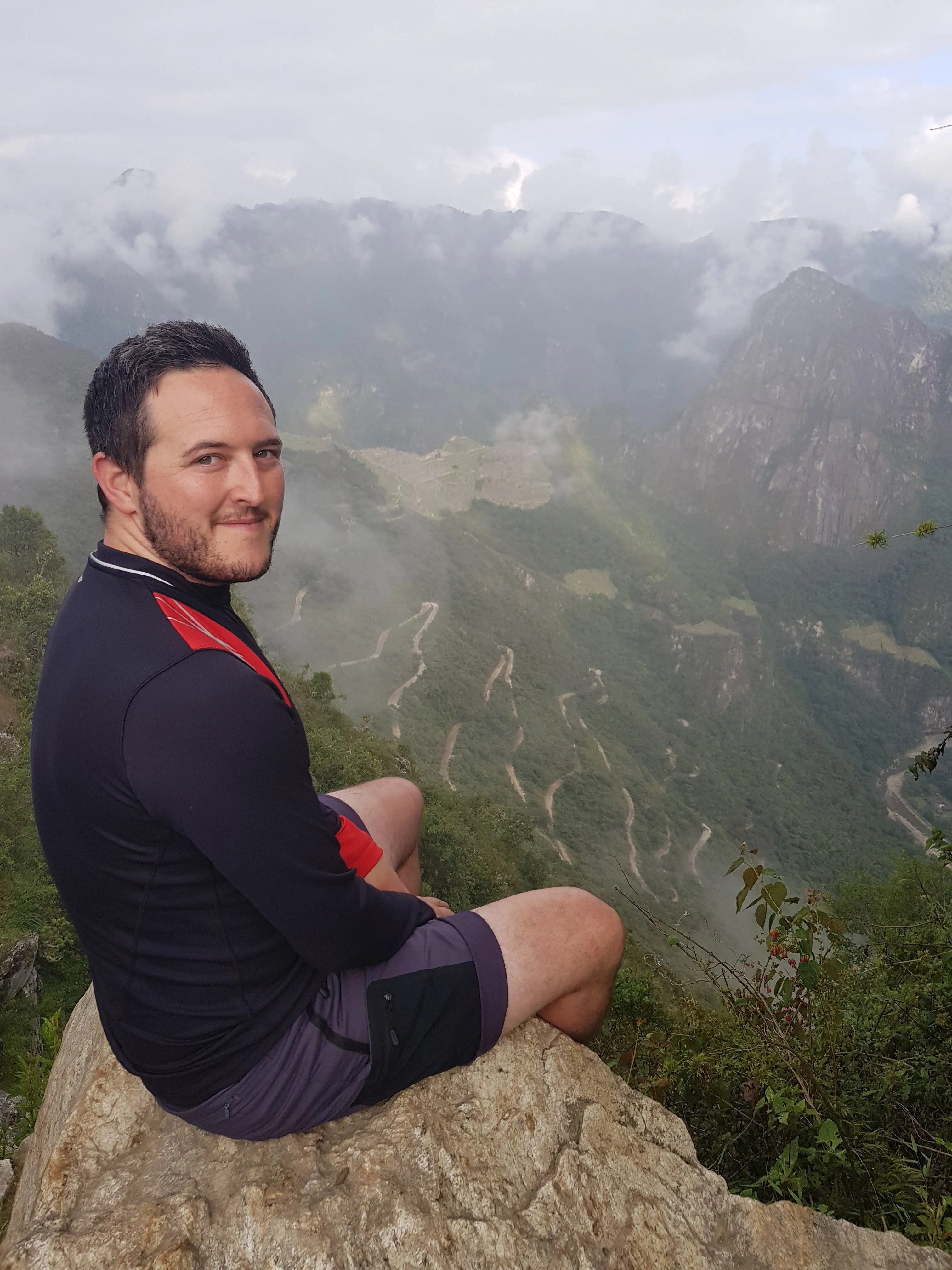
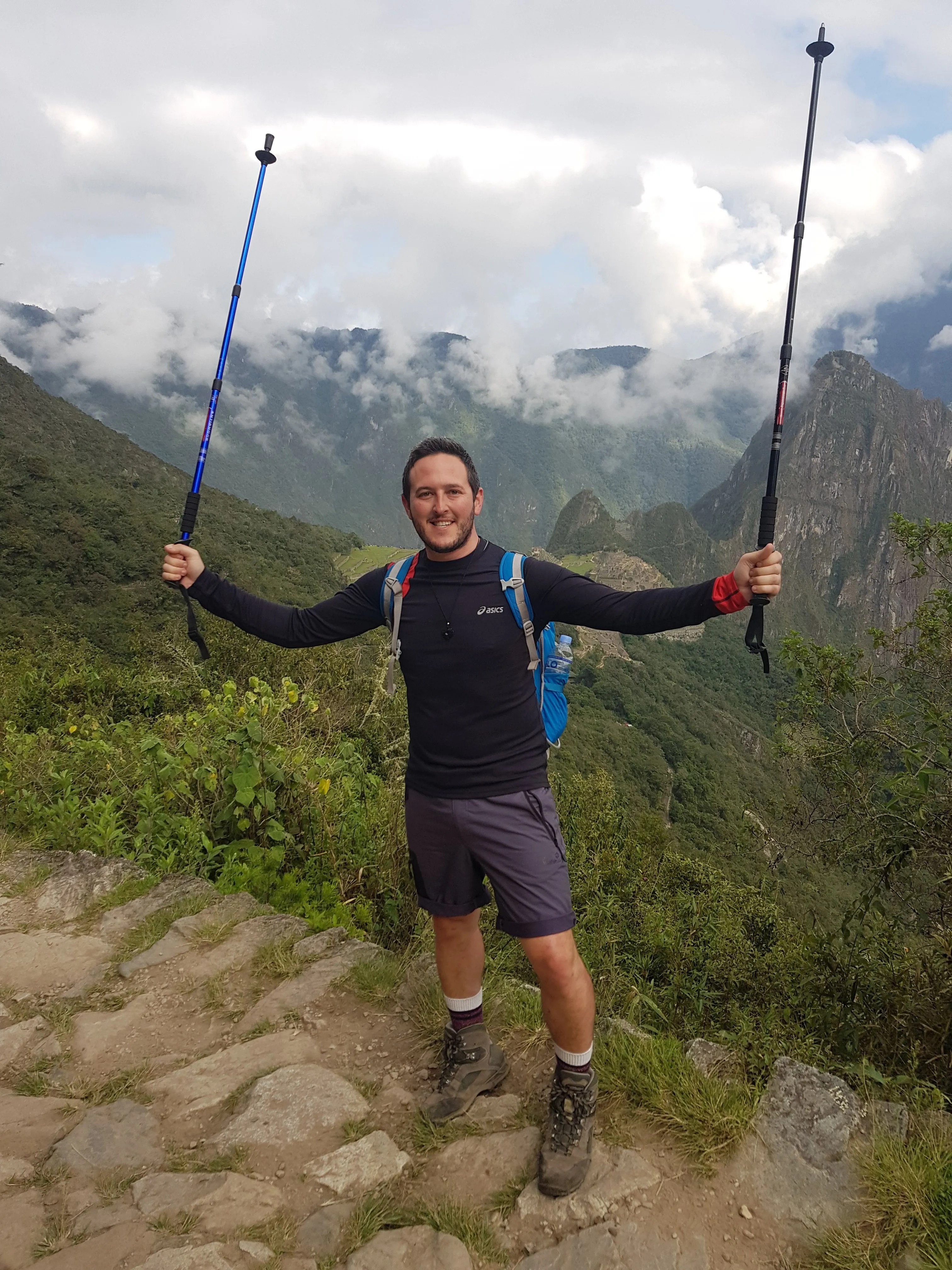
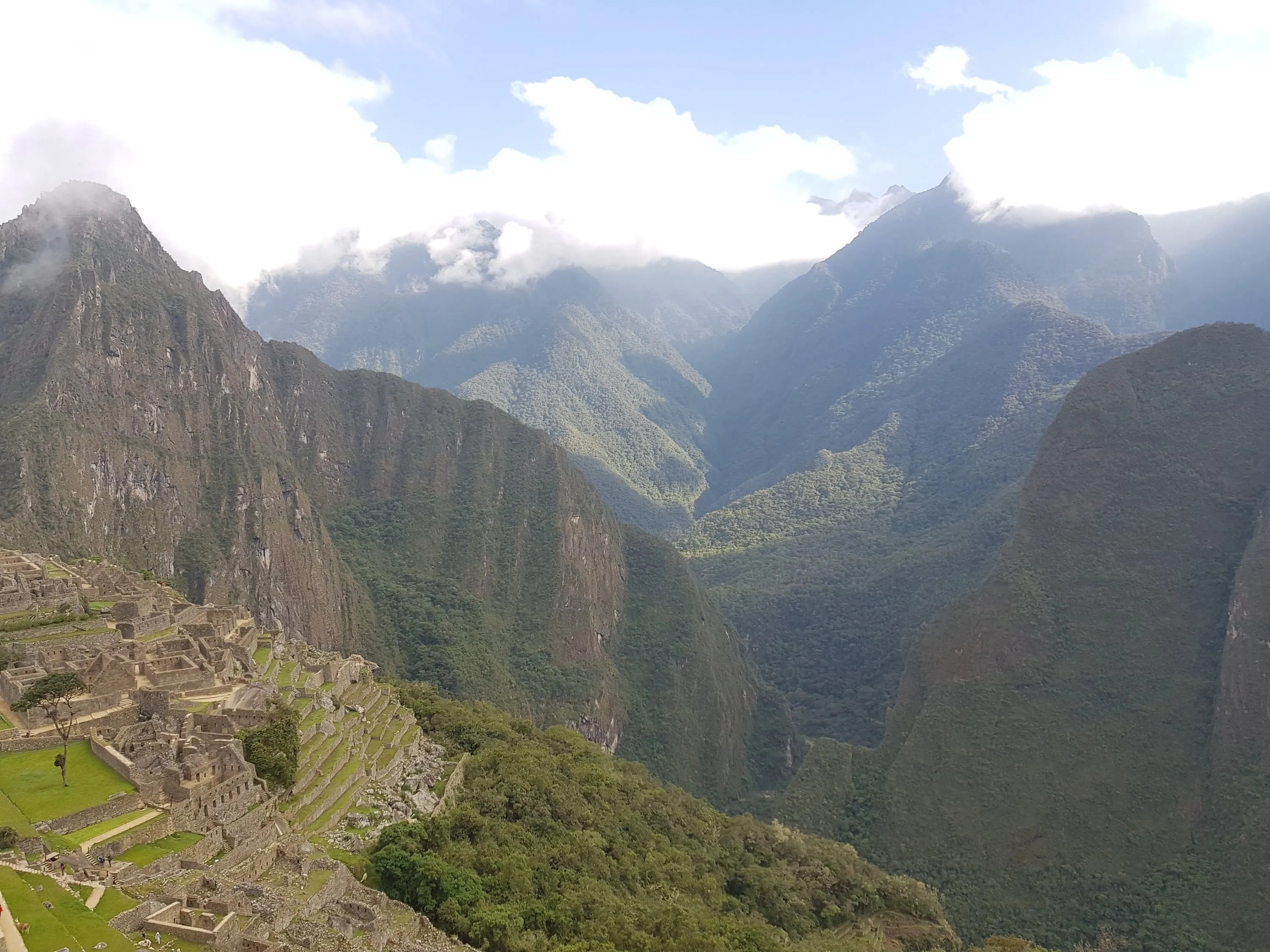
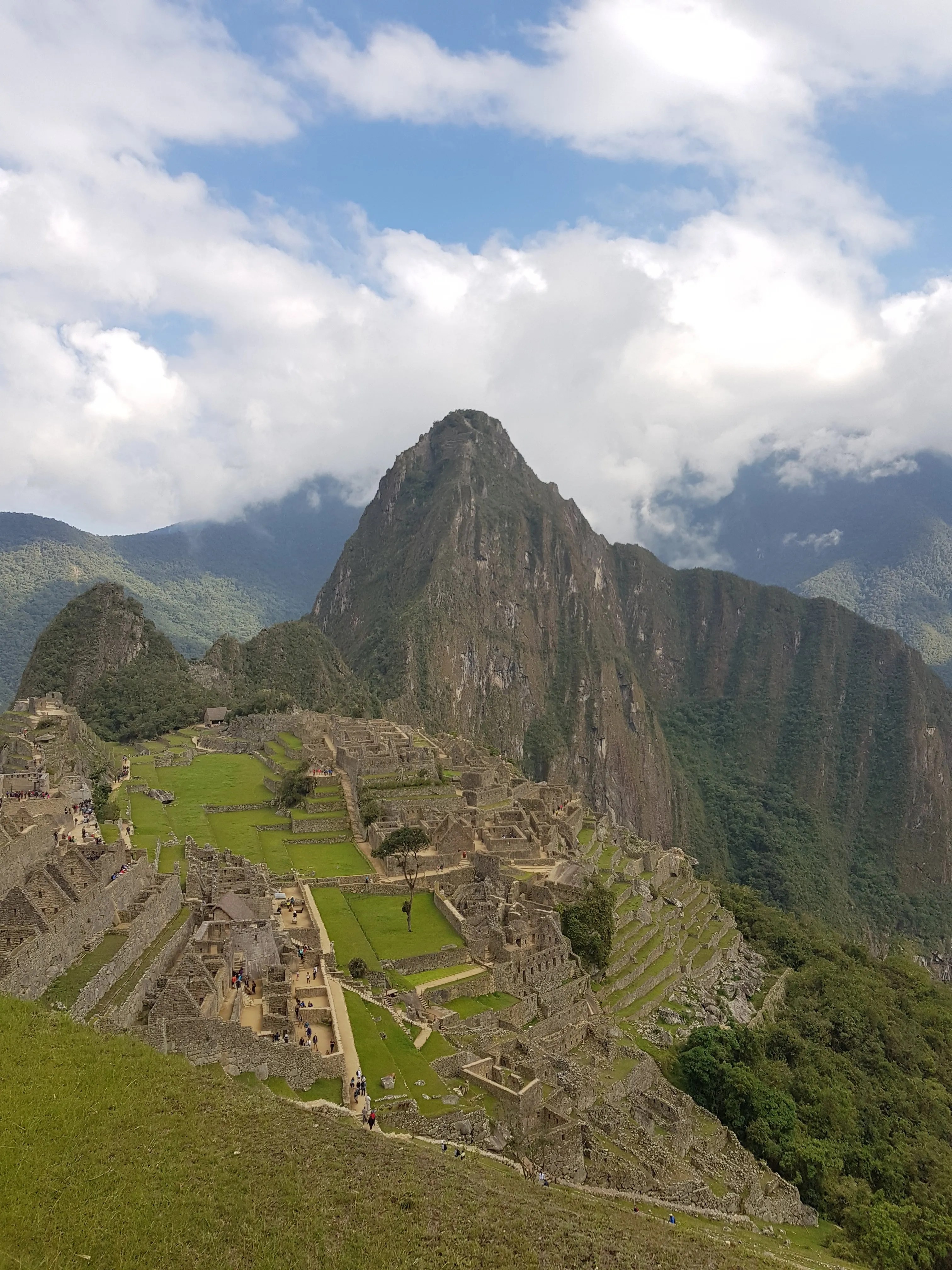
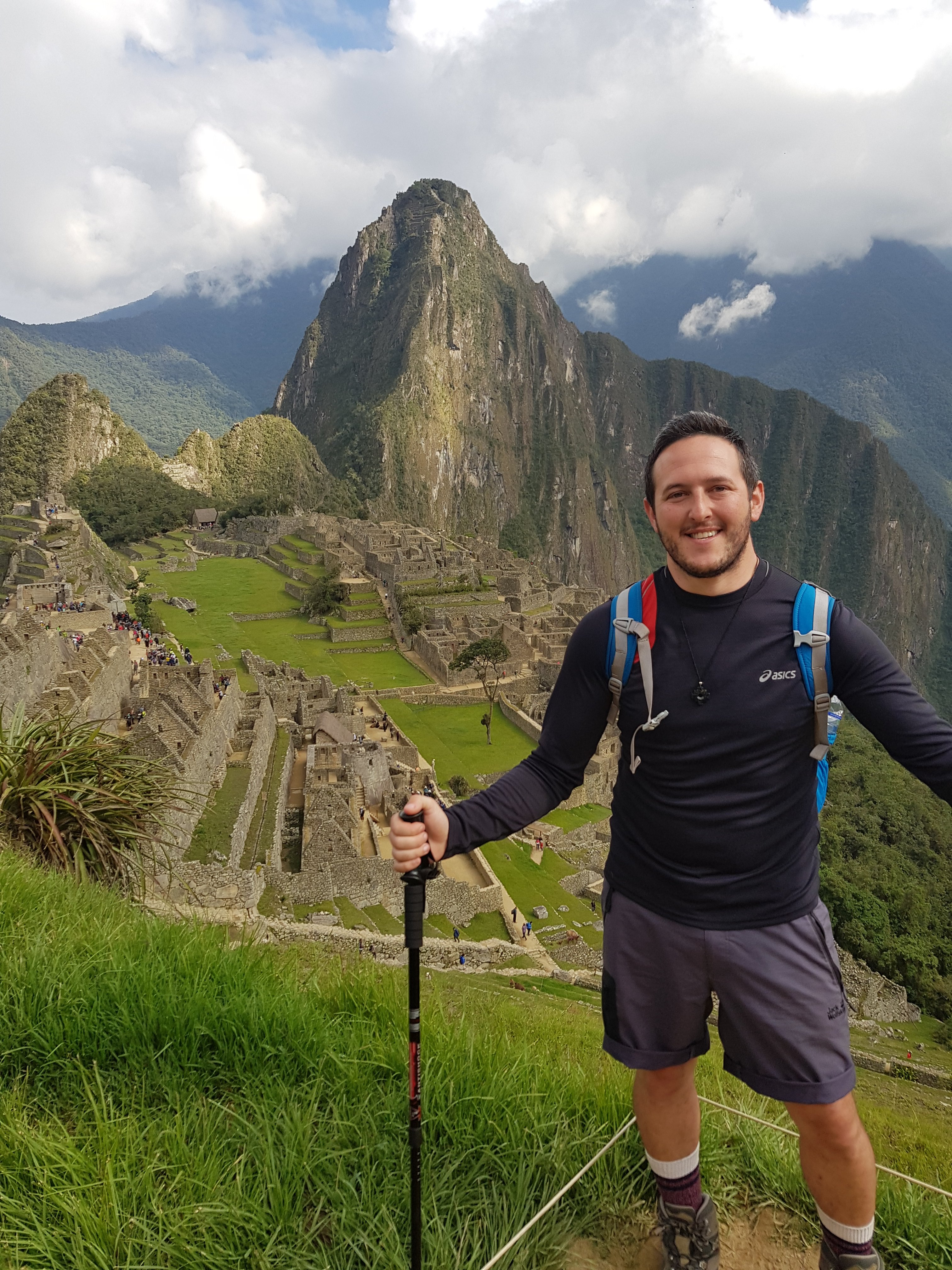
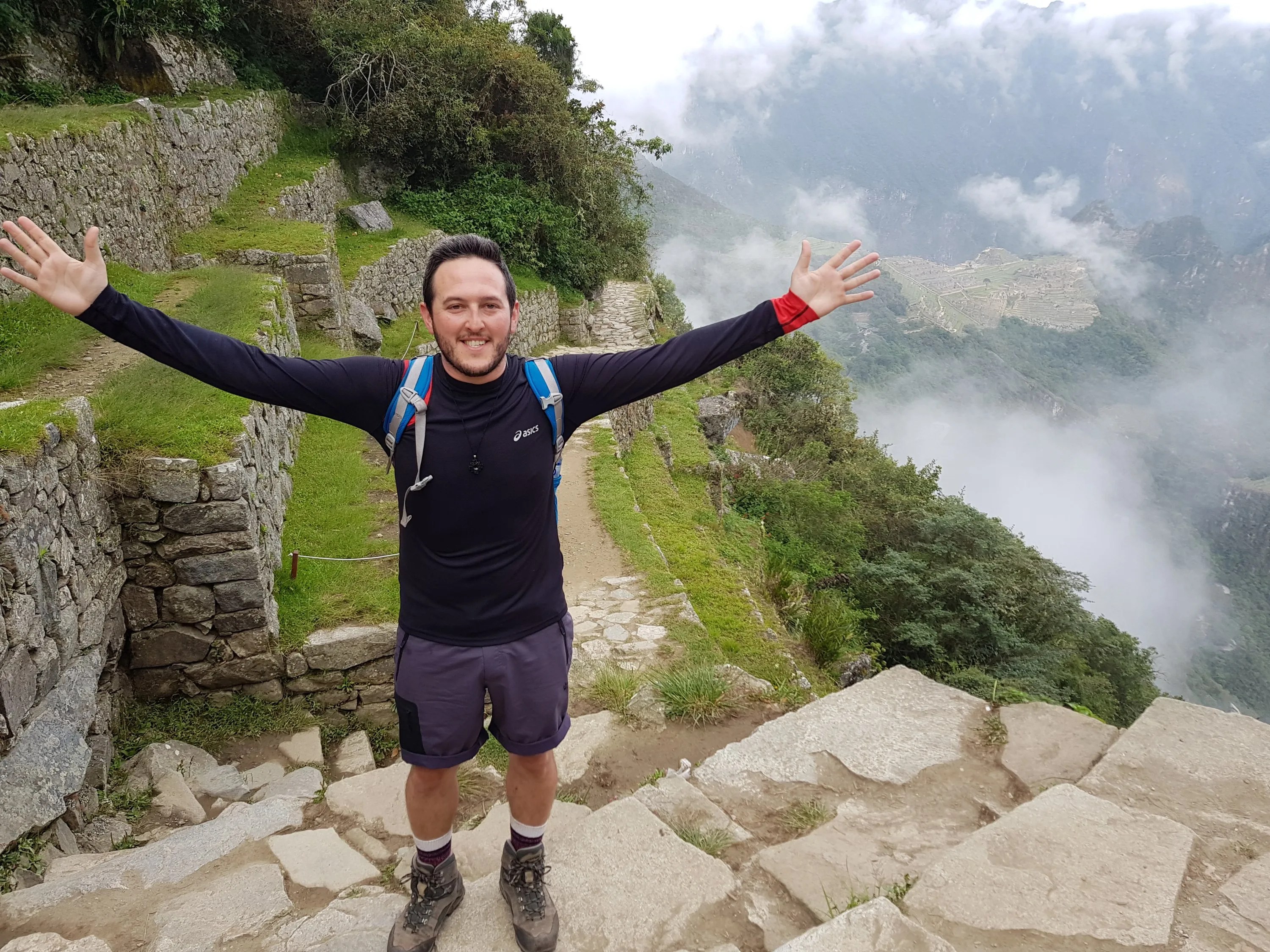
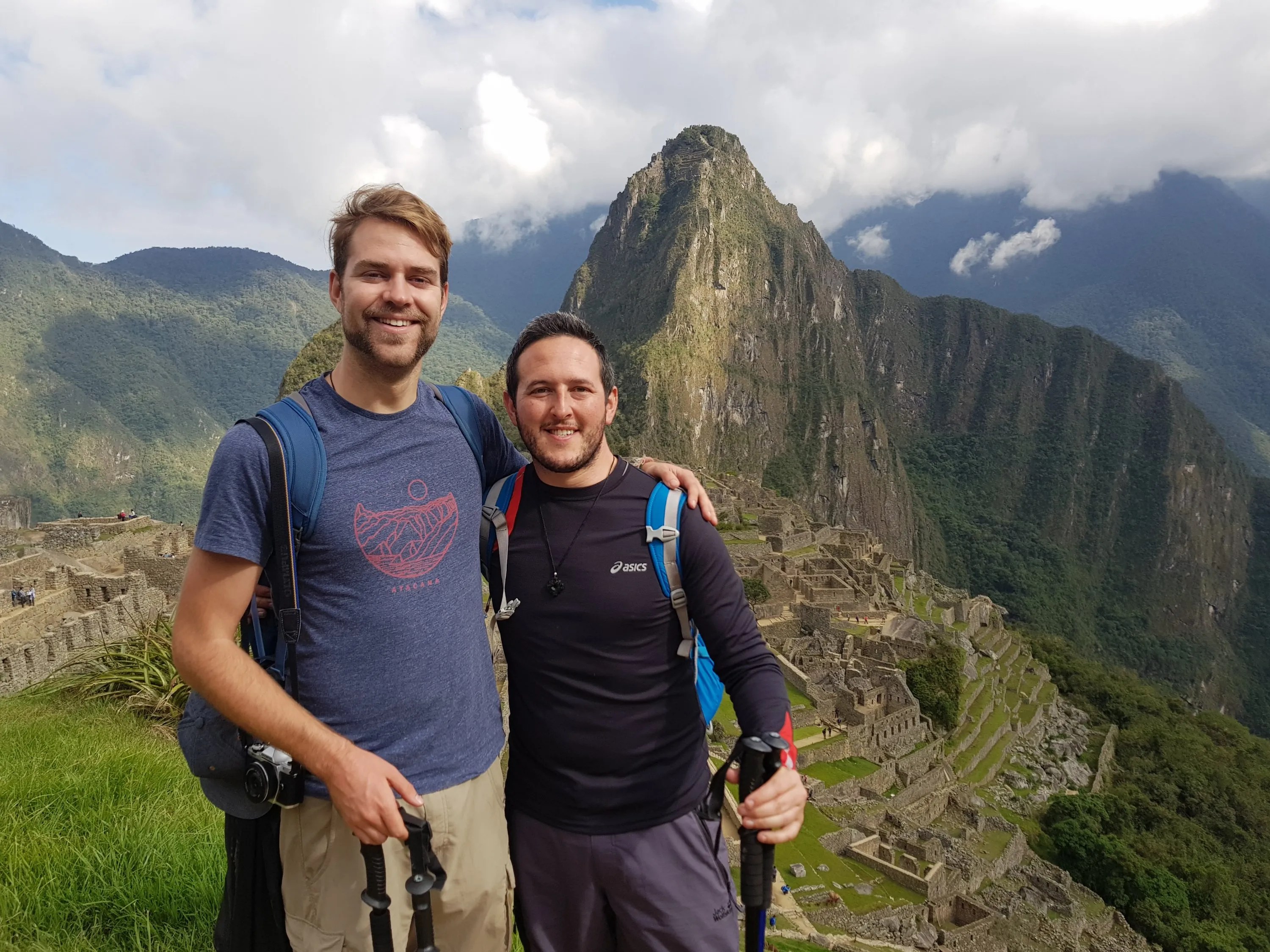
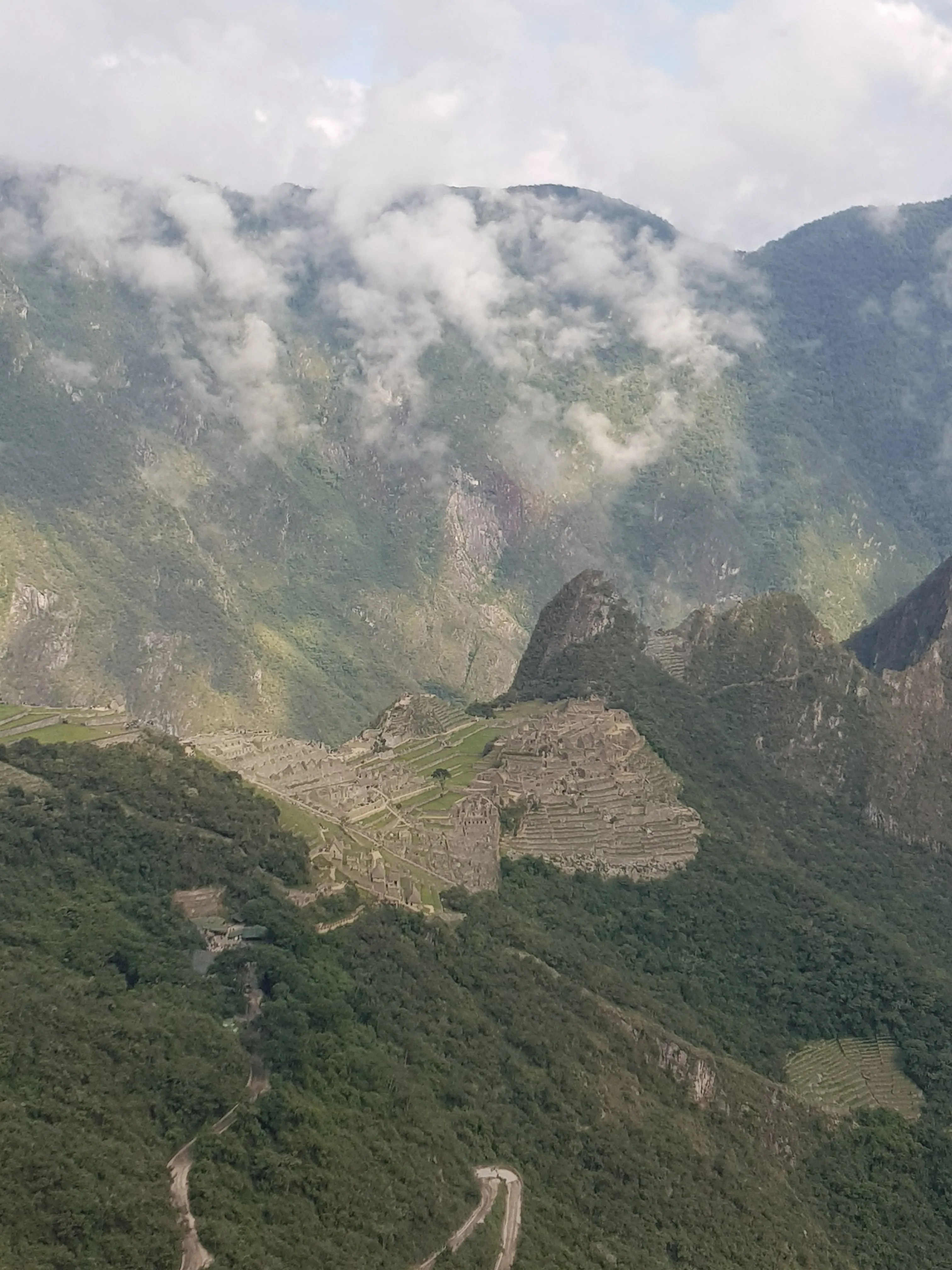
The porters woke us up at the ungodly hour of 0300 to start the short walk to the Sun Gate and our first sight of Machu Picchu. When I booked this trip, the brochure said we would arrive at Machu Picchu at sunrise, but this wasn’t entirely true. We walked along the jungle path for fifteen minutes, before joining the queue of hikers who were waiting for the path to be opened at 0530. Ian ‘entertained’ us with the five jokes he has memorised for such an occasion, our polite laughter the only sound piercing the early morning silence. The gates were promptly opened at 0530 and we began the 75 minute walk up to the Sun Gate. By this time, sunrise had come and gone, and after climbing the final super steep steps, we were treated to our first sight of the famous Inca city of Machu Picchu. Except we weren’t. A mist had rolled in at exactly the worst moment, and all you could hear were the disappointing sighs of smelly and tired hikers. Thankfully the sun worked its magic and the mist soon cleared to reveal the ancient stones. It’s a truly remarkable sight and it’s hard not to be impressed by the spectacle.
After the obligatory photos, I was craving some alone time, so I went for a coffee and sandwich before playing with the numerous well-fed pooches who hang around the entrance of the sight hoping for scraps from tourists. Ian and I then caught the bus to the nearby town of Aguas Calientes (literally HotWaters) and celebrated our achievements with a couple of litres of beer and WiFi. I’m not sure Ian felt much of a sense of achievement given that he said he thought it was a lot easier than he’d imagined (needless to say I thought it would kill me at one point on the second day), or perhaps his achievement was managing to cope with me as a tentmate for three nights without killing me. Either way, the beer went down a treat.
The group met for lunch after which we took the train back to Cusco. Following dinner, copious amounts of alcohol was consumed before a corresponding amount of dancing took place on the bar of a local club.
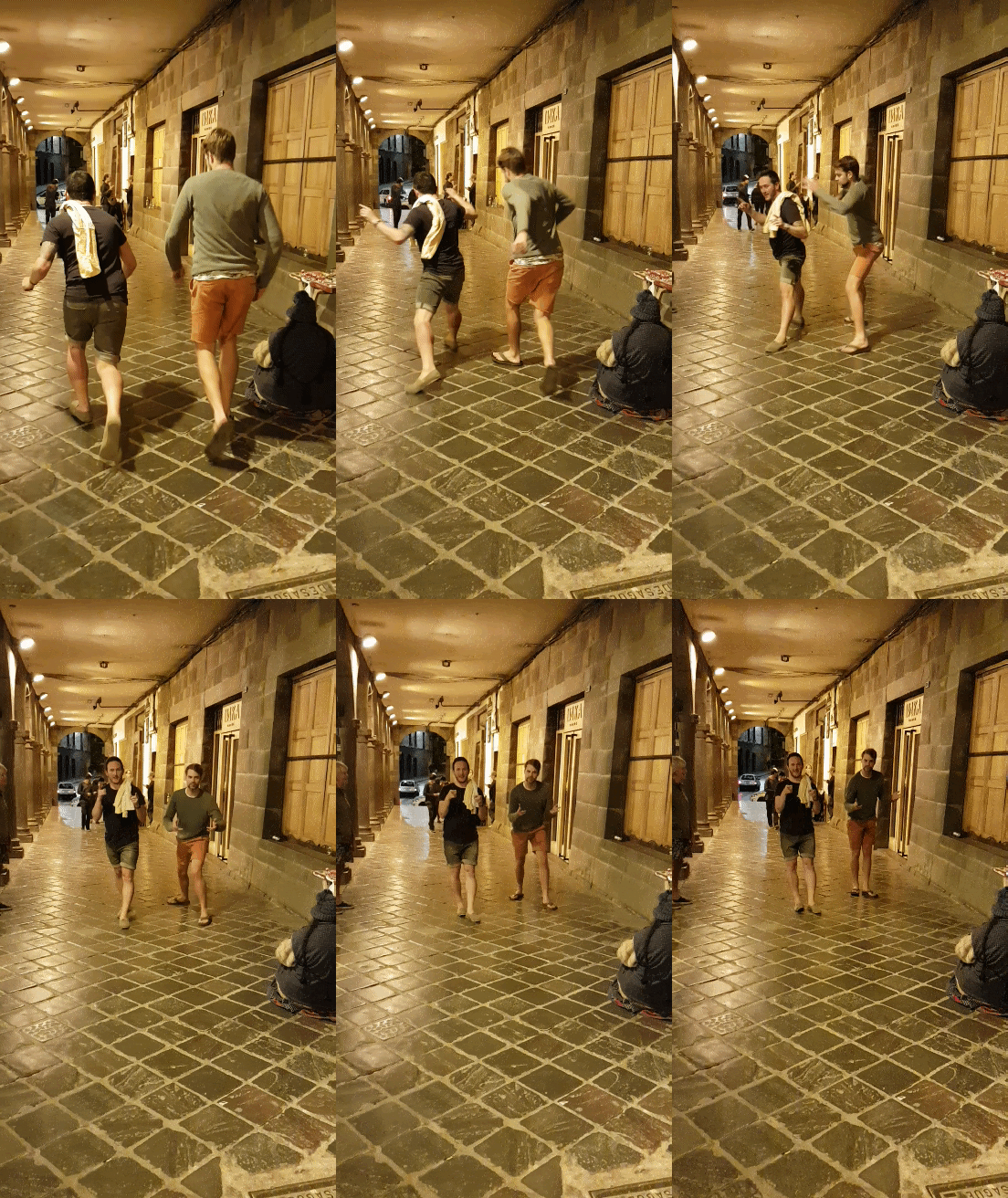
I decided to call it a night at 0430, 25.5 hours after I’d woken up the day before. The walk home was probably my favourite part of the evening, once Ian and I had discovered Cusco’s slippery stone pavements.
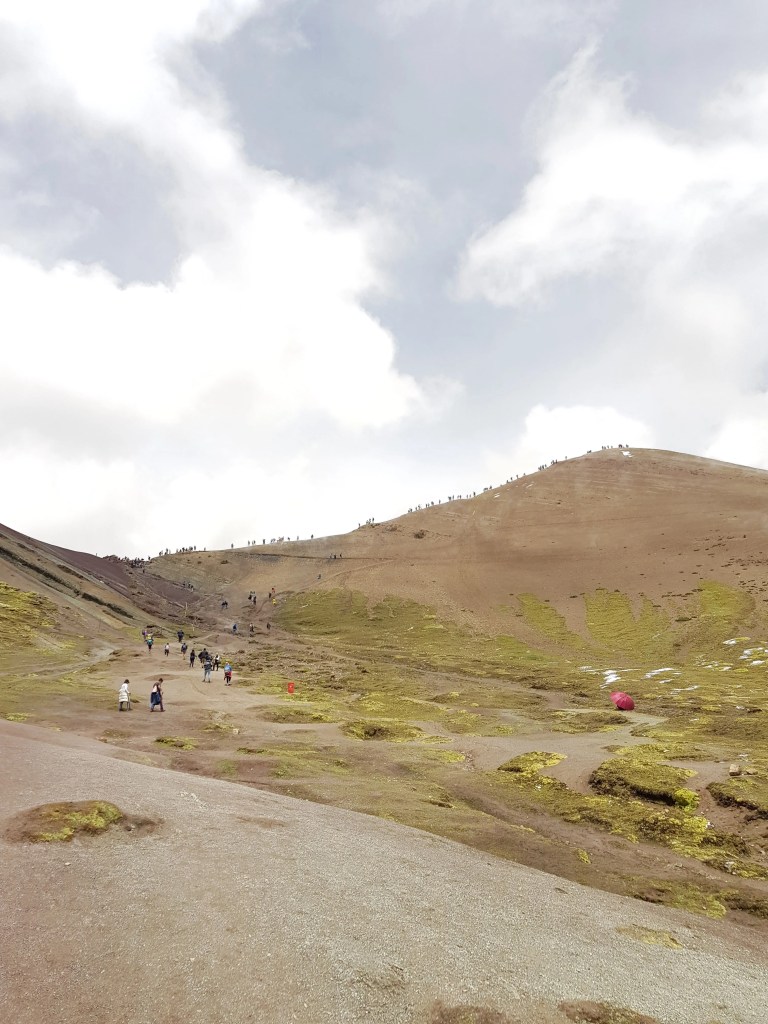
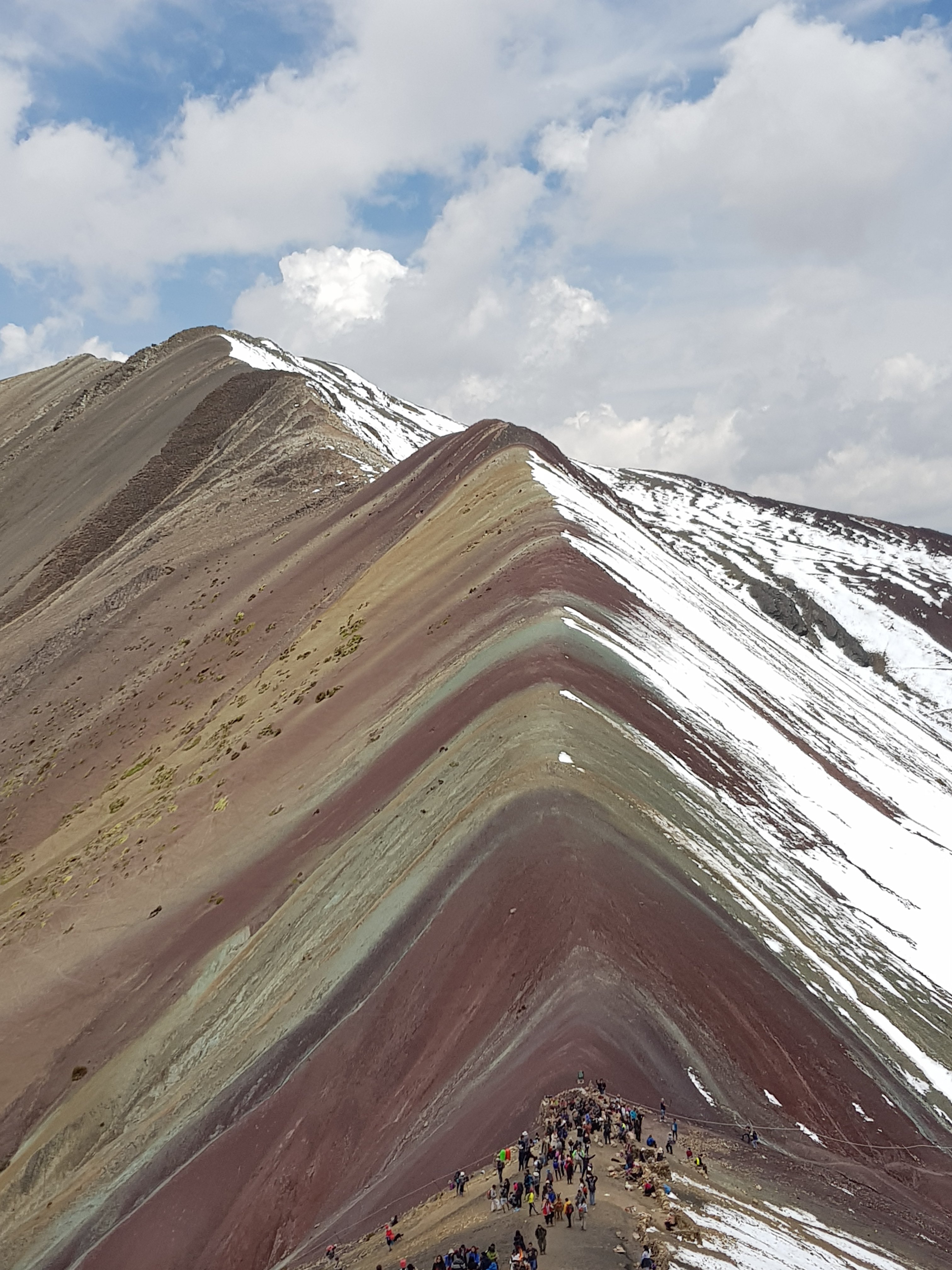
The main reason for visiting Cusco was its location as the gateway to Machu Picchu, but we’d also heard there was a great trek up to Rainbow Mountain, known as Vinicunca in the Quechua language, and having ogled the relevant Instagram hashtag, four of us decided it was definitely worth doing. I’m not quite sure how or why we reached that conclusion given the following:
* The day trek requires a 0400 wake up call for a 0430 departure, and we’d return to the city at 1930;
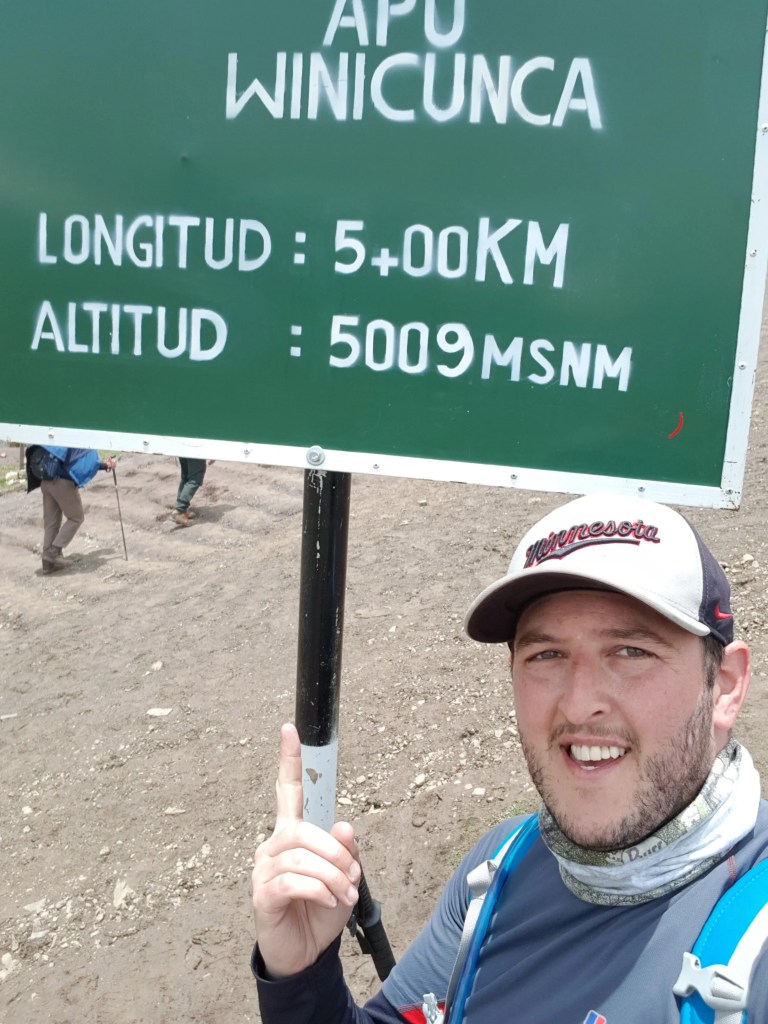
* The hike would take us to 5,200 metres above sea level, by far the highest we’d been on the trip so far, and altitude sickness isn’t fun;
* We would be doing the 4-day Classic Inca Trail hike to Machu Picchu after Rainbow Mountain, with only one rest day in between.
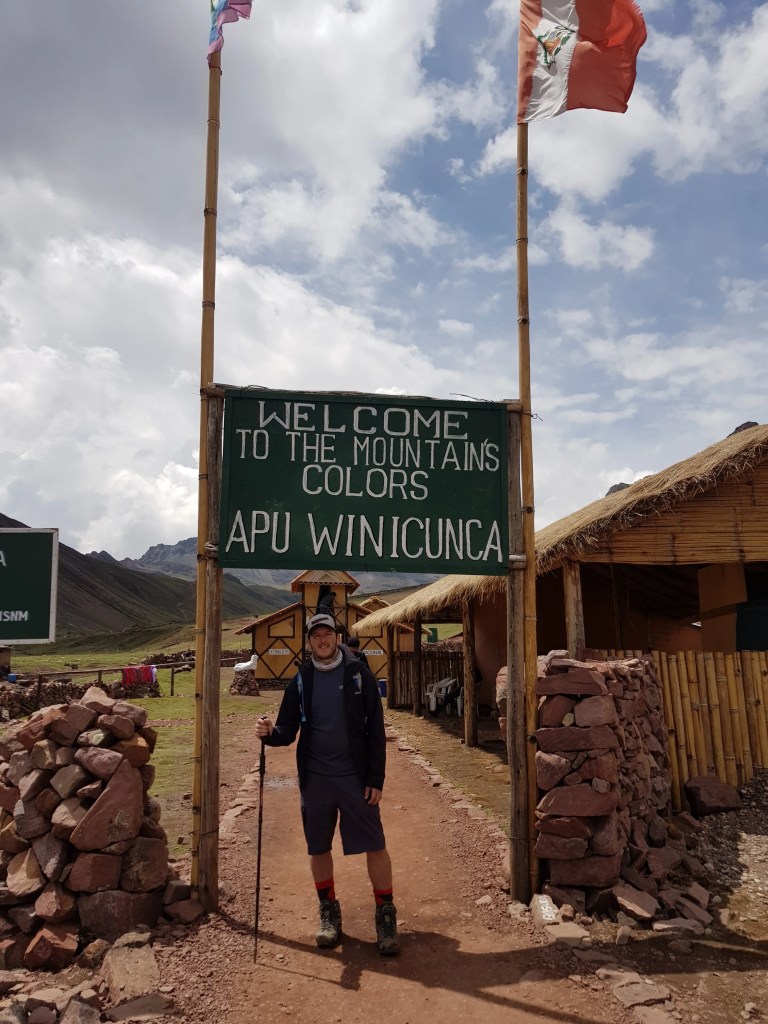
Like I said, I’m not sure how we decided it would be a good idea, but nonetheless we paid the fees and off we went. It took three hours by minibus to reach the start of the hike which is located at 4,700m above sea level (Cusco is 3,600m). On the way we stopped for a very hearty breakfast, but as those close to me already know, I can’t eat anything before ten in the morning. I managed to swallow a few bites of a bread roll while my fellow hikers scoffed cereals and panqueques, a far more sensible preparation for what was to come.
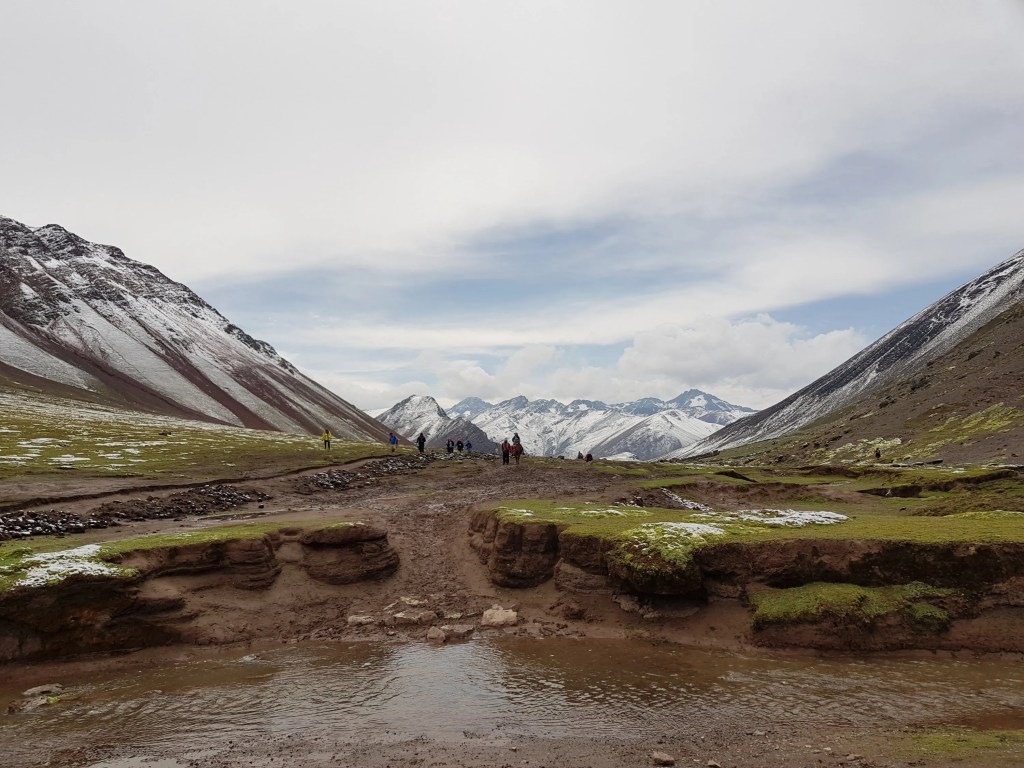
The first couple of kilometres were relatively flat so we declined offers of ascending on horseback – something I came to regret later – and we set off purposefully, the rhythmic clackclack of our walking sticks the only sound to be heard. The inclines got steeper after the third kilometre and it became a real struggle, especially as we had to reach the summit by a certain time in order to be able to descend in daylight and return to the city by early evening. There were horses available at various spots on the mountain and Ian came up with the mantra of ‘every horse you pass is a victory Gazza’ which really helped by appealing to my competitive nature. However, by the time we got to the fourth kilometre, that competitive streak which has served me so well throughout my life decided to desert me when I needed it the most, and I finally gave in to the idea of completing the trek on horseback. The only snag, however, is that horses were forbidden from going any further from where I currently stood. I stopped and wondered what I’d done to deserve such a cruel fate.
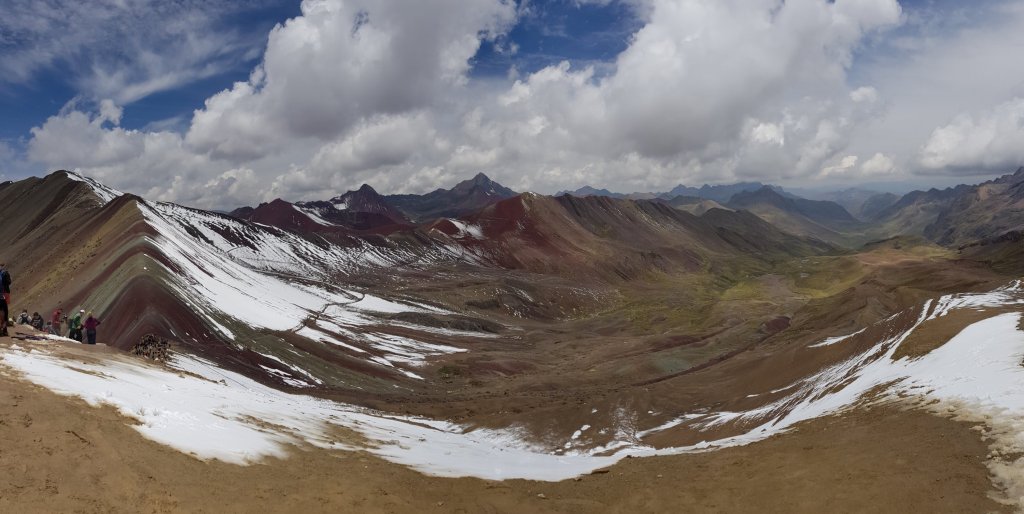
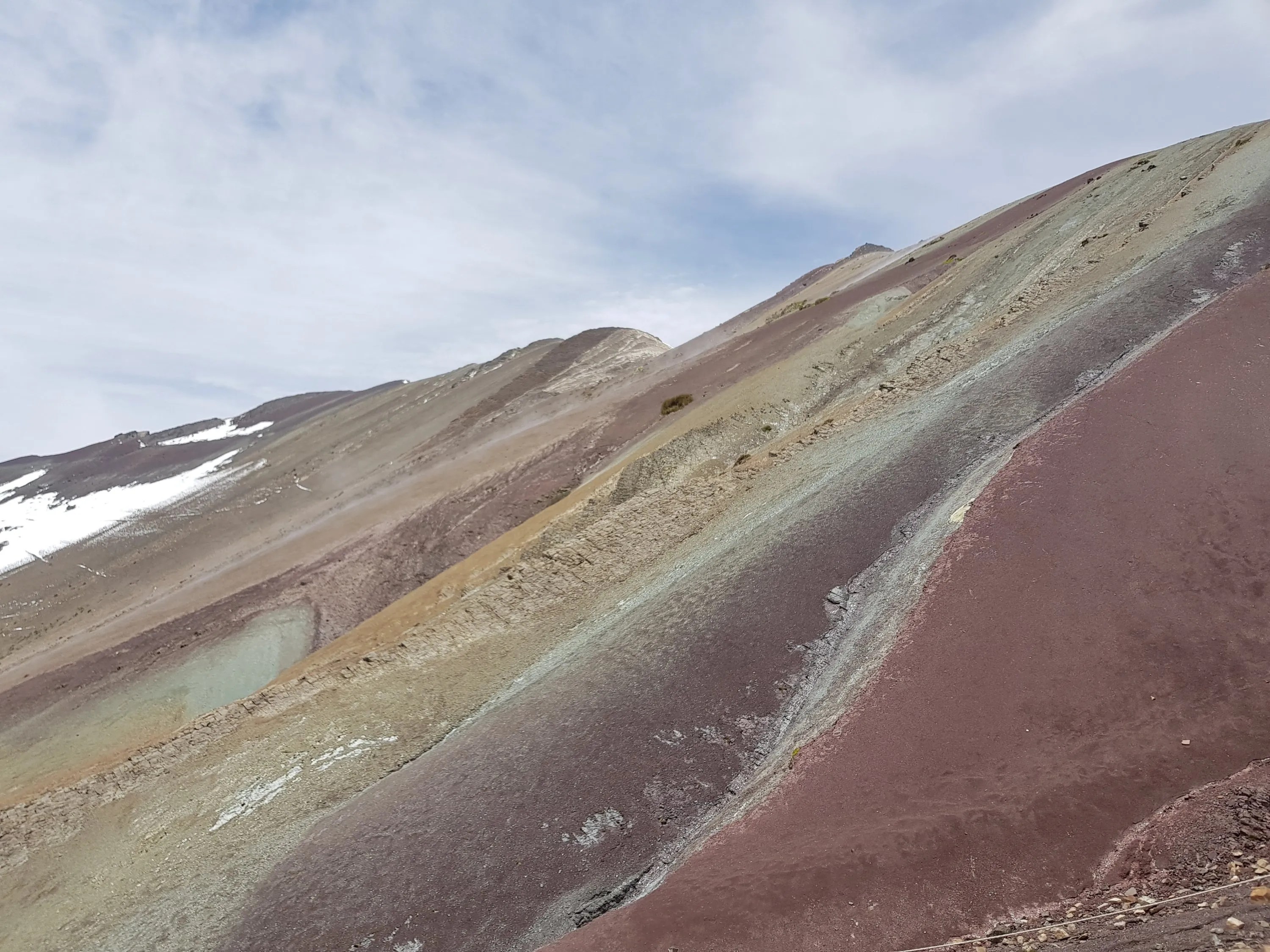
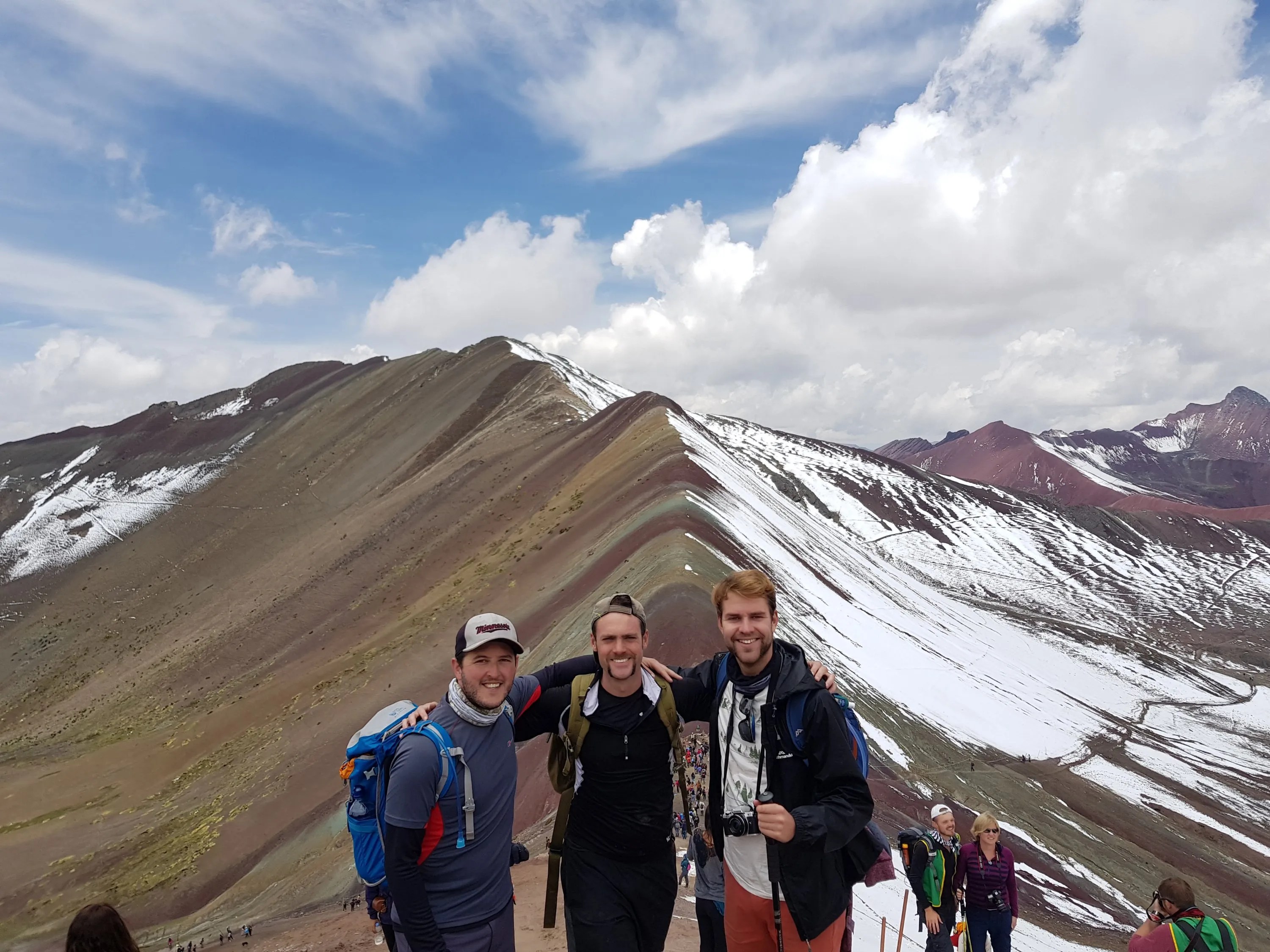
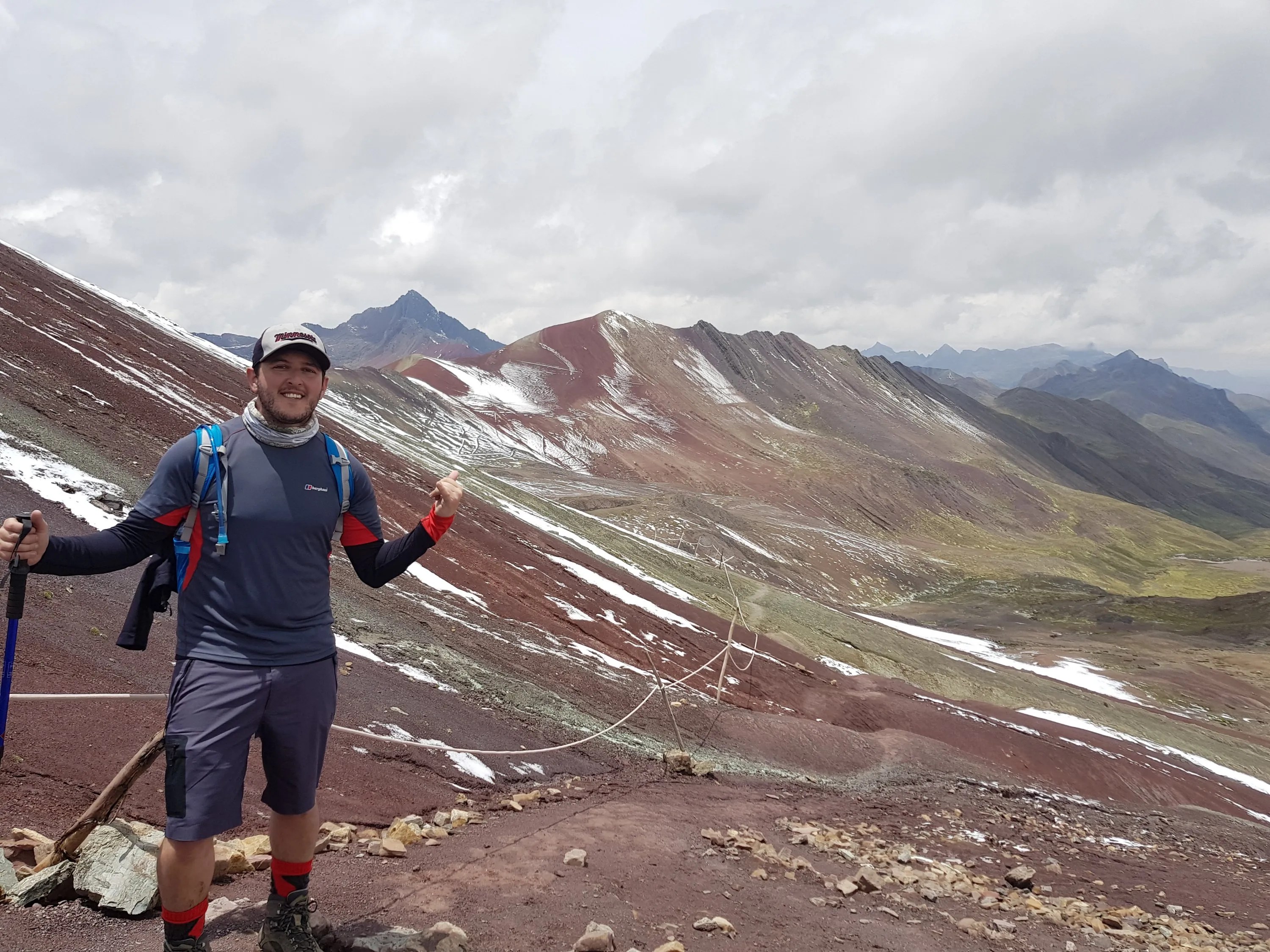
The final two inclines were only another 400m or so, but were undoubtedly the hardest physical activity I’d ever asked my body to undertake. To give you some perspective, the summit of Rainbow Mountain is only 125m lower than that of Mount Everest Base Camp. Thankfully, on this final descent the level of camaraderie really swelled and there were lots of encouraging ‘you can do its’ and ‘you’re almost theres’ from not only the group, but complete strangers who knew exactly how I was feeling. They definitely brought on an extra spurt of energy and the sense of elation on reaching the summit was like nothing else I’d ever experienced. I think Ian and Matt were a little taken aback by the bearhugs they were subsequently treated to.
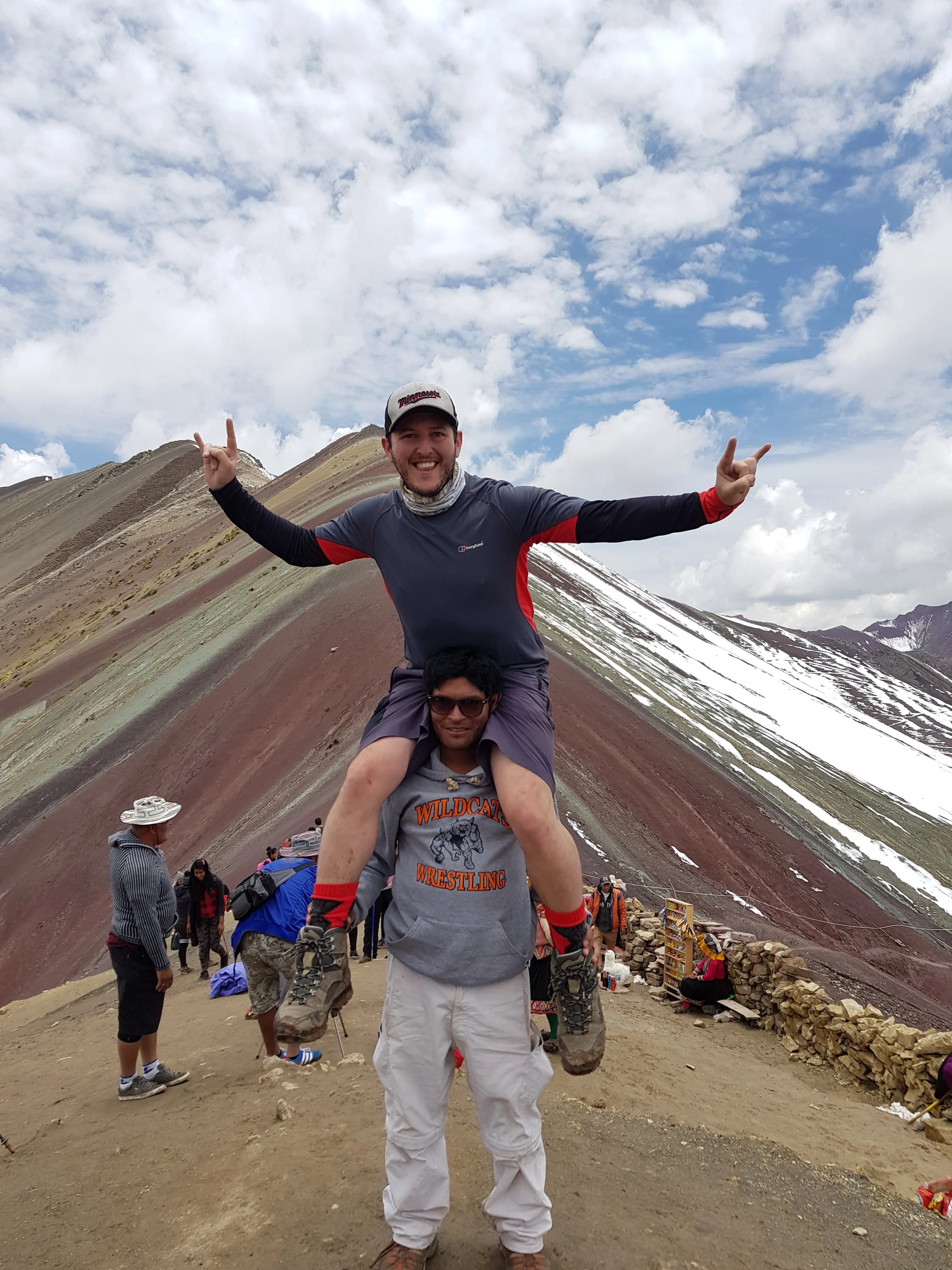
The view from atop the summit was something unique to me. So many different coloured soils were exposed, hence the name Rainbow Mountain. It was amazing to look back from where we had come and the realisation hit of what we’d achieved. After 45 minutes of celebratory back slaps and selfies (including one sitting on our guide’s shoulders, at his insistence!) we began the descent back to the start. The downhill terrain was much appreciated and we were making good time when I started to feel a bit ‘iffy’. It began with a splitting headache, and was soon followed by an upset stomach. Matt (who thankfully I’d shared rooms with already on this trip) and I sped up once I told him that I needed to reach the dreaded drop-toilet that we could see in the distance asap. We arrived just in time, however, upon squatting into position I realised that not only did the rickety door not lock, it did not even close shut. Poor Matt stood guard as my stomach fell out of me at quite a rate of knots, no doubt wondering what he’d done to deserve such a fate. I could see the hiking boots of fellow trekkers trudge by, and their footsteps increased in speed once their ears and noses were assaulted by indescribable sounds and smells. As I exited the shack, rather sheepishly I have to admit, Matt asked me if I felt better for the experience at least. I don’t think he was expecting my response to be in the form of projectile vomiting near his feet, and to be honest, neither was I. The combination of no breakfast and drinking lots of water meant that a constant stream of bright yellow liquid landed on the mountain for the next five minutes. Unlike in the drop-toilet, this time I could see the sympathetic faces of my fellow trekkers. It didn’t make me feel any better.
Matt, ever the gentlemen, accompanied me for the entire descent and I’d never been more glad to see a minibus in my entire life. Ian tried to make me feel better by telling me that another guy in our group had also puked, but I was too busy wallowing in my exhaustion to pay much attention. The drive back to the city was the best medicine and for every kilometre we descended I felt much improved. So much so that upon arrival in Cusco, I felt like I did at the start of the day. We treated ourselves to a carbtastic dinner and red wine before collapsing into bed, telling ourselves that it was good prep before Machu Picchu the day after tomorrow. My body was not convinced.
We had our shortest truck journey so far on this trip (five hours), to reach the town of Chivay. I actually quite enjoy the long journeys on the truck; there’s time for reading, chatting, sleeping, contemplating and gazing in wonderment at our constant companion, the Andes. I’m not sure I’ll feel the same way after nearly four months on the road, but ‘vamos a ver’.
We arrived in town on the same day that the Peruvian national football team were attempting to qualify for the World Cup for the first time in 32 years. I wouldn’t usually watch a Peru vs. New Zealand football match, but national fervour had been evident everywhere we had been in the past week. Everywhere except Chivay it seemed. I thought it would be a fun experience to see the game in a bar with locals, but they were nowhere to be seen. Instead I settled for pizza and an early night as we were up at 0500 the next morning.
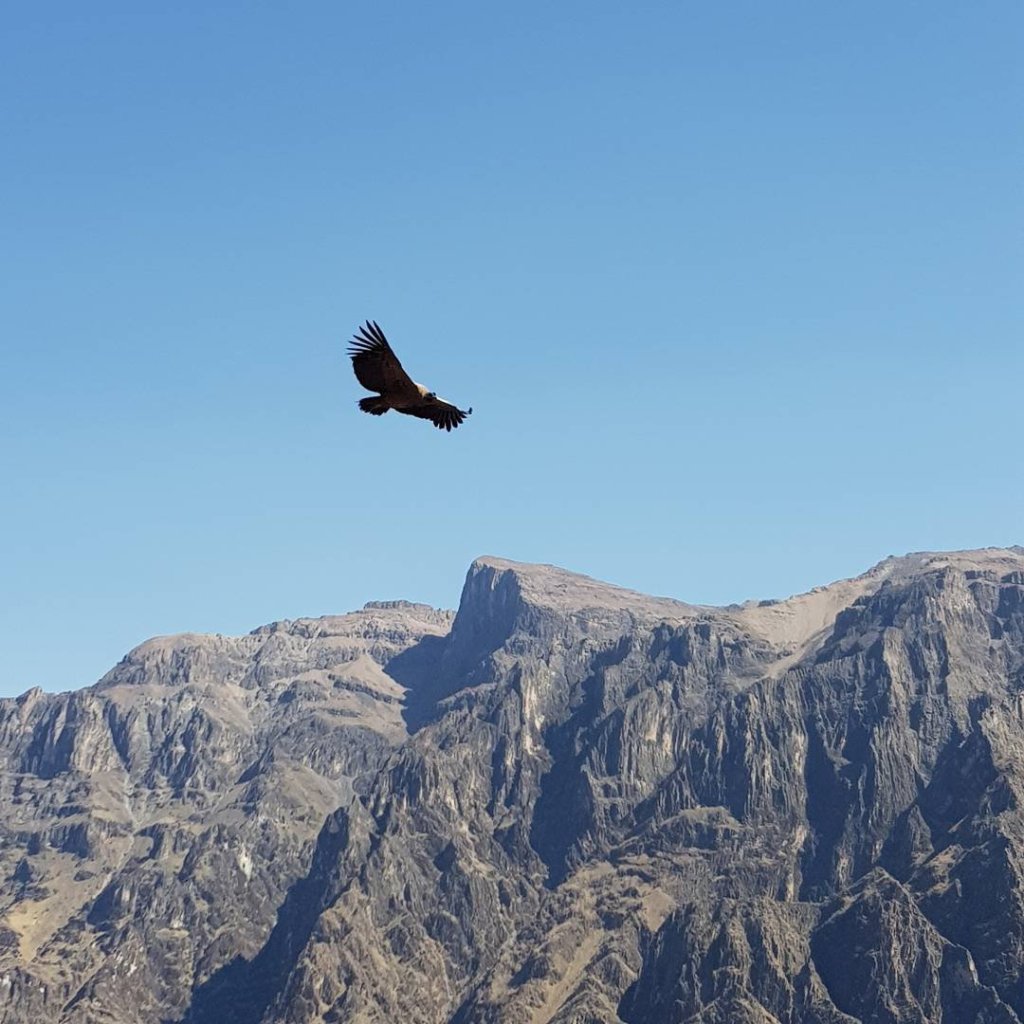
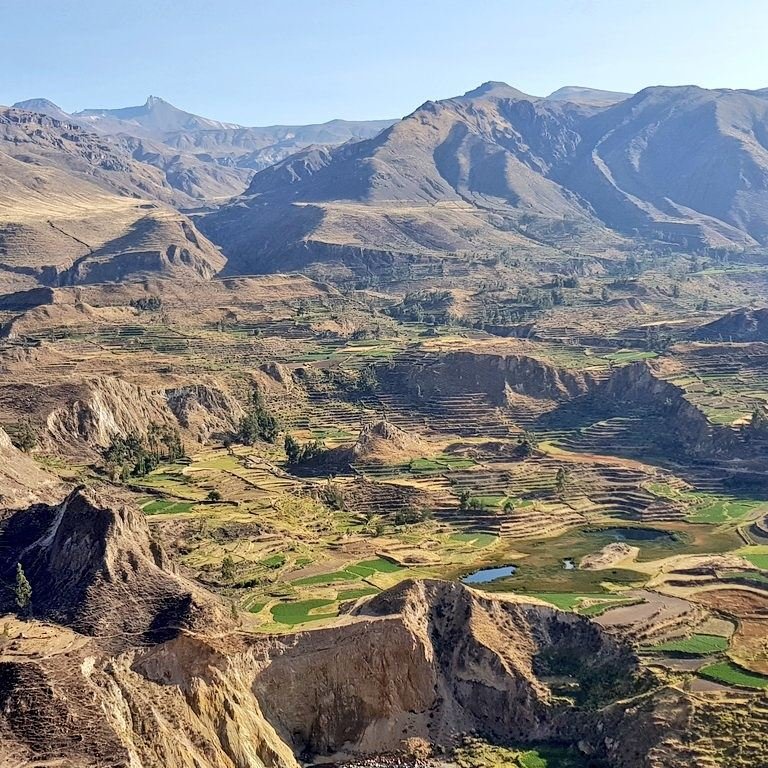
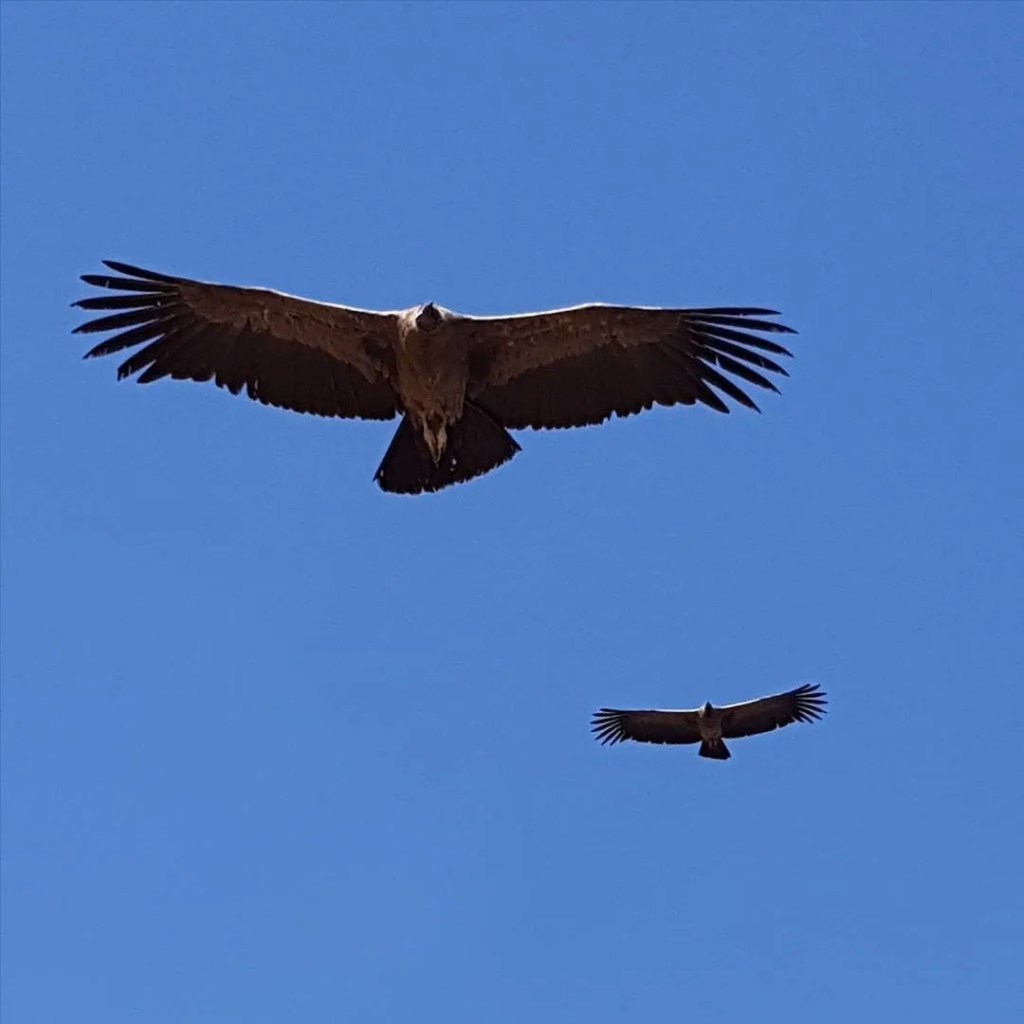
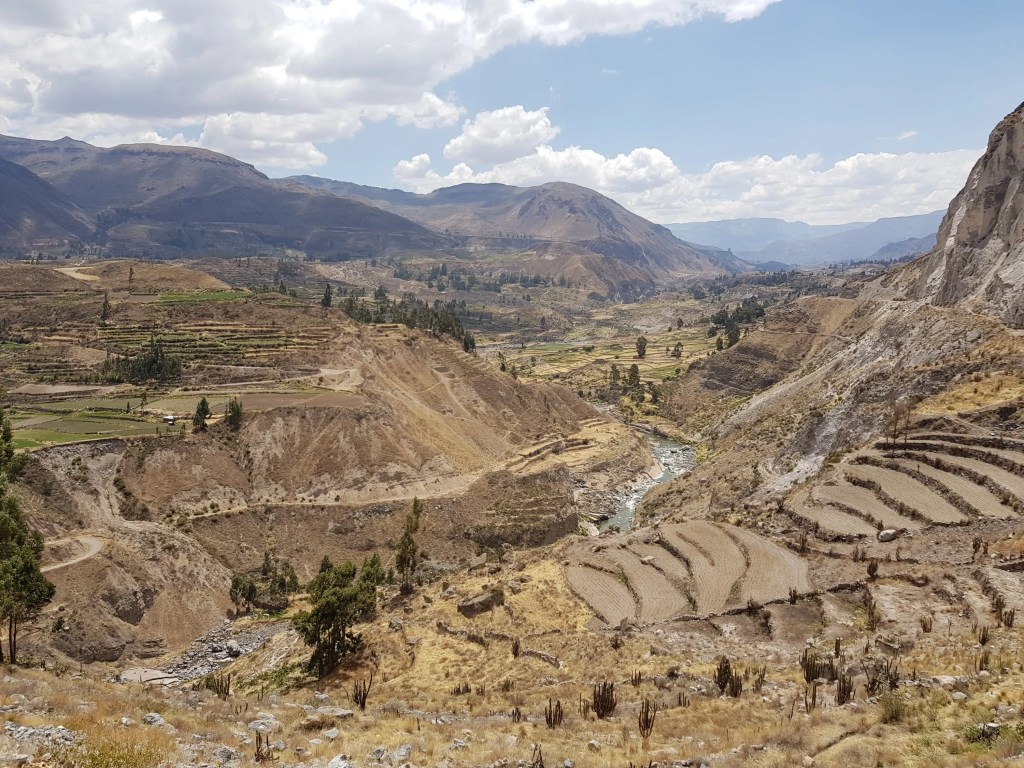
The reason for the early start, and indeed the reason we were in Chivay, was to visit the incredible Colca Canyon and it’s famous Andean condors. Colca is the world’s second deepest canyon, and is almost 3,400m at its deepest point. And for all you geography buffs, no, the Grand Canyon isn’t the deepest canyon in the world. Colca is twice as deep as the Grand Canyon, but the world’s deepest canyon is, in fact, the nearby Cotahuasi. Anyway, that’s enough geography for one day. We stopped at some truly breathtakingly scenery, before trekking to the best viewpoint for condors spotting. Our guide was very knowledgeable and sensed that the giant birds would in fact come to us and lo and behold, within five minutes of hiking, we saw shadows being cast on the foliage by the giant wings of a condor. A collective gasp went up when it glided directly above us, using the early morning thermals to get lift.
We continued hiking to the designated viewing platforms, but it wasn’t necessary given the show the birds were putting on for us throughout the walk. As it was a sunny day, and as we were technically not on a major road, we could ride on the roof seats for the journey home. We were treated to an incredible five-condor flyby while marvelling at the landscape from the unobstructed rooftop view.
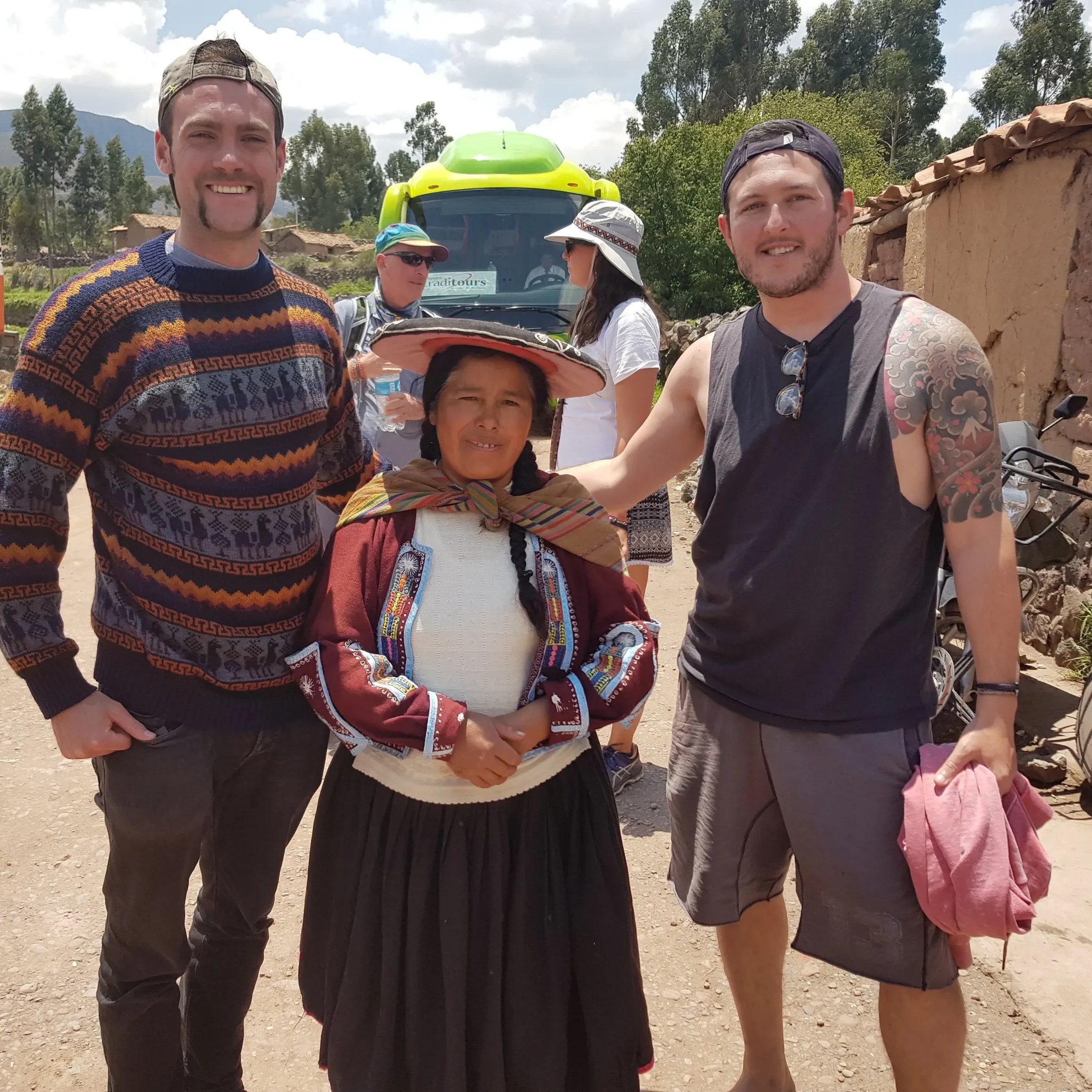
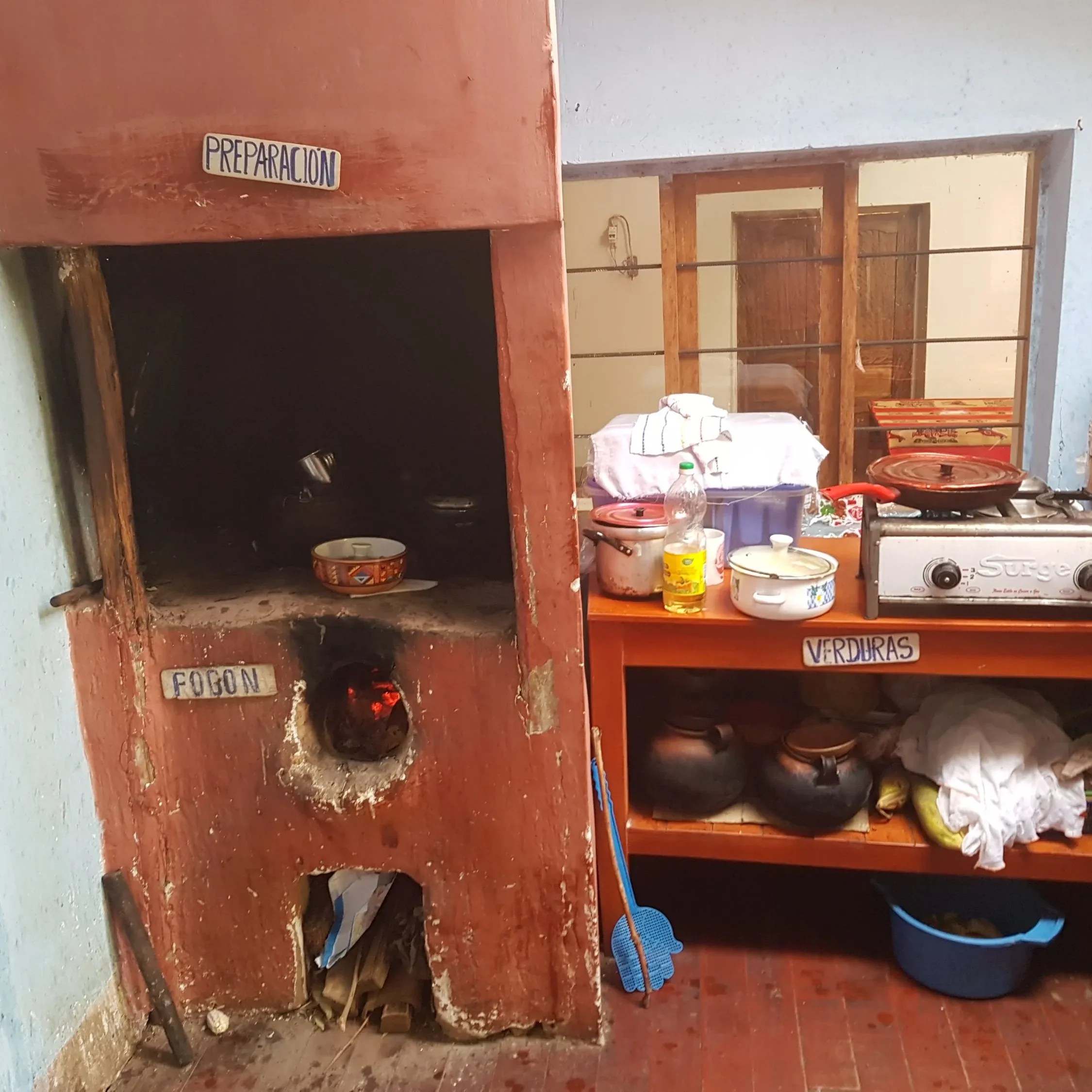
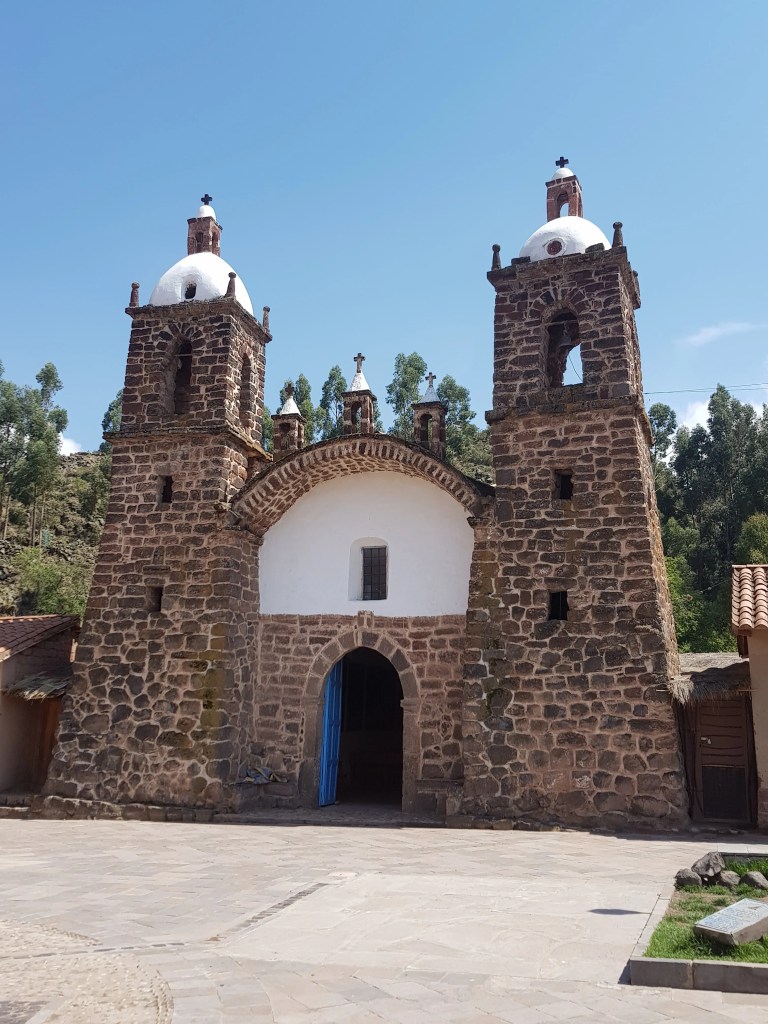
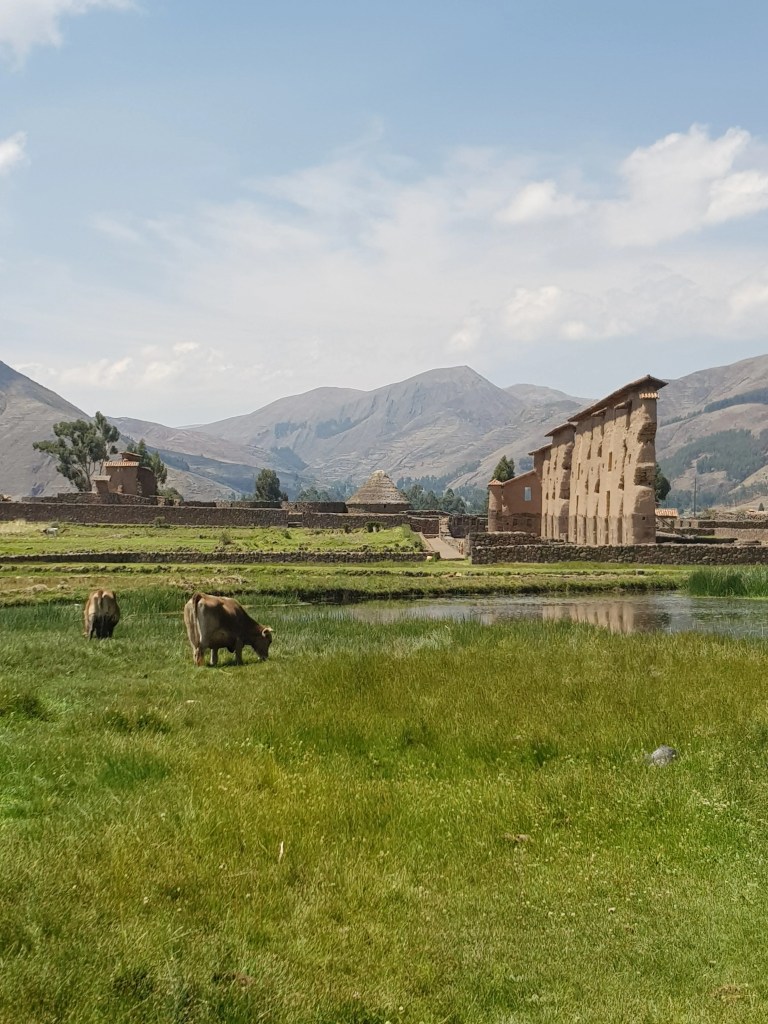
The following day we drove to a small Quechua village called Raqchi, where we were treated to a homestay with a local family. I was a little anxious given that my Spanish is virtually non-existent, but I needn’t have worried; Papa Peo and Mama Concepçion were full of warmth that required no words, and one of our Peruvian guides was staying with us and helped translate where needed. Listening to Mama and Papa tell their story, I was filled with happiness as their eyes sparkled reminiscing about how they met and fell in love. It also gave me an appreciation for everything I have in my life, although it did make me miss my partner, Ken, and home.
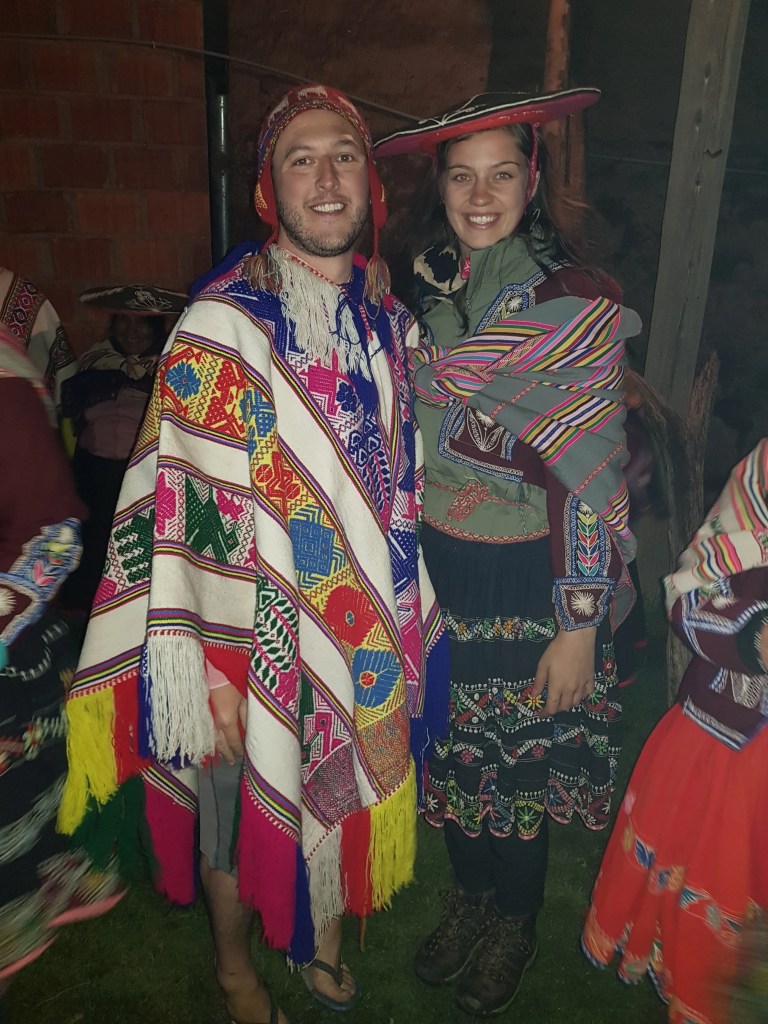
Any homesickness was quickly dispelled when Papa signalled for us to change into one of his ponchos, and we headed to one of the other houses for a traditional ceremony to honour Pachamama, a goddess revered by the indigenous people of the Andes. Pachamama is the earth mother, and is toasted before festivities by spilling a small amount of beer before drinking. The indigenous community believe that we should give back to the earth before taking, and only taking what is appropriate. It made me think that I, and perhaps many of us, could do better at this. Once the solemn ceremony had been performed, the music started up, which in turn meant the dancing commenced around the fire. It turned into quite a raucous affair and everyone went to bed in high spirits.
The homestay was probably the one part of the trip that I was most anxious about, but my fears were completely unfounded. It turned out to be the most educational and thought-provoking; not so much in what we were taught in historical terms, but with regards to the local folks’ ethos for life, something I hope to apply to some degree upon my return home.
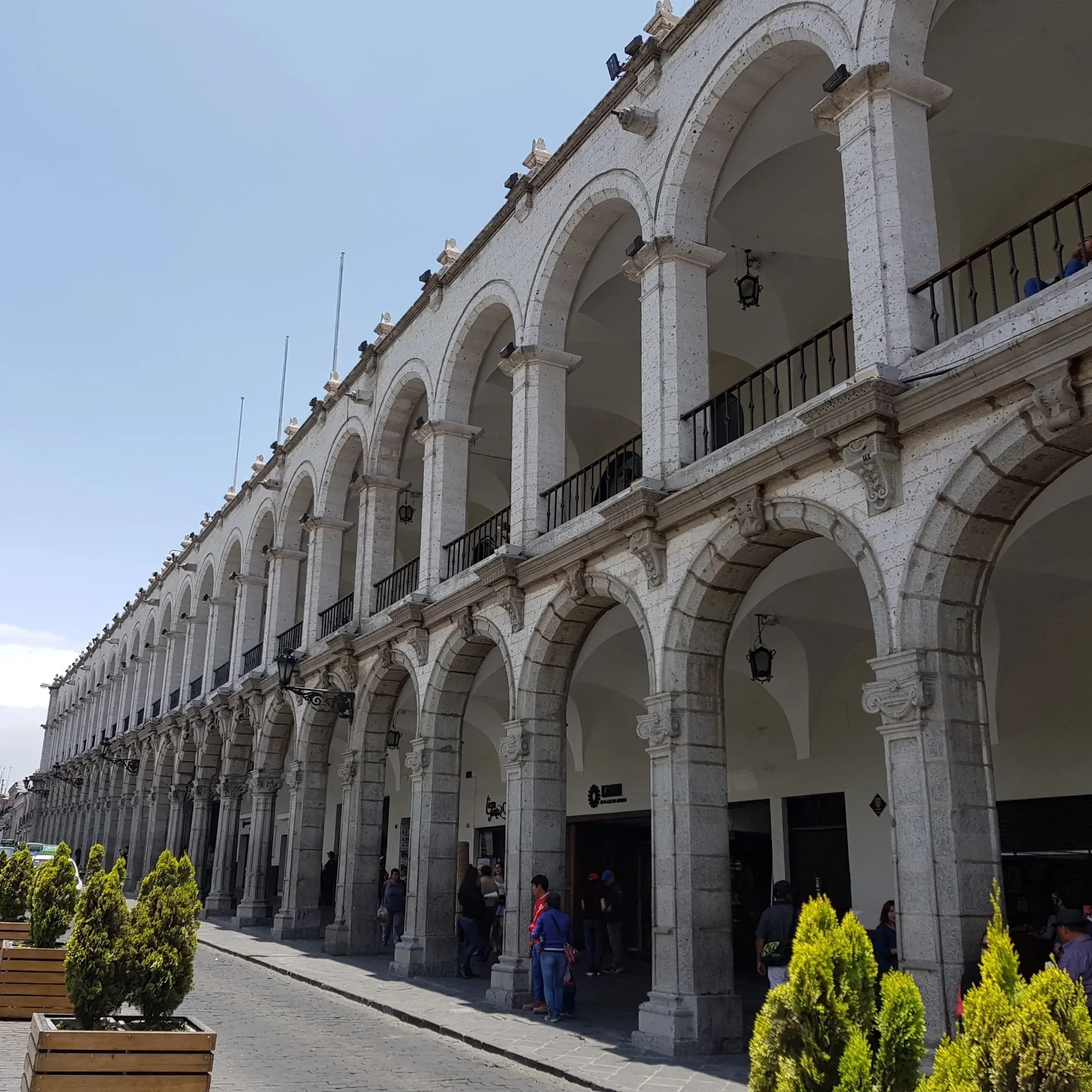
Arequipa is the second largest city in Peru and is known as the ‘White City’ on account of it being built with ‘silla’ or white volcanic rock. It sits on the Peruvian altiplano at 3,500m above sea level and is truly beautiful. Its main square is a breathtaking sight, especially in the evening when complementary lighting shows it at its best.
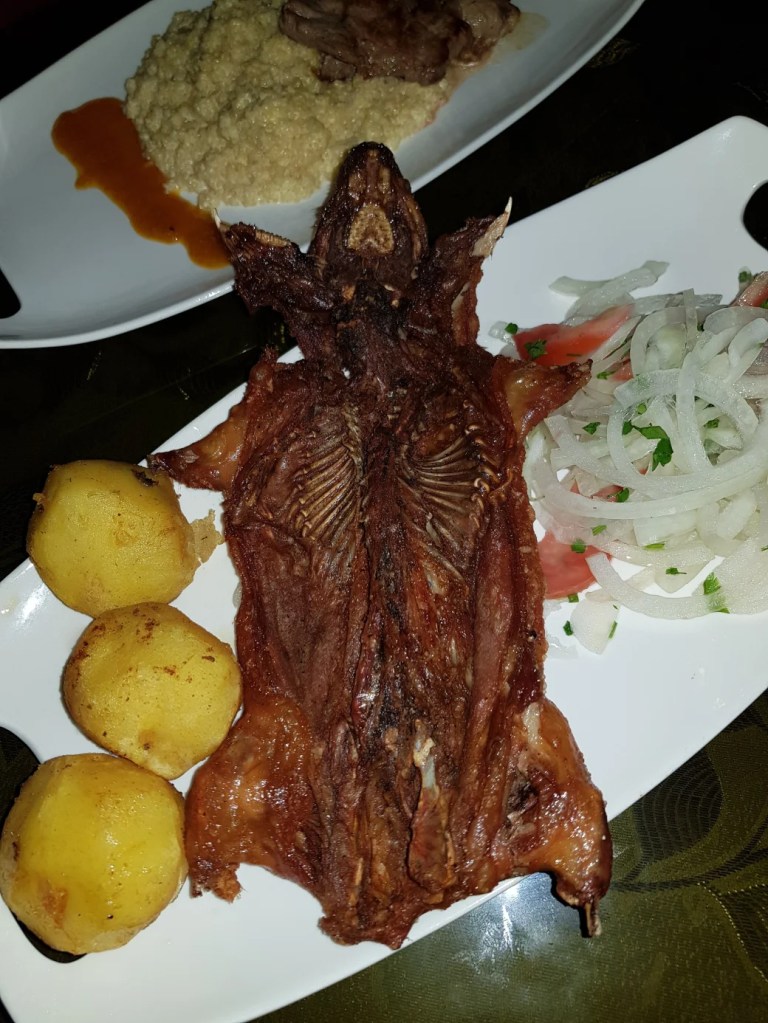
After a relatively relaxing drive, we checked into our hostel and headed out for dinner to a restaurant that had been recommended to one of the group. It had an amazing view overlooking the square and the ponchos we were handed upon entering soon had us feeling cosy. This feeling started to dissipate, however, when two of us decided to share a meal of guinea pig and alpaca. It probably didn’t help that we were sat next to a committed vegetarian. Sorry, not sorry. The guinea pig was served whole and the appearance didn’t really help make it appealing and to be honest, I wouldn’t order it again. If you like eating the skin of a roasted chicken, then you’d like the skin of these rodents, but there was little else to get excited about. The alpaca steak on the other hand was delicious and much needed to be honest.
The following day was free so a few of us decided to go to a museum to see the ‘Ice Maiden’ Juanita, said to be one of the best preserved mummies in the world. The young teenage girl was sacrificed as an offering to the Inca gods sometime in the 1400s and discovered in 1995 on Mount Ampato. Imagine stumbling across that on a hike!!
As has been common during my trip, it was a sunny day so a few of us decided to have a couple of afternoon drinks at a pub close to hostel. I don’t know if it was the copious amounts of coca beer or the euphoria from besting everyone at darts, but I somehow found myself stumbling home at 0130. Definitely not part of the plan! Having forgotten about dinner completely, needless to say I woke up with my first South American hangover; it wasn’t pleasant. Thankfully, my roommate, Ian, is a diamond and when I eventually rolled out of bed at 1000, I saw that he’d collected my laundry from down the road. Like I said, he’s a diamond. Luckily our drive didn’t start until 1200 so I had time to down a Starbucks and some unsatisfying Turkish sandwiches. Arequipa was a bit of a blur but I’d love to come back, even just to correct all of my food choices!
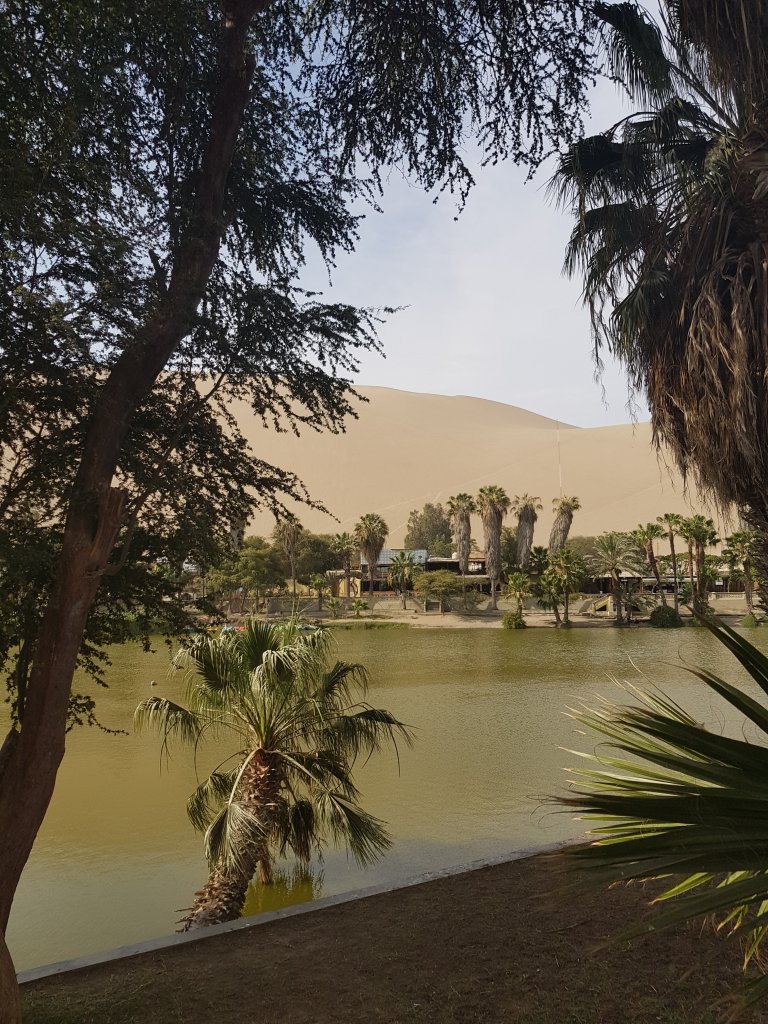
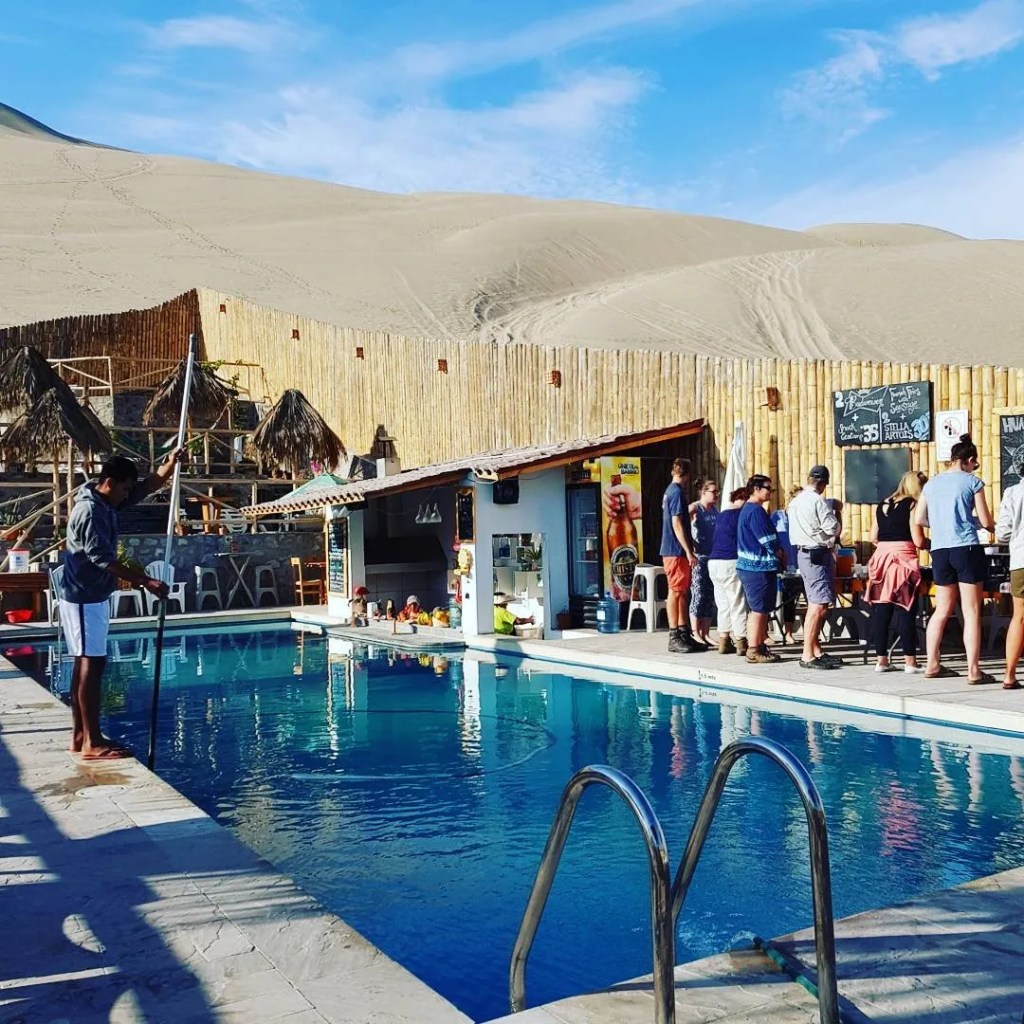
Immediately following the boat trip to the Ballestas Islands, we jumped back in the trucks to continue the drive to the desert in Huacachina. Upon arrival, we took a short walk down to the lagoon in the middle of the small town where the calm waters, surrounded by palm trees, brought immediate relaxation.
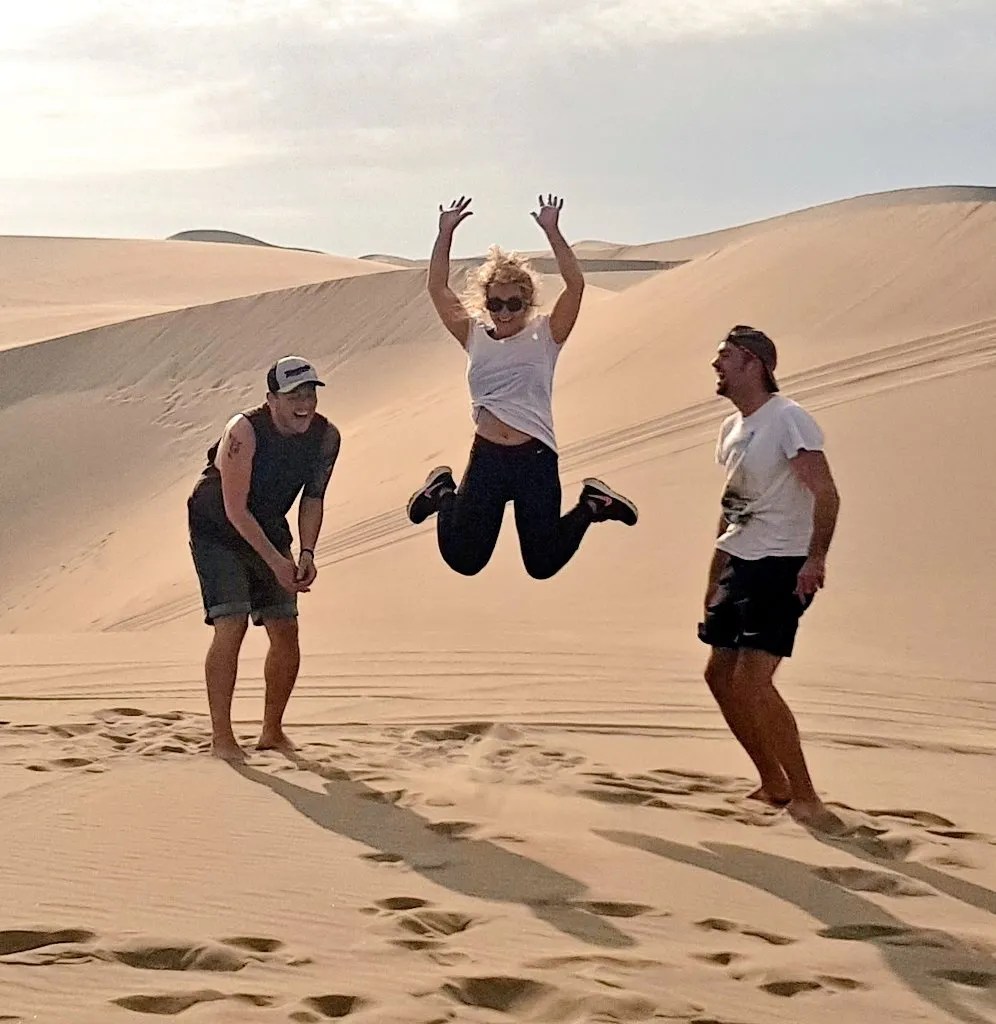
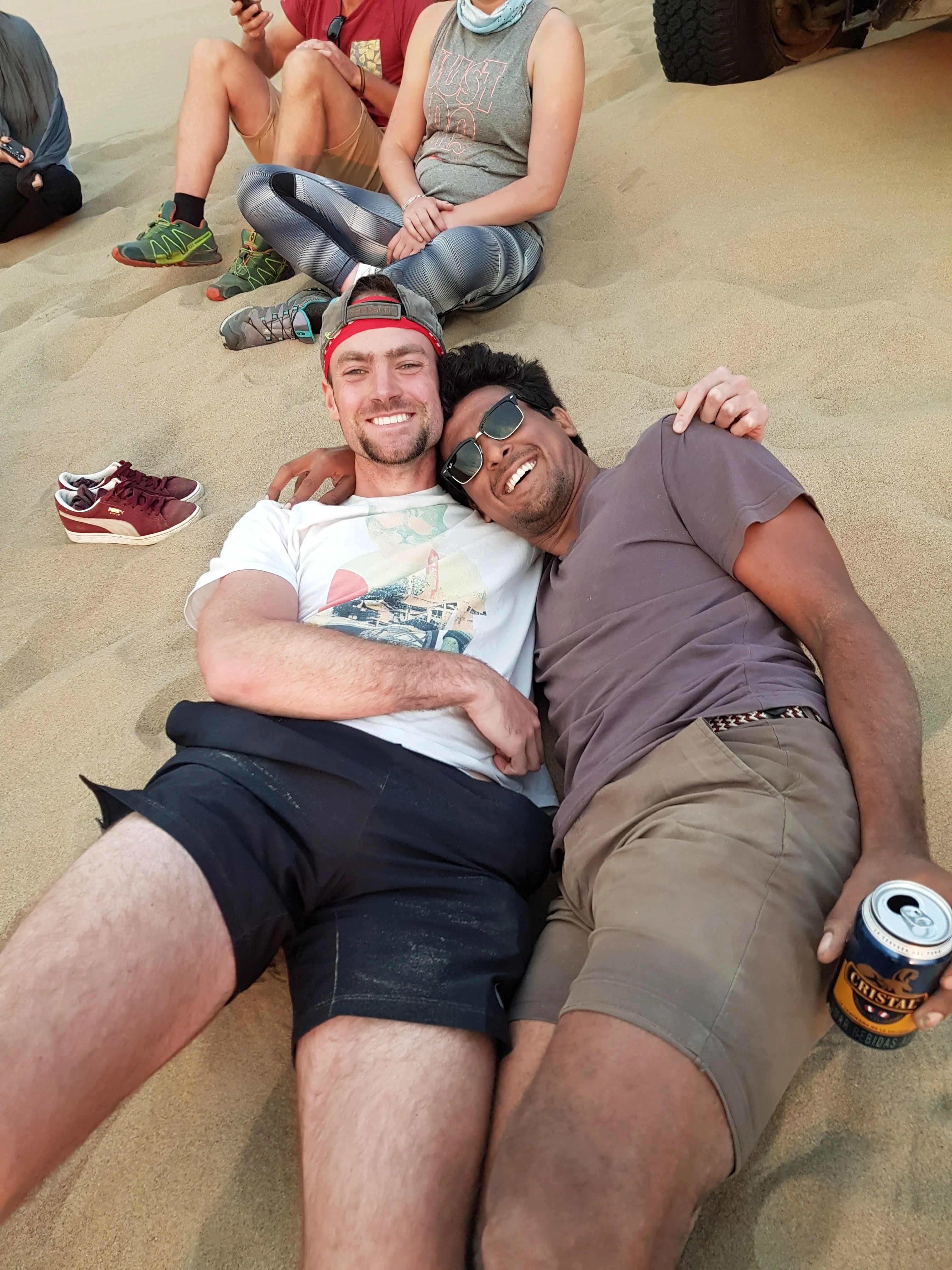
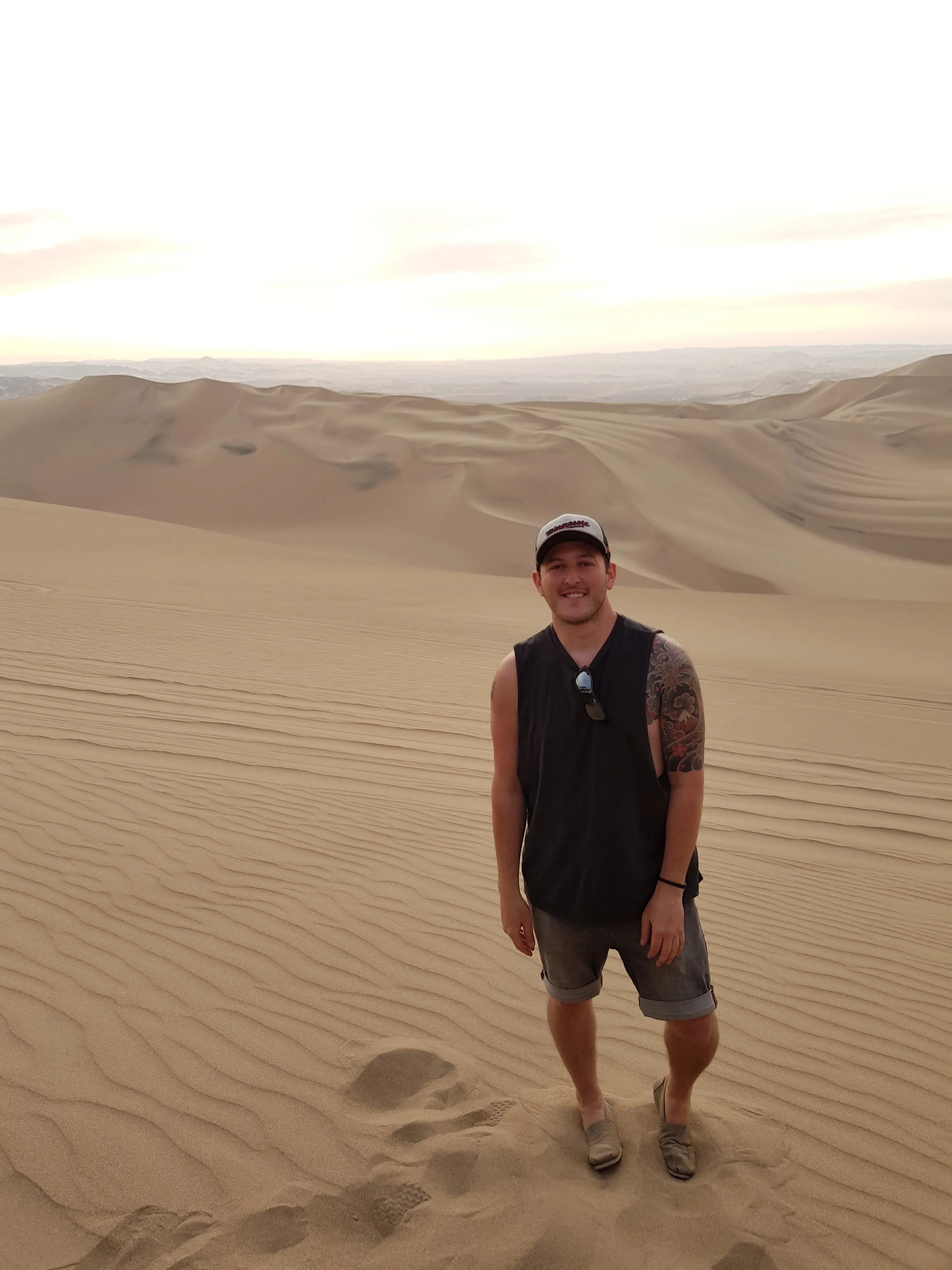
The reverie didn’t last too long though once we’d exchanged our trucks for dune buggies and a local driver. He whizzed us to the top of the surrounding dunes, chicaning where no chicanes should ever be chicaned, to the delight slash screams of my fellow passengers. At the top, two of my new buddies (Charlotte and Matthew) and I decided it would be a good spot for a jumping photo. Now, if you’ve read my blog about Queenstown in New Zealand (and in case that was an oversight on your part, or if you just want to refresh your memory, you can do so here) you’ll know that I love any excuse to jump off things. Unfortunately, as the pictures below testify, it’s rather hard to do so on sand. However, as you can see, there were lots of giggles and that’s kinda the point right?
The jumping shenanigans were brought to a finish, mainly because the photographer lost patience when she realised we’d never manage to jump in sync ‘on three’, and we got back in the buggies for the short ride to the first sandboard slope.
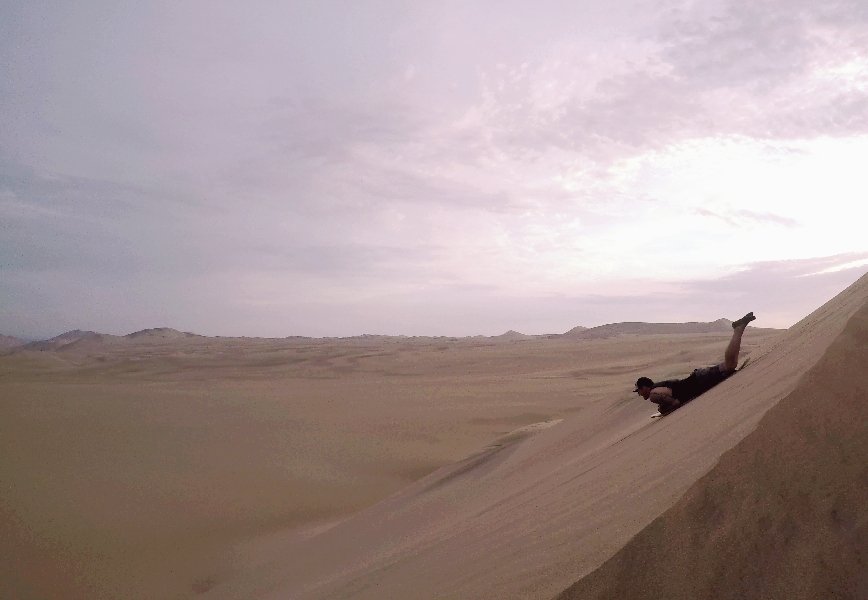
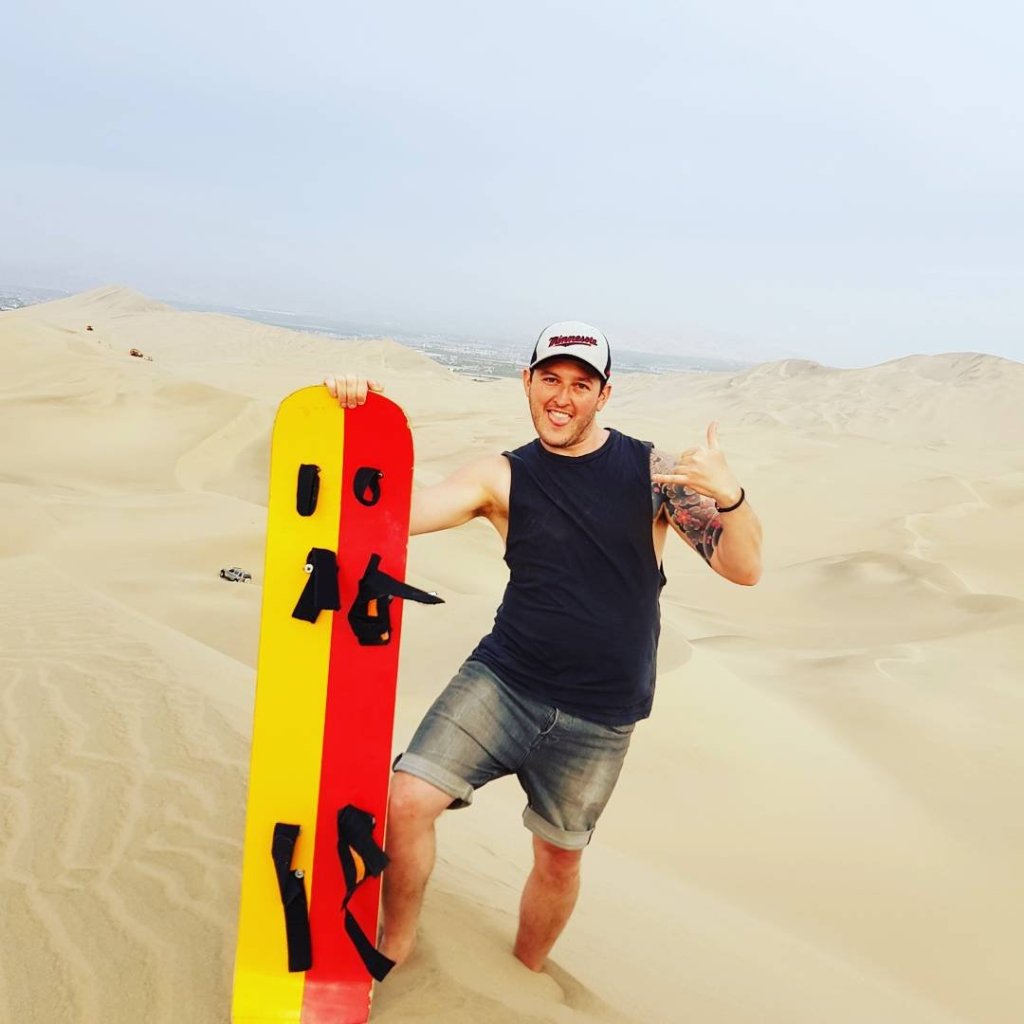
After what can only be described as a perfunctory training – which is being pretty generous given that it lasted all of twenty seconds – we were tipped over the ridge off the dune.
The sandboards fairly flew and the adrenaline rush was incredible. About halfway down I started bricking it when the board wobbled slightly, before remembering to brake with my feet. As soon as the board came to a stop though, I was itching to go again. Thankfully, that’s exactly what our ‘instructor’ had in store and over the next couple of hours we rode increasingly bigger dunes until we were spent. I filmed some of the descents on my GoPro (my attempt to justify buying it for this trip), and managed to rip a large patch of skin off my elbow in the process, but it was totally worth it. There are no pictures of that as it still looks kinda funky.
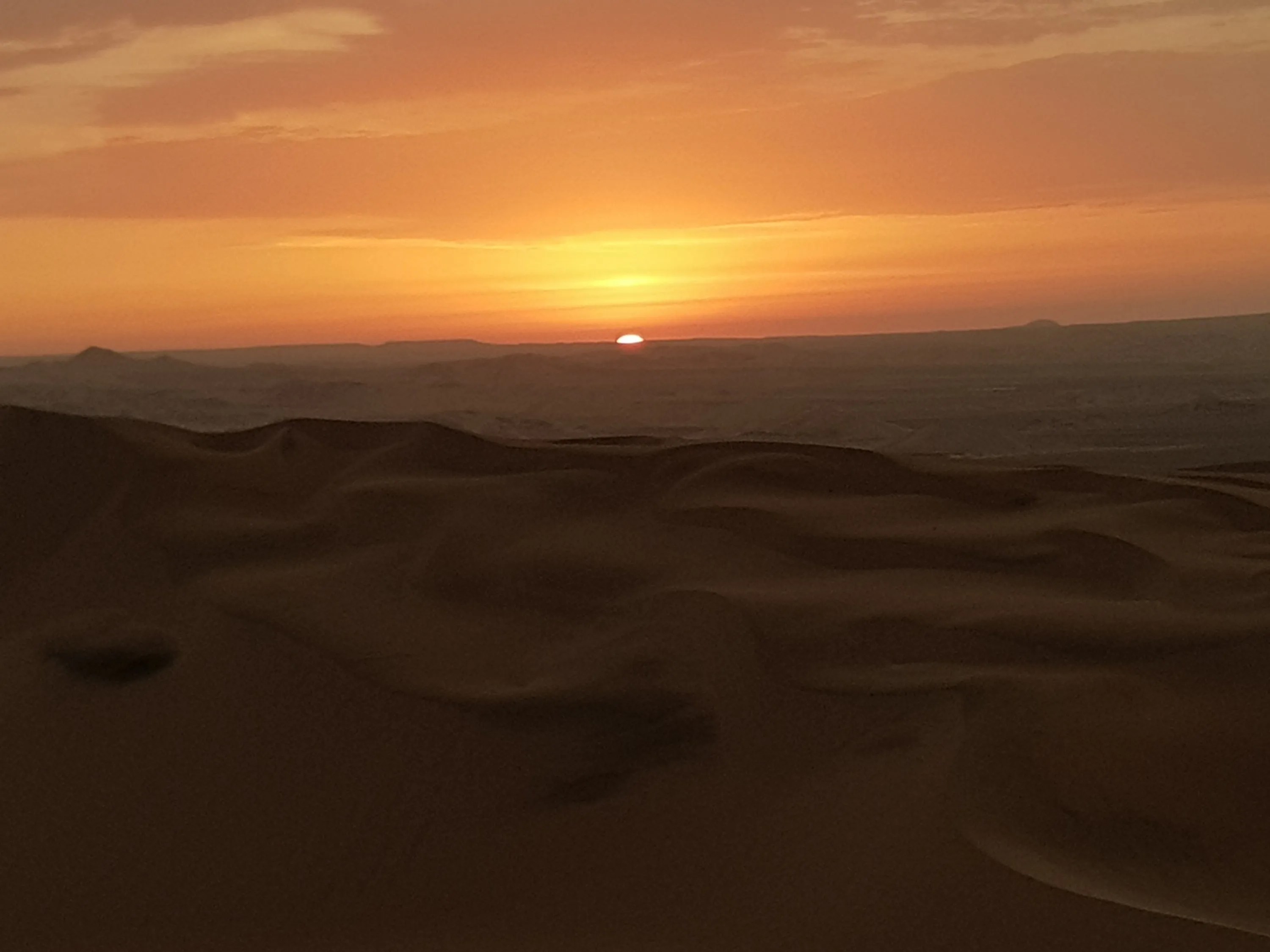
Our guides then drove us further up the dunes from where we were treated to a beautiful sunset. Everyone seemed really content, and with the boat trip from the morning, the newer passengers especially were raving about their first day. Once the sun was gone, we were taken to a dip in the dunes, where we found a humongous barbecue sizzling away on a camp fire. A feast followed and the continual pouring of pisco ensured a good time was had by all. We set up our sleeping bags on the sand and gazed at the stars. With little light pollution, they were dazzlingly bright and I fell asleep with a big grin on my face, thinking how lucky I was right then.
The following day saw us drive to Nazca, home of the Nazca lines. The only way to see the figures is from the air and in small planes, but being conscious that I’m away for nearly four months and would be undertaking the Inca Trail in just over a week, I decided to take an activity break and instead, I took up residence by the hotel pool (a first so far on this trip) and enjoyed some me time: reading, sipping a beer and pretending to swim lengths. It was bliss and set me up well for the next few days in Arequipa.
Our departure from Lima was at 0500, something which didn’t seem to faze the new passengers too much. In fact, I felt a little sorry for them as their growing excitement having boarded the truck for the first time was not met with the same enthusiasm by us ‘oldies’ who promptly fell asleep due to the ungodly hour. The early departure was required to avoid the heavy traffic in Lima which seems to have peak times of 0000 – 2400. Peruvian drivers also appear to have no concept of lanes despite the clear road markings. Thankfully the journey out of Lima was much nicer than the one we undertook to enter the city. After a short time we stopped at paradise, which in this instance was a petrol station that served delicious coffee, had clean working toilets with plenty of loo roll, and a nice view of the mountains to boot. We felt it necessary to warn the newbies to not get used to such luxuries.
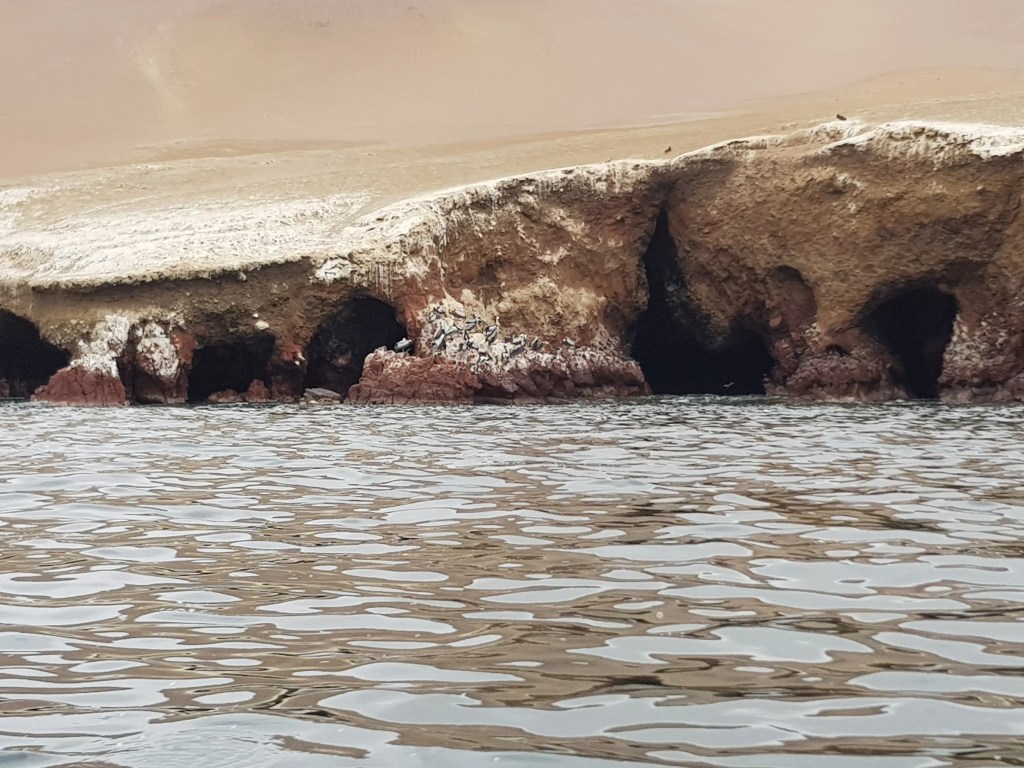
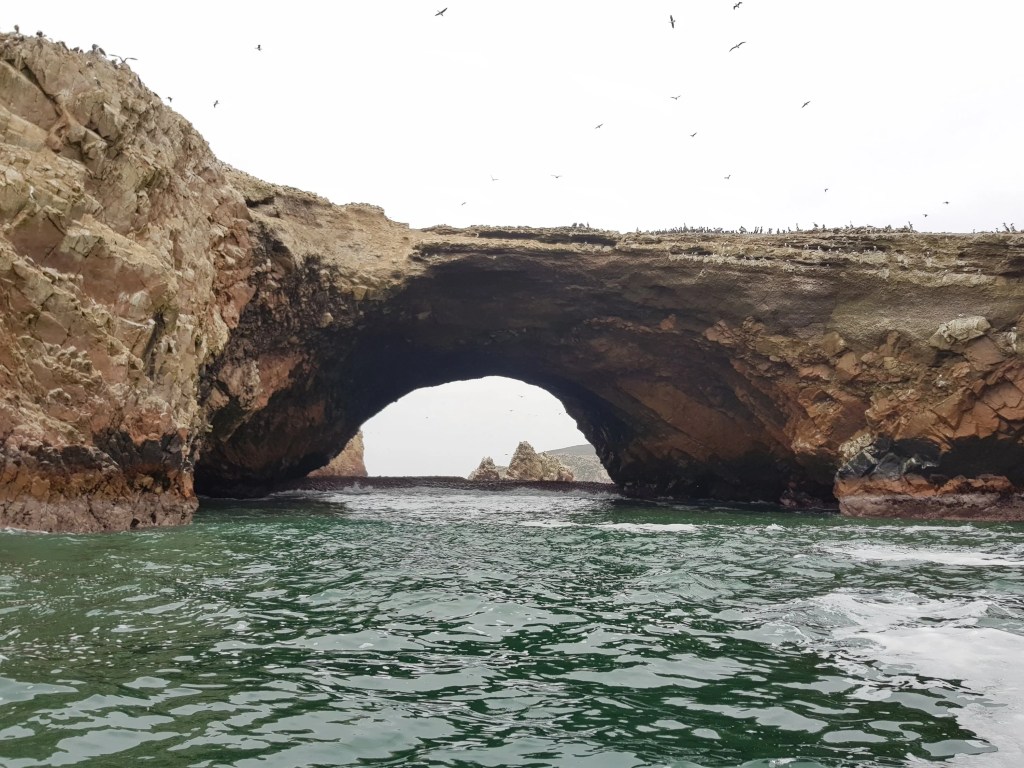
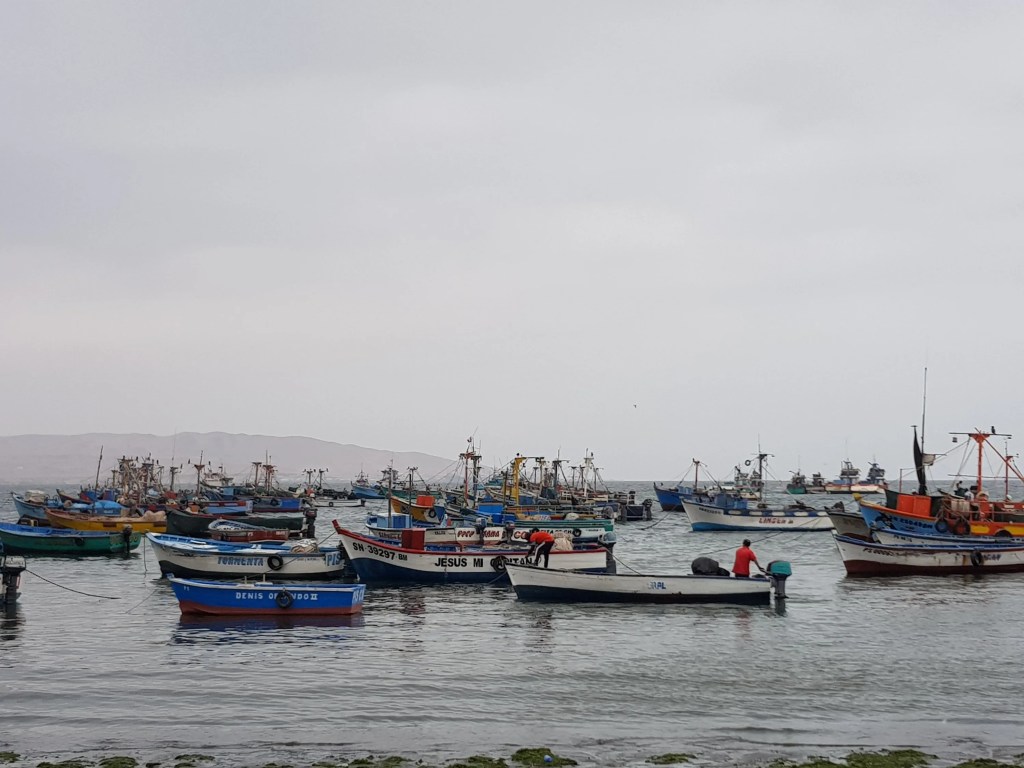
By 1030, we had reached Paracas from where we took a speedboat out to the Ballestas Islands for a spot of bird watching. The excursion should really be entitled ‘bird smelling’ for the odour emanating from the impressive rock formations was, well, impressive. Of sorts. This guano was historically exported as fertiliser and if you are so inclined, there’s a great article here with details of the history and process.
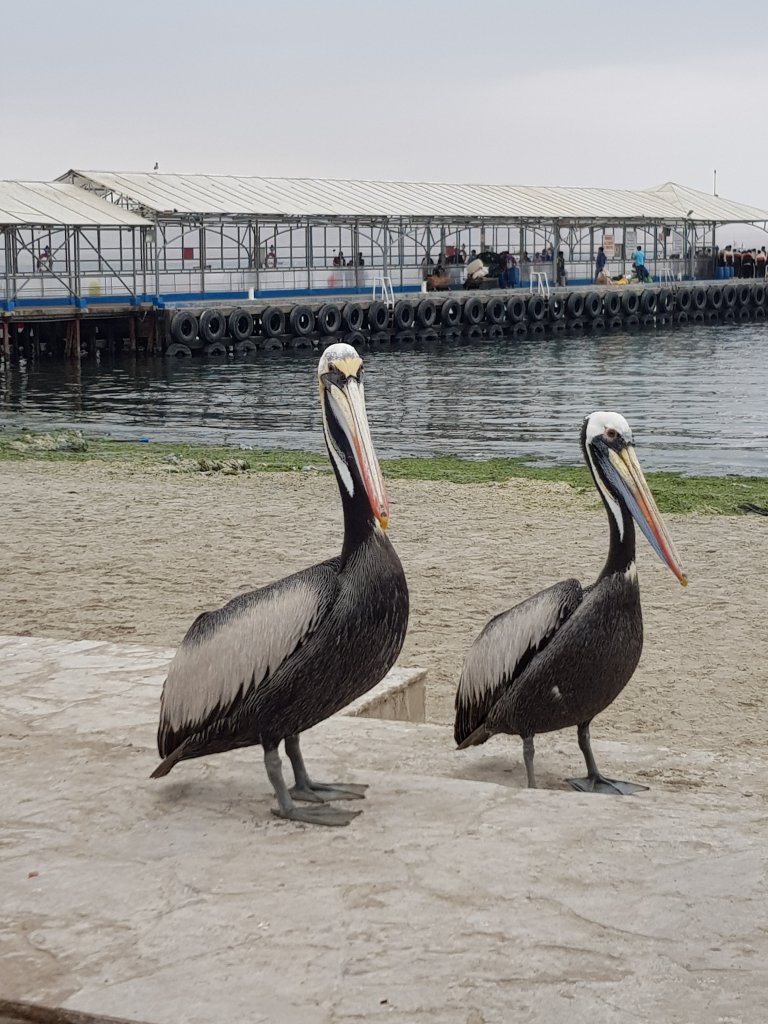
It was great to see tiny penguins next to huge pelicans, and we were also treated to some snoozing sea lions. My favourite part was on the return journey when we watched cormorants divebombing the fish below, one after another.
The Ballestas Islands are often referred to as the ‘poor man’s Galapagos’ which seems rather harsh given the rich abundance of wildlife on show. This biodiversity is the result of two merging currents in the Pacific Ocean: the warm waters of El Niño and the cooler waters of the Humboldt (named after the Prussian naturalist Alexander von Hi Humboldt who also has a penguin named after him), which create the perfect environment for plankton and phytoplankton.
And here endeth today’s lessons. This stuff had better turn up on Pointless at some point or I’ll be fuming!




























 Tea & Tulips